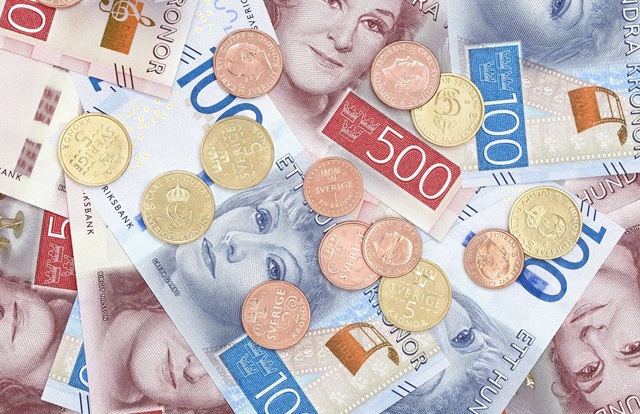
Sweden and Norway’s currencies have emerged as top picks for traders banking on a European economic revival, outperforming their major peers since the start of the year. As Financial Times reports, the Swedish krona and Norwegian krone have surged ahead of the G10 group of developed market currencies, benefiting from strong economic fundamentals and a wave of investor optimism.
The Swedish krona has gained more than 10% against the US dollar this year, marking its most significant quarterly rise since 2010. Meanwhile, the Norwegian krone has jumped over 8%, its largest increase in more than two years. These rallies place the Scandinavian currencies ahead of the euro and the British pound as investors bet on higher interest rates in the region and the economic tailwinds generated by large-scale spending initiatives in Germany and other major European economies.
“The Scandi currencies are simply the euro on steroids,” said Kamal Sharma, an FX strategist at Bank of America. He emphasized that Germany’s ambitious spending plans—expected to fuel European growth—would particularly benefit Sweden, given its strong defense sector.
Sweden’s arms exports, as a share of its economic output, were close to those of France last year, positioning it as a key global supplier. Data from the Stockholm International Peace Research Institute and SpareBank 1 Markets reveal that Sweden’s defense industry is set to gain from the broader European infrastructure and military spending surge. The Swedish government has also pledged to boost military expenditure to 3.5% of GDP by 2030, further bolstering investor confidence.
Norway’s krone has also benefited from its defense sector, as well as its steel and aluminum industries, which are poised to capitalize on Europe’s infrastructure push. The currency’s performance is a sharp turnaround from last year when it hovered near record lows against both the dollar and the euro, barring extreme drops seen during the early stages of the COVID-19 pandemic.
“The moves over the last weeks have been really big—it has been surprising,” said Dane Cekov, an FX strategist at SpareBank 1 Markets. He attributed part of the appeal to Norway and Sweden’s stable fiscal policies, particularly in contrast to the political uncertainties in the United States under former President Donald Trump. According to Bank of America, Sweden and Norway’s economies are projected to grow by 1.8% and 1.5% next year, respectively, outpacing the Eurozone’s forecasted growth of 1.1%.
The bullish sentiment around Scandinavian currencies has also been reflected in stock markets, where Sweden’s Saab has surged over 70% since the beginning of the year, while Norway’s Kongsberg Gruppen has climbed more than 20%.
Adding to the strength of both currencies is unexpectedly high inflation in recent weeks, prompting their central banks to keep interest rates higher for longer. Markets expect the European Central Bank (ECB) to implement at least two quarter-point cuts by the end of the year. In contrast, Norway’s Norges Bank is only expected to make one cut—possibly two—while Sweden’s Riksbank is not anticipated to lower rates at all in 2024. On Thursday, Norges Bank held rates at a 17-year high of 4.5%.
The Scandinavian rally has also been driven by a broader weakening of the US dollar, fueled by concerns that Trump’s aggressive trade tariff plans could harm the American economy. Central bank officials in Sweden and Norway remain somewhat perplexed by the rapid rise of their currencies, noting that traditional drivers like oil prices have not played a significant role—Brent crude, the global benchmark, has dipped slightly since the start of the year.
According to Brad Bechtel, global head of FX at Jefferies, the outperformance of the Swedish and Norwegian currencies is partly due to their being “ultra undervalued” before the recent spending boost in Europe. As traders continue to pile into Scandinavian markets, the region’s economic outlook appears increasingly resilient, reinforcing the appeal of these currencies as high-growth alternatives to the euro.