


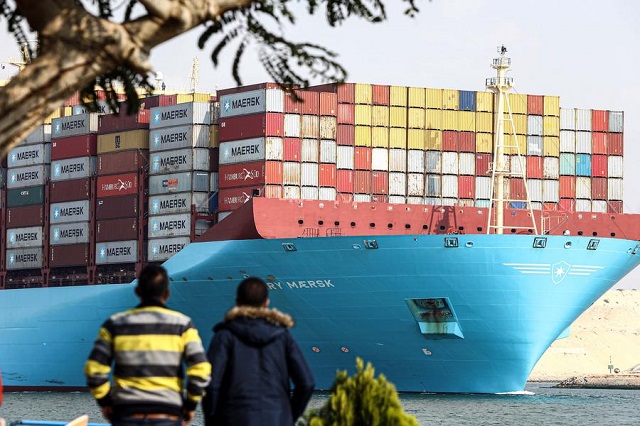
U.S. President Donald Trump has intensified his assault on the international trade system by imposing steep tariffs on major economic partners. On March 3, Trump announced a 25% tariff on imports from Canada and Mexico, along with an additional 10% tariff on Chinese goods—on top of previous levies. A similar 25% tariff on European imports is widely expected to follow. Together, these regions account for over 60% of U.S. goods imports, meaning the economic repercussions will be significant. Simultaneously, Trump suspended military aid to Ukraine, a decision that could have devastating consequences for the country’s defense against Russian aggression. The two actions underscore his administration’s growing departure from traditional U.S. alliances and the rules-based global order that the country once championed.
Trump has long framed trade as a zero-sum game, blaming other nations for America’s trade deficits. However, as economists—including Maurice Obstfeld, former chief economist of the International Monetary Fund—have pointed out, the U.S. trade deficit is primarily driven by its own fiscal policies, particularly high government spending and tax cuts. The latest round of tariffs, aimed at forcing trading partners to make concessions, is unlikely to reduce the deficit and could instead provoke retaliatory measures. The European Union, for example, is already preparing countermeasures should Trump follow through on his tariff threats, which could permanently damage transatlantic economic relations.
Financial Times has highlighted the broader implications of Trump’s trade policies, noting that they mark a fundamental shift in how the U.S. engages with its allies. Rather than reinforcing economic and military partnerships, the administration is creating fractures that could realign global power structures. One striking example is Trump’s stance on the European Union, which he has falsely claimed was “formed to screw the United States.” Such rhetoric ignores the EU’s origins as a project to ensure economic stability and political cooperation in post-war Europe—an initiative that the U.S. itself once strongly supported.
While the economic effects of Trump’s trade war will be severe, particularly for Canada and Mexico, the decision to halt military aid to Ukraine is even more alarming. The abrupt suspension of assistance leaves Ukraine vulnerable at a critical moment in its war against Russia. Many analysts see this as a gift to Russian President Vladimir Putin, who has long sought to weaken Western unity on Ukraine. Trump’s approach has forced European leaders to reconsider their security strategy, with German Chancellor-in-waiting Friedrich Merz emphasizing the urgent need for Europe to become more self-reliant in defense.
The long-term consequences of these decisions remain uncertain, but one outcome is clear: trust in the United States as a stable economic and military partner is eroding. By prioritizing short-term political gains over strategic alliances, Trump’s policies risk isolating the U.S. on the world stage while strengthening adversaries who stand to benefit from a fractured Western bloc.









