


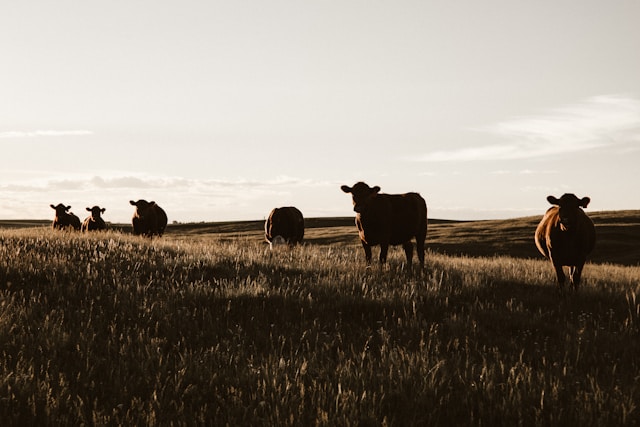
Beef prices in the United States have surged to unprecedented levels, driven by the country’s lowest cattle inventory in over 70 years, according to a recent report by the Financial Times. A combination of severe drought, rising input costs, and shrinking herds has pushed the cost of beef to record highs, deepening the financial burden on American consumers.
As of March, the average price of a pound of ground beef reached $5.79 in U.S. cities — a 12.8% increase over the past year — while uncooked beef steaks hit $10.98 per pound, both all-time highs, according to data from the U.S. Department of Labor. This spike is largely attributed to years of drought across the American West, which has decimated grazing lands and forced ranchers to cut back on their herds.
“Beef is experiencing the most challenging market conditions we’ve ever seen,” said Donnie King, CEO of Tyson Foods, the nation’s largest meatpacker, during a second-quarter earnings call. Despite cattle reaching heavier weights, it hasn’t been enough to offset the sharp decline in headcount. Tyson reported that the average price of its beef products climbed 8.2% between February and April, prompting many customers to switch to cheaper alternatives like chicken — a trend that cost the company $181 million over six months.
The rising prices are a double-edged sword. While meatpackers face thinner margins due to higher cattle costs, many ranchers are now benefiting from historically high market prices. “My neighbour… is going to sell every cow in his place next Tuesday,” said Carl Ray Polk Jr., president of the Texas & Southwestern Cattle Raisers Association. “It’s not necessarily because of his input cost. It’s because the market is so high.”
However, rebuilding the cattle population remains a slow and expensive process. It can take up to 42 months to raise a steer for beef production, and high interest rates are further discouraging herd expansion. Polk, who plans to grow his own herd by 10% this year, acknowledged the uncertainty: “I don’t know if I’m doing the right thing… all indications are that if we maintain a fair weather pattern, market highs are not going away next month.”
David Anderson, a livestock economist at Texas A&M University, echoed these concerns. “It’s hard to see really falling prices,” he noted, highlighting that while some signs of herd rebuilding exist, progress is sluggish.
With summer grilling season approaching and food inflation remaining a political flashpoint, especially in the 2024 U.S. presidential race, soaring beef prices are likely to remain a significant pressure point for consumers.












