


Western automakers could face near-total obsolescence in China, the world’s largest car market, as domestic brands aggressively gain ground across all vehicle segments, according to Stellantis executive Maxime Picat. Speaking at the Financial Times Future of the Car summit, Picat — one of two leading internal candidates to become Stellantis’s next CEO — offered a stark assessment of foreign carmakers’ prospects in the country.
“I’m quite an optimistic guy, but not on that one,” Picat said when asked whether Western brands could maintain their foothold in China. “I was shocked,” he added, referring to the pace and breadth of the local brands’ offensive. “Western carmakers are left with the internal combustion engine C-segment. And that will not last.”
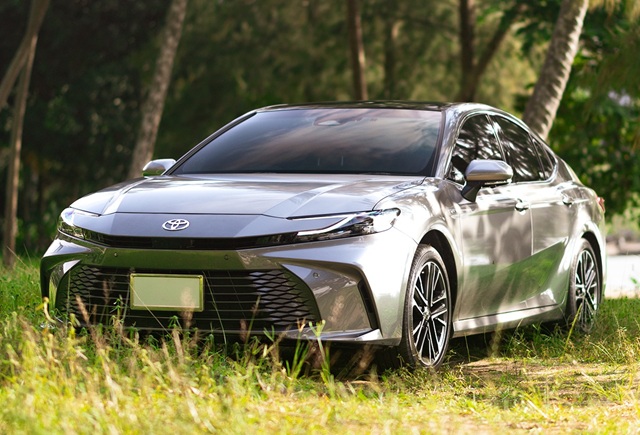
Picat, who oversees Stellantis’s operations in Asia-Pacific, the Middle East, and Africa, pointed to the rapid erosion of market share for non-Chinese brands. Once dominant players like Volkswagen and Toyota still sell large volumes of mid-sized petrol vehicles, but local brands have captured the electric and larger vehicle segments, leaving Western companies scrambling to remain relevant.
According to data cited at the summit and reported by the Financial Times, foreign automakers now hold just 32% of China’s market — down dramatically from 64% in 2020. Chinese EV giant BYD has displaced Volkswagen as the best-selling brand, highlighting the local industry’s growing strength and consumer appeal.
While some Western automakers, including Stellantis, have retreated from the Chinese market amid intense competition and a brutal price war, others like Volkswagen have doubled down. VW has committed an additional €2.5 billion to its operations in China and has embraced a “China for China” strategy to better compete with domestic rivals. Still, the challenges remain steep.
Stellantis, which owns brands such as Peugeot, Fiat, and Opel, has pivoted by investing €1.5 billion for a 20% stake in Chinese EV start-up Leapmotor. The move is part of its strategy to reengage in China through partnerships rather than traditional joint ventures.
The issue has also exposed divisions within the European auto sector. Stellantis and Renault — both with limited exposure to China — have supported the EU’s push for anti-subsidy tariffs on Chinese EV imports. In contrast, Volkswagen and other German manufacturers have criticized the tariffs, fearing retaliation in their largest overseas market.
Picat, along with Stellantis’s North American chief Antonio Filosa, is seen as a leading contender to replace Carlos Tavares, who stepped down in December following strategic disagreements. On the succession process, Picat stated, “The board has started a very comprehensive process… everything is under control and that will be a good decision, whatever the decision.”
As the Chinese auto industry races ahead, the comments from Stellantis underscore a sobering reality for legacy carmakers: survival in China is no longer guaranteed — and may already be slipping away.











