
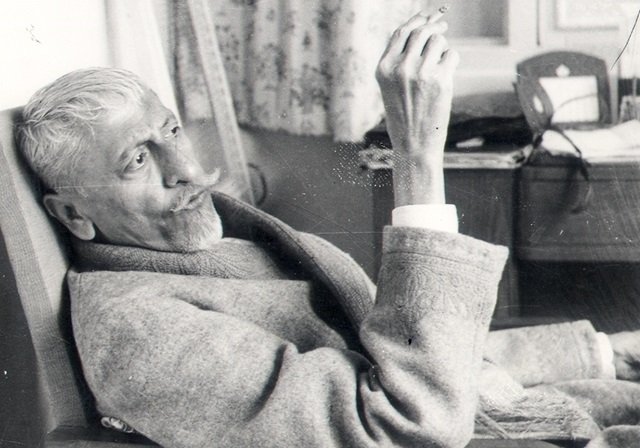
India’s freedom struggle produced many extraordinary leaders, but few combined intellectual brilliance, political courage, spiritual depth and an unwavering commitment to Hindu-Muslim unity as profoundly as Maulana Abul Kalam Azad. A freedom fighter, scholar, journalist, educationist and independent India’s first Education Minister, Azad embodied the finest traditions of composite Indian nationalism. His life remains a powerful reminder that India’s strength lies not in uniformity, but in its extraordinary diversity and shared destiny.
Every year, 11 November, his birth anniversary, offers an opportunity to revisit his ideas and ask ourselves whether the India we are building reflects the values for which he struggled throughout his life?
Maulana Azad was born on 11 November 1888 in Mecca, then part of the Ottoman-era Hijaz, to a family deeply rooted in Islamic scholarship; father Maulana Khairuddin and mother Aliya Begum. His father was a respected religious scholar who later settled in Calcutta, where Azad spent much of his formative life.
Educated at home, Azad mastered Arabic, Persian, Urdu and several other subjects, including Islamic theology, philosophy, mathematics and history. His intellectual curiosity extended far beyond traditional religious education. He studied modern political thought, the ideas of contemporary reformers and developed a deep understanding of religion, society and the modern world. In his epistolary collection Ghubar i Khatir he writes ‘I was a child when I fell in love with books’. Young Azad was not content with traditions and inherited opinions. He questioned established orthodoxies, embraced intellectual debate and recognised the need to reconcile religious understanding with reason and modern knowledge. His literary gifts emerged early, and journalism became an instrument through which he could reach people beyond the walls of traditional scholarship. His personality united two qualities that are too often presented as opposites: a profound commitment to faith and an equally profound commitment to freedom of thought. He believed that genuine religious understanding should enlarge the human spirit, not imprison it within prejudice.
Azad entered public life when India’s freedom movement was undergoing a decisive transformation. British colonial rule had weakened the country politically and economically while attempting to divide its people along communal lines. Through his journals, Al-Hilal, launched in 1912, confiscated by the British and later Al-Balagh 1914 who met identical fate, Azad awakened political consciousness among readers, especially Indian Muslims. His writings challenged colonial authority, criticised imperialism and called for resistance to foreign domination. The British Sarkar viewed his journalism as a threat, barged into his press and ravaged his publications.
Very early in life Azad understood that India could not achieve independence if its communities were connived into regarding one another as enemies. For him, the struggle against colonialism was inseparable from the struggle against communalism.
He joined the Indian National Congress and became one of the strongest advocates of Hindu-Muslim unification. His association with Mahatma Gandhi’s Non-Cooperation Movement and his support for the Khilafat movement reflected his conviction that the people of India had to unite across religious boundaries against colonial rule.
In 1923, at the age of just 35, Azad became the youngest president of the Indian National Congress. He was again elected Congress president in 1940, remaining in office during a crucial period of the freedom struggle, including the Quit India Movement in 1942.
Azad saw India as a shared homeland in which Hindus, Muslims, Sikhs, Christians and people of every other faith had an equal claim to citizenship, dignity and belonging. His 1923 speech in Delhi as Congress President says it all.
“If today an angel descending from the clouds were to declare from the top of the Qutab Minar ‘Discard Hindu-Muslim Unity and within twenty-four hours Swaraj is yours,’ I would prefer to sacrifice Swaraj rather than Hindu-Muslim Unity. For delay in the attainment of Swaraj will be a loss to India alone, but if our Unity disappears, it will be a loss to the whole world of humanity.”
These words were not an abstract expression of idealism. They represented a fundamental political conviction: independence without fraternity would be an incomplete victory. His opposition to the Partition of India emerged from this conviction. He warned that dividing the country along religious lines would inflict lasting wounds, separate communities with intertwined histories and create new insecurities for those who remained minorities on either side of the border. Azad’s nasbul ain (goal) reminds us that the preservation of unity requires political courage, particularly when division appears to offer an easier path. History has proved that his unheeded warnings resulted in mass killings on both sides of the border drawn with an ominous pen by Cyril Radcliffe.
Azad became the country’s first Education Minister in Jawaharlal Nehru’s Cabinet. He inherited a nation burdened by poverty, widespread illiteracy, inadequate educational infrastructure and the devastating consequences of Partition. He understood that political independence would remain incomplete unless it was accompanied by intellectual freedom and educational opportunity. For Azad, education was not a privilege reserved for the wealthy; it was a fundamental instrument of democracy and national development. He championed universal elementary education, the expansion of secondary and higher education, women’s education, technical training and scientific research. During his tenure the Indian Institute of Technology at Kharagpur 1951, the University Grants Commission in 1953, and the Indian Council for Cultural Relations in 1950 and national academies for literature, music, dance and drama, and the visual arts.
The tragedy of Partition deeply wounded him, but it did not diminish his commitment to building a democratic and secular India. He continued to insist that every citizen, irrespective of religion, must enjoy equal rights and opportunities. His commitment to scientific temper was equally significant. He understood that modern India required investment in research, technology, universities and critical thinking. A society unable to question superstition, challenge inherited prejudices or examine public policy rationally could not fully realise its democratic potential.
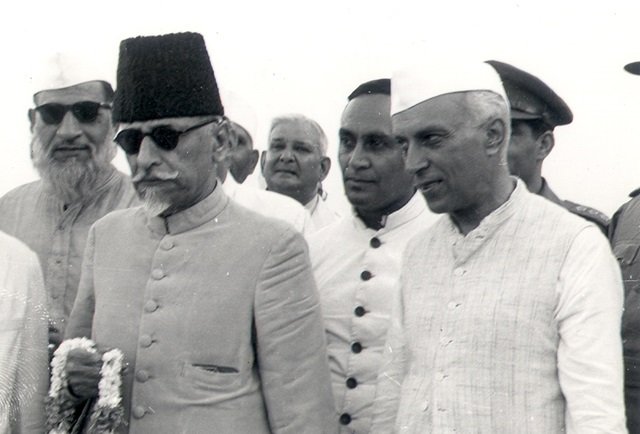
Azad’s vision brought together seemingly distinct ideals: faith and reason, tradition and modernity, cultural inheritance and scientific advancement. He saw no contradiction in a person being deeply religious while also defending intellectual freedom and equal citizenship.
Maulana Azad died in New Delhi on 22 February 1958, at the age of 69. His death marked the loss of one of the last great intellectual figures of the generation that had led India’s freedom struggle. There is something deeply moving about Nehru sitting beside Azad in his final moments. Their friendship had been forged through the freedom struggle, political imprisonment, debates over India’s future and the challenge of governing a newly independent country. Azad’s mortal journey ended, but his intellectual and moral legacy continues. He was posthumously awarded the Bharat Ratna in 1992.
As we commemorate Maulana Azad’s birth anniversary on 11 November, we must move beyond ceremonial tributes. On his birth anniversary, let us remember Maulana Azad not only as a great freedom fighter and educationist, but as a visionary who understood that the soul of India resides in its unity, diversity and shared humanity. The true honour we can offer him is to defend the values he spent his life advancing. We must also recognise that communal harmony cannot be sustained through speeches alone. It requires justice, responsible political leadership, dialogue between communities and the courage to challenge prejudice wherever it appears.
At a time when societies across the world struggle with polarisation, intolerance and the manipulation of identities, his message acquires renewed urgency. Azad belonged to a generation that fought to free India from colonial rule. The responsibility of our generation is to ensure that freedom remains meaningful through education, social justice, scientific progress, constitutional democracy and communal harmony.
His life speaks across generations: a nation is not made great by the uniformity of its people, but by the dignity with which it embraces their differences.
What Azad said as Congress President in 1923 holds true 103 years later…. all Indians should think.. We are quoting his own words
Ek taraf kaha ja rah hai ke Hinduon ko Muslamanon se bachao aur doosri taraf Musalmanon ki laaj ko Hinduon se.. Jab Hinduon aur Mulsamanon ki hifazat ki pukar ho rah hai… to badnaseeb Hindistan ki hifazat kaun kareyga??