


The year 2025 was officially the world’s third-warmest year on record, with average temperatures just 0.01 degrees Celsius cooler than 2023, according to data released Wednesday by the European Centre for Medium-Range Weather Forecasts (ECMWF). The finding confirms that the planet is in the midst of its hottest three-year period since temperature records began, and it underscores mounting concerns about climate change. The UK Met Office corroborated the ranking, noting that its own measurements dating back to 1850 also place 2025 as the third-warmest year. The World Meteorological Organization is expected to release its official figures later the same day.
ECMWF scientists emphasized that the last three years collectively represent the first sustained period in which the global average temperature has exceeded 1.5 degrees Celsius above pre-industrial levels. This milestone is particularly alarming because 1.5 degrees Celsius has long been identified as a critical threshold, beyond which the consequences of global warming—ranging from extreme heatwaves to catastrophic storms—could intensify and in some cases become irreversible. Samantha Burgess, strategic lead for climate at ECMWF, stressed that while 1.5 degrees is “not a cliff edge,” every fraction of a degree has meaningful impacts on extreme weather patterns.
The Paris Agreement of 2015 sought to limit global warming to 1.5 degrees Celsius, but scientists warn that this target is now likely to be exceeded well before 2030 due to insufficient reductions in greenhouse gas emissions. Carlo Buontempo, director of the EU’s Copernicus Climate Change Service, acknowledged the grim reality, stating, “We are bound to pass it. The choice we now have is how to best manage the inevitable overshoot and its consequences on societies and natural systems.”
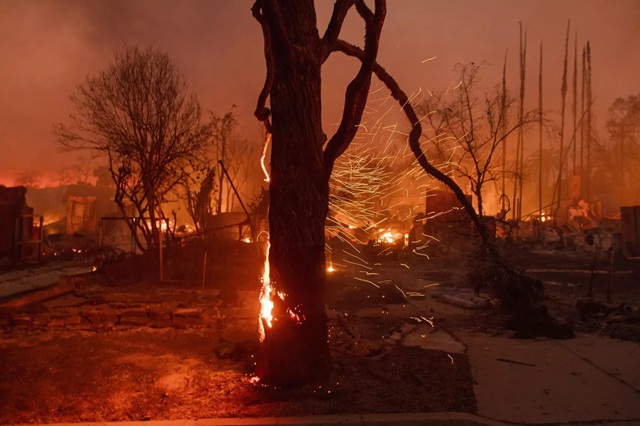
The consequences of rising temperatures were evident throughout 2025. Europe experienced record wildfire emissions, the combined sea ice at both poles fell to historic lows in February, and deadly weather events, such as Hurricane Melissa in the Caribbean and catastrophic monsoon floods in Pakistan that killed over 1,000 people, were worsened by climate change. ECMWF cautioned that even temporary exceedances of the 1.5-degree limit could drive longer and more severe heatwaves, more intense storms, and unprecedented flooding events worldwide.
Despite the mounting evidence, climate science faces growing political opposition. Last week, former U.S. President Donald Trump, who has repeatedly dismissed climate change as a “con job,” withdrew the United States from multiple U.N. scientific bodies, including the Intergovernmental Panel on Climate Change. The global scientific consensus remains clear: climate change is real, primarily driven by human-caused greenhouse gas emissions from fossil fuels, and the risks are escalating at an alarming pace.









