Eighty years after the world’s first nuclear detonation, the National Security Archive (NSA) has released a new collection of declassified documents, eyewitness accounts, and rare historical footage that provide a stark reminder of the long-lasting and far-reaching consequences of the Trinity Test conducted on July 16, 1945. The detonation, carried out in the remote desert of New Mexico as part of the top-secret Manhattan Project, marked the dawn of the atomic age but also unleashed a legacy of radioactive contamination and public health concerns that continue to reverberate to this day.
The NSA’s newly released materials include memoranda, scientific reports, and personal observations by some of the most prominent figures involved in the nuclear project, including James B. Conant, president of Harvard University and key science advisor. In a dramatic firsthand account, Conant described witnessing the explosion as a moment of overwhelming intensity, writing, “The whole sky [was] suddenly full of white light like the end of the world… The enormity of the light and its length quite stunned me.” This visceral recollection is one of many documents in the NSA collection that offer a rare, unfiltered glimpse into the thoughts of those who stood at ground zero of a transformative and terrifying moment in human history.

The Trinity Test was the first full-scale detonation of a plutonium implosion device, the same design used weeks later in the bombing of Nagasaki. At the time, scientists and military leaders were primarily focused on ensuring the success of the weapon as a means to end World War II. However, documents now declassified and published by the NSA show that concerns over environmental and health impacts were raised before the test, particularly regarding the radioactive fallout that might spread from the blast site. Scientists from Los Alamos, including J. O. Hirschfelder and John Magee, warned that fallout could deposit dangerous levels of radiation in nearby towns and potentially require evacuations. Despite these warnings, General Leslie R. Groves, head of the Manhattan Project, prioritized secrecy and mission success over public safety, although he did approve contingency plans for evacuation and radiation monitoring.
The explosion, which occurred just before dawn, released an estimated 21 kilotons of explosive energy—though later assessments suggest it may have been as high as 24.8 kilotons—and produced a fireball hotter than the surface of the sun. Fallout from the test was not limited to the immediate area. According to a Los Alamos Laboratory report cited by the NSA, a band of high radioactivity covered an area approximately 100 miles long and 30 miles wide, stretching northeast from the detonation site. Measurable levels of gamma radiation were found as far away as Santa Fe, Las Vegas, and Raton in New Mexico, and even Trinidad, Colorado, located 260 miles from ground zero.
One of the most troubling aspects highlighted in the NSA release is the extent to which nearby populations were exposed to radioactive fallout without their knowledge or consent. Families such as the Ratliffs, who lived close to the site in what became known as a “Hot Canyon,” were exposed to high levels of radiation. Medical teams from Los Alamos later visited the family and others, checking on their health discreetly. Although no immediate illnesses were reported, animals in the area—particularly cattle on the Chupadera Mesa—showed clear signs of exposure, including beta burns on their skin, indicating that they had been caught in the open during the radioactive dust fallout.
In the years that followed, the Atomic Energy Commission funded a systematic research effort led by scientists at the newly established Atomic Energy Project at UCLA. With the support of the NSA’s documentation, the public now has access to the findings of these early studies, which remained obscure and difficult to access for decades. The initial 1948 survey examined over 1,100 square miles of land, confirming widespread but uneven contamination. Particularly high levels of plutonium were found on the Chupadera Mesa, where some soil samples contained as much as 0.107 micrograms of plutonium per square foot. A 1957 follow-up study revealed that the radioactive contamination had not diminished significantly due to natural erosion, indicating the long-term persistence of the hazard.
These findings were unsettling to the scientific community. Although the reports cautiously noted that immediate danger to humans and livestock was limited outside the immediate blast area, they also warned that the long-term effects of low-level contamination were unknown and potentially dangerous. A 1951 report from UCLA expressed concern about airborne alpha emitters, presumably plutonium, which could be inhaled and accumulate in the lungs. The report acknowledged that while external exposure levels appeared low, internal exposure through inhalation or ingestion could pose serious health risks over time.
Decades later, a major study conducted by the Centers for Disease Control and Prevention in 2010, known as the Los Alamos Historical Document Retrieval and Assessment (LAHDRA) project, reinforced these concerns. It found that public exposure rates from the Trinity test exceeded modern safety standards by factors of up to 10,000. However, due to limited data and the passage of time, the study stopped short of making definitive conclusions about health outcomes. This gap was partly addressed by the National Cancer Institute, which undertook its own study of the health effects of the Trinity fallout. According to their findings, five counties in New Mexico—Guadalupe, Lincoln, San Miguel, Socorro, and Torrance—accounted for more than 70% of projected excess cancer cases, particularly thyroid cancer. The institute estimated that nearly 10% of thyroid cancer cases among the state’s 1945 population could be attributed to fallout exposure.
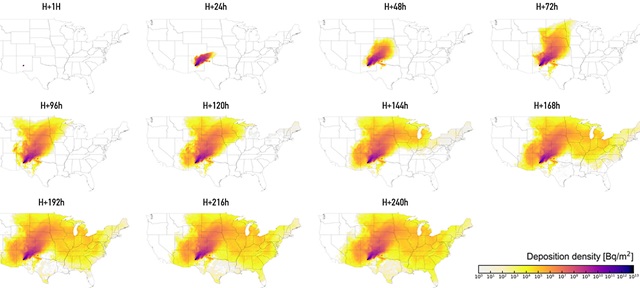
Despite mounting scientific evidence, residents of New Mexico—often referred to as “downwinders”—remain excluded from compensation under the 1990 Radiation Exposure Compensation Act (RECA), which provides restitution to individuals exposed to nuclear testing and uranium industry activities. This exclusion persists even though 28 of New Mexico’s 33 counties, including several Native American tribal areas, experienced radioactive fallout levels higher than other U.S. counties that are covered by the act. Socorro County, where the test occurred, recorded the fifth-highest deposition of radioactive material in the entire country. Although the U.S. Senate has passed legislation to extend RECA coverage to these communities, it has been stalled in the House of Representatives due to opposition from Speaker Mike Johnson (R-LA).
The NSA’s release not only deepens public understanding of the environmental and health consequences of the Trinity Test but also raises critical questions about justice, accountability, and scientific transparency. While the test marked a turning point in world history, ushering in the nuclear age and altering the course of global conflict, its legacy is still deeply felt in New Mexico, where residents continue to advocate for recognition and redress. As these newly available documents make clear, the full story of Trinity is not one of triumph alone—it is also a cautionary tale of overlooked risks, governmental secrecy, and a decades-long struggle for the truth.