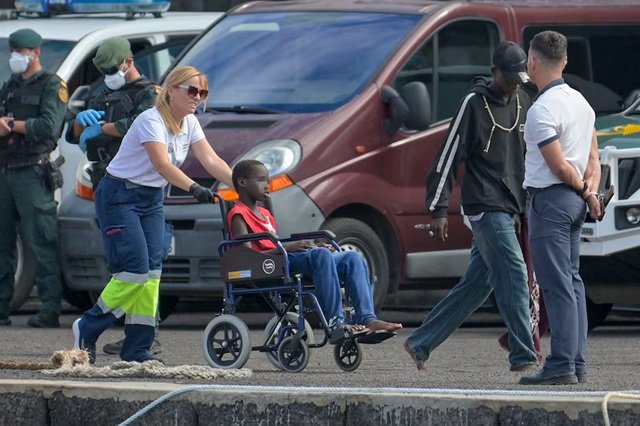
Senegal has re-emerged as the principal departure point for migrants attempting the dangerous Atlantic crossing to Spain’s Canary Islands, as economic hardship, political disillusionment and the decline of traditional fishing livelihoods combine to drive thousands of young people towards the sea. The scale of the latest surge is striking: at least 62 of the 102 migrant boats that reached the island of El Hierro during October and the first 13 days of November came from Senegal, according to figures reported by El País.
The arrivals mark a dramatic reversal after two years of relative calm along the route. El Hierro received 14,816 migrants during 2026, including 11,296 between 1 October and 13 November alone. By comparison, only 3,520 people arrived between January and September. The island’s total for 2026 has also already exceeded the 10,625 arrivals recorded throughout 2025.
Several immediate circumstances have contributed to the increase. September, October and November are traditionally favourable months for departures, as the rainy season ends, temperatures remain high and Atlantic waters are often relatively calm. This year, however, the usual seasonal pattern has coincided with a temporary reduction in coastal surveillance during the Dakar Youth Olympic Games, held from 31 October to 13 November.
Boubacar Seye, president of the NGO Horizons sans Frontiers, told El País that young people and those organising departures recognised the opportunity created by the security deployment for the Games. Around 10,000 police officers and gendarmes were assigned to Dakar, Saly and Diamniadio, the three host cities. Saliou Diouf, president of the Boza Fii association, said organisers of the crossings understood when enforcement resources were being redirected and adjusted their activities accordingly.
The departures have also spread across Senegal’s coastline rather than being concentrated in one location. Boats have left from Kafountine and Ziguinchor in the south, as well as Saint-Louis in the north, with departures reported from areas including Sine Saloum, Mbour, Kayar, Mboro and Potou. In Saint-Louis, young people are closely following the journeys through WhatsApp groups, where photographs shared by those who have reached the Canary Islands are encouraging others to consider making the crossing.
But the temporary factors affecting surveillance and sea conditions explain only the timing of the surge. The deeper causes lie in the country’s economic difficulties and the disappointment of a generation that voted for political change in 2024 but sees few improvements in its circumstances.
The election brought the Pastef party to power on promises associated with sovereignty, pan-Africanism and left-wing politics. Yet Senegal is now facing a severe fiscal crisis, with public debt estimated at approximately €42 billion, equivalent to 132 per cent of gross domestic product. Political tensions between the government and parliament have obstructed efforts to secure an International Monetary Fund assistance package and pursue debt restructuring. The state is struggling to pay suppliers, while foreign investment has fallen sharply.
“The economy has stalled,” Seye told El País, describing chronic unemployment, rising prices and a lack of prospects for young people. He argued that the political expectations created in 2024 have given way to widespread disappointment. Ibrahima Diouf, head of training at the Diocesan Delegation for Migration in Mbour, similarly said young people had supported the new political leadership in the hope of meaningful change, but had yet to see improvements in their lives.
The employment figures illustrate the scale of the challenge. Official youth unemployment stands at 23.5 per cent, according to Senegal’s statistical agency. Each year, approximately 160,000 young people enter a labour market unable to absorb them all, while average monthly salaries remain below €200 and living costs continue to rise. For many, the prospect of finding secure employment at home appears increasingly remote.
The crisis in artisanal fishing has added another powerful incentive to leave. For at least two decades, Senegalese fishermen have reported declining fish stocks and increasingly poor catches, a situation they associate with the extensive presence of industrial fishing vessels and foreign trawlers, including those from Turkey, China and Spain. Restrictions on access to Mauritanian fishing waters have further reduced the options available to small-scale operators.
The consequences are particularly significant in Saint-Louis, where more than 5,000 fishing boats are registered. Only 500 are legally authorised to operate in Mauritanian waters under the bilateral agreement. Fishermen entering without permission risk having their catches confiscated, being imprisoned or facing the use of firearms. Offshore gas extraction projects have also created exclusion zones that further restrict access to traditional fishing grounds.
As Mohamed Camara, a young man from Saint-Louis, explained to El País, some of the boats now being used for migration belong to fishing families whose livelihoods can no longer sustain them. Their experience at sea gives them the navigational knowledge needed to attempt the crossing, turning vessels once used to support coastal communities into instruments of migration.
The trend is not confined to Senegal. At least 31 boats departing from neighbouring Gambia reached El Hierro during October and November. There, unemployment and limited opportunities are compounded by growing political and economic tensions ahead of presidential elections scheduled for 5 December. Electricity shortages have caused blackouts lasting as long as 48 hours since June, while protests in September were met with a forceful police response. Businesses have been forced to close, and fishermen have struggled to preserve their catches without reliable refrigeration.
The latest departures therefore reflect more than a favourable season or a temporary gap in coastal enforcement. They expose the pressures confronting young people in communities where employment is scarce, traditional livelihoods are weakening and political promises have yet to translate into tangible improvements. With the Atlantic crossing remaining perilous, the growing number of departures also points to the human cost of a crisis that cannot be explained by border surveillance alone.