by Durga Velayudham
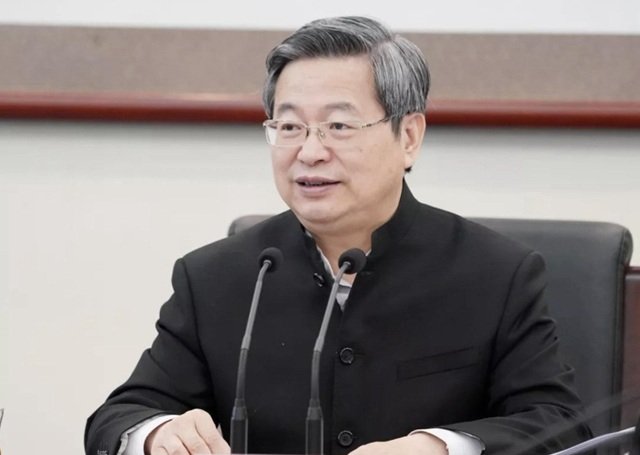
If the Chinese espionage game is indeed at work in the controversy surrounding Nvidia’s chief executive, Jensen Huang, a Taiwanese-born technology mogul, it would rank among the most consequential intelligence stories of the modern technological age. It would be a game of extraordinary strategic value, potentially comparable in historical significance to the operation undertaken by the British botanist Robert Fortune in nineteenth-century China. Working for the East India Company, Fortune travelled through China’s tea-growing regions, sometimes disguised as a Chinese merchant, and secretly collected tea plants, seeds and the knowledge of tea processing. In 1851, he introduced thousands of tea plants and seeds into British-controlled India, helping transfer an industry that had long been dominated by China to the British colonial economy. The consequences eventually extended to Ceylon, now Sri Lanka, where tea became one of the foundations of the colonial economy. The historical comparison is tempting, although the contemporary allegations concerning Nvidia remain unproven. US authorities have not established that Alice Huang, a Chinese businesswoman associated with an Nvidia business partner, was recruited by China’s Ministry of State Security. Nor has Reuters independently verified the reported allegations. Yet the controversy offers an extraordinary entry point into understanding the man behind China’s intelligence establishment. Chen Yixin, the Minister of State Security, is worth examining not as a conventional master spy but as a political strategist whose understanding of national security increasingly encompasses technology, industrial independence, artificial intelligence and the global competition for economic power.
Born in September 1959 in Taishun County, Zhejiang Province, Chen’s early life offered little indication that he would eventually lead one of the world’s most secretive intelligence organisations. During the final years of the Cultural Revolution, in July 1976, he was sent to work as a rural youth in Zhangcun Commune in Yunhe County. He was sixteen. Two years later, he entered Lishui Normal College, where he studied physics. His subsequent entry into Communist Youth League activities marked the beginning of a career that would be shaped less by scientific research than by political organisation and administration. He joined the Communist Party in 1982 and gradually moved through the provincial party apparatus. His political formation in Zhejiang became particularly important when Xi Jinping arrived in the province. Between 2002 and 2007, Chen worked within the provincial leadership under Xi, developing a relationship that would prove consequential for his subsequent advancement. He later served as party secretary of Jinhua and Wenzhou and became a member of the Zhejiang provincial party standing committee. Unlike several intelligence chiefs elsewhere, Chen did not emerge from a career in clandestine operations, military intelligence or counterespionage. His rise was built through party administration, political management and his association with the country’s future paramount leader.
His transfer to Beijing in 2015 marked an important change in his career. He became deputy director of the General Office of the Central Leading Group for Comprehensively Deepening Reform, one of the principal mechanisms through which Xi Jinping sought to coordinate his domestic reform programme. He subsequently became party secretary of Wuhan in 2016 and deputy party secretary of Hubei. Wuhan would later become the centre of the COVID-19 outbreak, giving Chen an unexpected return to national prominence. In February 2020, after public anger intensified over the authorities’ handling of the outbreak and the death of doctor Li Wenliang, Beijing sent Chen back to the city. He was not a medical specialist. His assignment was political. The central leadership needed someone capable of imposing discipline, restoring administrative control and reinforcing the authority of the party at a moment when public confidence had been severely damaged. The contemporary description of him as the man with the emperor’s sword captured the perception that he had arrived with exceptional authority delegated from Beijing. The phrase was journalistic rather than an official designation, but it conveyed something important about his position. Chen was trusted to enforce the centre’s instructions during a crisis that had become a test of political credibility as much as public health administration.
His experience in Wuhan was only one part of a much wider security career. In March 2018, he had become secretary-general of the Central Political and Legal Affairs Commission, the Communist Party’s principal coordinating institution for the police, courts, prosecutors and other political-legal organisations. In this capacity, he became closely involved in the nationwide anti-organised-crime campaign known as Saohei. Although presented as an effort to dismantle criminal networks and their political protection, the campaign also provided a mechanism for investigating corruption and misconduct within law-enforcement institutions. In July 2020, Chen announced an education and rectification campaign intended to strengthen political discipline throughout the political-legal apparatus. He compared the exercise to the party rectification campaigns associated with Yan’an. The scale was considerable. Millions of personnel across the police, judicial and related institutions were drawn into the process. These experiences matter because they reveal the administrative philosophy Chen subsequently brought to the Ministry of State Security. He regarded institutional loyalty, political discipline and operational effectiveness as inseparable. His appointment as Minister of State Security on 30 October 2022 therefore represented more than the promotion of a senior party official. It placed a trusted political administrator at the head of an organisation whose responsibilities had expanded significantly under Xi Jinping.
One of the most revealing aspects of Chen’s leadership is his insistence that intelligence work must anticipate threats rather than merely respond to them. In July 2023, he called for China to use big data, blockchain and artificial intelligence to strengthen its ability to detect espionage. He argued that the country must proactively defend itself against spies. This was not simply a call for more surveillance. It reflected an understanding that contemporary intelligence competition increasingly operates through financial transactions, commercial relationships, digital infrastructure, scientific research and technological supply chains. Intelligence agencies can no longer concentrate exclusively on diplomats, military installations and traditional sources of classified information. The movement of advanced computer chips, access to research laboratories, ownership structures of technology companies and the transfer of industrial knowledge can carry strategic implications comparable to those of conventional military secrets. Chen’s emphasis on technological tools suggests that he wants the MSS to develop a more anticipatory model of counterintelligence, one capable of identifying patterns across enormous quantities of information. The distinction between intelligence collection and economic security becomes increasingly difficult to maintain under such a model.
His thinking becomes clearer in an article published in the Communist Party’s theoretical journal Qiushi on 15 April 2024. Entitled Fully Implement the Overall National Security Outlook, it offered an unusually comprehensive account of the relationship between China’s political security and its technological ambitions. Chen argued that national security was the foundation of national rejuvenation. He placed political security at the centre of the country’s wider security framework and called for greater technological self-reliance, stronger mechanisms against sanctions and more effective protection against external interference. Importantly, he extended the discussion beyond conventional security institutions. Artificial intelligence, data and emerging technologies were identified as areas requiring greater attention. This is significant because Chen was not writing as an industrial scientist or technology entrepreneur. He was articulating the security implications of China’s technological development from the perspective of its principal civilian intelligence institution. His argument was that technological dependence creates strategic vulnerability. A country that cannot manufacture critical components, control essential infrastructure or protect its technological knowledge may find its political and economic choices constrained by foreign powers.
This thinking intersects directly with China’s struggle to master semiconductor production. The contest is not simply about producing faster processors or manufacturing more chips. It concerns control over an entire technological ecosystem, including advanced lithography equipment, electronic design automation software, specialised materials, manufacturing machinery, intellectual property and the computing infrastructure required to develop artificial intelligence. American restrictions on advanced semiconductor exports have exposed China’s dependence on foreign technology, particularly in the most sophisticated manufacturing processes. Beijing has responded with enormous state investment, industrial subsidies, research programmes and efforts to build domestic alternatives. The results have been substantial, although uneven. Huawei’s return to advanced smartphone processors through its collaboration with Semiconductor Manufacturing International Corporation demonstrated that restrictions could slow technological progress without necessarily stopping it. Chinese manufacturers have also expanded their capacity in mature-node semiconductors, which remain essential for automobiles, telecommunications, industrial machinery and power systems. Yet China has not won the semiconductor contest. It continues to face serious difficulties in advanced lithography and several categories of high-end manufacturing equipment. A 2025 assessment by the US-China Economic and Security Review Commission found that China had achieved major advances in foundational semiconductor production but remained behind the technological frontier in advanced manufacturing. The distinction between progress and technological supremacy is essential.
Chen’s significance lies not in any demonstrated personal role in designing chips or directing semiconductor factories but in the way his security doctrine reinforces the political priority attached to technological independence. The MSS operates within a broader party-state structure in which intelligence, industrial policy, research security and economic planning increasingly intersect. China’s ambition to develop domestic alternatives to Nvidia’s advanced processors, reduce dependence on foreign semiconductor equipment and build competitive artificial intelligence systems is therefore relevant to the national security thinking Chen has articulated. Artificial intelligence is particularly important because it changes the scale and speed of intelligence analysis. It can help identify relationships between seemingly unrelated individuals, transactions and organisations. It can support the analysis of satellite imagery, foreign-language communications, financial records and cyber activity. It can also create new vulnerabilities through data manipulation, automated surveillance and the theft of intellectual property. Chen’s public statements demonstrate an awareness of these emerging dimensions. They do not, however, establish that he personally directs China’s semiconductor strategy or that the MSS is responsible for particular commercial or technological breakthroughs.
His relationship with foreign intelligence leaders offers another glimpse into the changing role of the ministry. In May 2023, Chen met William Burns, then director of the Central Intelligence Agency, during a period of considerable tension between Washington and Beijing. Burns was the most senior American official from the Biden administration to visit China following the surveillance balloon incident. According to American officials cited in contemporary reporting, Burns wanted to maintain communication between the intelligence establishments and prevent misunderstandings from escalating into a wider confrontation. The meeting was unusual because intelligence chiefs rarely conduct their business in public view. It also demonstrated that competition and communication can coexist between rival intelligence services. The relationship was not confined to Washington. In November 2023, Chen travelled through Southeast Asia, meeting security and intelligence counterparts in Vietnam, Cambodia and Thailand. Discussions included intelligence cooperation, regional stability, transnational crime and the protection of overseas interests. These engagements reflected the growing international dimension of the MSS and its role in supporting China’s wider diplomatic and strategic relationships.
Perhaps the most visible change under Chen has been the transformation of the MSS’s public communication. For decades, the ministry maintained an almost impenetrable public profile. Its activities were rarely discussed openly, and its institutional identity remained distant from ordinary Chinese citizens. In July 2023, it launched an official WeChat account, beginning a sustained campaign of public education about espionage and national security. The ministry subsequently published accounts of alleged foreign intelligence operations, historical intelligence episodes and warnings about recruitment approaches by foreign agencies. It even introduced comic material based on purported real cases, seeking to make counterespionage accessible to younger audiences. This was an unusual development for an intelligence organisation traditionally associated with secrecy. Yet it was consistent with Chen’s earlier interest in political communication and the use of social media to influence public opinion. He appears to recognise that national security is not merely an activity conducted by professionals behind closed doors. It is also a political narrative through which the state seeks to mobilise citizens, institutions and businesses. The approach has attracted criticism because broad counterespionage messaging and expanded legal definitions can create uncertainty for foreign researchers, companies and ordinary commercial activity. Nevertheless, it reveals a significant shift in the ministry’s public role.
Chen’s own language provides a final clue to his leadership philosophy. Addressing newly promoted young officials in December 2023, he urged them to aspire to accomplish great things rather than seek high office. He warned against empty performance, individualism and arrogance, and stressed the importance of practical work, institutional cooperation and continuous learning. One of his memorable expressions was that empty tricks were crooked tricks. The statement may sound like conventional party rhetoric, but it is revealing when considered against his career. Chen is an administrator who places considerable emphasis on discipline, political reliability and institutional coordination. He is not publicly known for dramatic intelligence operations or the cultivation of a personal mythology around espionage. His influence is more visible in the institutional direction of the organisation he leads.
The controversy surrounding Jensen Huang and Alice Huang, reported in November 2026, makes the strategic stakes of this environment particularly apparent. Reuters reported that American authorities had investigated allegations that Alice Huang was recruited by the MSS to obtain sensitive information or gain access to Nvidia’s business relationships. Reuters also reported that the US Department of Justice had not reached a conclusion on whether she was a Chinese spy, and that Beijing denied the allegation. No public evidence has established that Jensen Huang knowingly assisted Chinese intelligence or that the MSS successfully penetrated Nvidia through him. The distinction must be maintained. Yet the reported investigation illustrates why access to semiconductor executives, technology distributors, investment networks and artificial intelligence companies has become a matter of national security. The contest is not necessarily about stealing a single secret processor. It is about understanding the commercial relationships, technological decisions and industrial dependencies that determine who will possess the computing power of the future.
Robert Fortune’s nineteenth-century journey through China’s tea districts offers a historical parallel, but not an exact equivalent. Fortune transferred living plants and specialised knowledge across imperial boundaries, helping Britain establish a competing tea industry in India and Ceylon. The modern technological contest involves far more complex systems, multiple states and competing corporations. Its outcome cannot be determined by espionage alone. Industrial research, education, capital investment, engineering expertise and access to global markets remain decisive. Chen Yixin’s importance is that he represents a Chinese leadership increasingly determined to treat all these dimensions as questions of national security. Whether that approach will make China technologically independent, or whether it will produce an excessively securitised environment that discourages innovation and international cooperation, remains an open question. What is already evident is that the head of China’s intelligence service is no longer concerned only with discovering what foreign governments are doing. He is operating within a political system that increasingly regards technological knowledge, industrial capacity, data and artificial intelligence as strategic assets. Understanding Chen Yixin therefore offers a useful way of understanding the changing character of Chinese intelligence itself.