German Chancellor Friedrich Merz has called for Germany to have a guaranteed place in any future negotiations involving Russia, Ukraine and the United States, while demanding that all European Union member states contribute fairly to Ukraine’s financial support. His positions, presented at an informal EU summit in Dublin on Friday, have exposed disagreements among European governments over diplomatic representation, financial commitments and the bloc’s next long-term budget.
Merz insisted that Germany must be represented if Europe enters negotiations with Moscow over a possible settlement of the Ukraine war. “That is absolutely clear,” he said. Rejecting Moscow’s stated intention to discuss the future of European security arrangements, he argued that such an architecture already existed, pointing particularly to NATO.
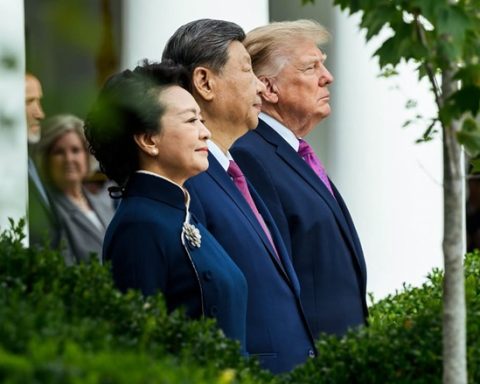
The chancellor also urged US President Donald Trump not to negotiate Ukraine’s future without the involvement of Kyiv or discuss European security without European participation. Trump is due to meet Russian President Vladimir Putin and Chinese President Xi Jinping in China next week, an encounter that has prompted concern among European leaders about the possibility of decisions affecting Ukraine being made without their involvement.
“Please, no surprises! Stay on Team Europe and on Team Ukraine!” Merz said, calling for Washington to maintain coordination with its European allies. He stressed that there should be “no discussion about Ukraine without Ukraine, and no discussion about Europe without Europe”.
European leaders, however, have yet to agree on who should represent the bloc in any negotiations with Putin. US special envoy Steve Witkoff announced late on Thursday that European representatives would participate in the next round of discussions involving Russia, Ukraine and the United States. The announcement was welcomed by EU leaders, but disagreements over the composition of the European delegation remain.
EU foreign policy chief Kaja Kallas, who is also a vice-president of the European Commission, said she recognised that Russia did not want her involved but argued that Europe had no influence over Moscow’s choice of negotiators. She said she was prepared to work with foreign ministers to assemble a strong negotiating team.
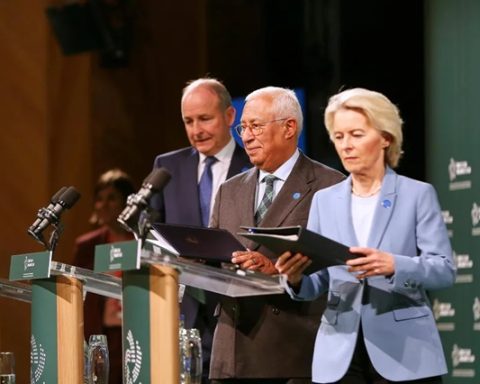
European Council President António Costa is another potential representative, with smaller EU member states favouring an official figure capable of speaking for the entire bloc. Merz, however, has previously questioned Costa’s suitability as an intermediary with Moscow. He now favours the E3 grouping of Germany, France and Britain, describing the arrangement as effective, while saying Italy and Poland could also be included.
Financial disagreements have added to the tensions. In late 2025, the EU agreed on a €90 billion package for Ukraine, financed through joint borrowing after member states failed to reach agreement on using frozen Russian assets. The Czech Republic, Hungary and Slovakia agreed to the arrangement on condition that they would not bear a share of the substantial interest costs.
The European Commission is now considering a further €45 billion for Ukraine’s military and government budget for next year. Merz has rejected arrangements that allow individual countries to avoid contributing, arguing that support for Ukraine serves the security interests of all Europeans.
In a letter to EU leaders last week, he made collective financing of Ukraine a condition for progress in negotiations over the bloc’s next multiannual budget, covering 2028 to 2034. Together with Denmark, Finland, Austria, Sweden and the Netherlands, Germany is also pressing for a smaller budget that allocates proportionately less funding to agriculture and regional development and more to competitiveness and defence.
Germany is the EU’s largest net contributor, although its export-oriented economy also benefits substantially from the single market and common currency. Merz’s spending proposals have faced resistance from countries including Poland and Romania, which receive significant EU funding. Slovak Prime Minister Robert Fico accused the German chancellor of “blackmail” over his decision to link Ukraine financing with the wider budget negotiations.
Lucas Guttenberg, director of the Europe’s Future programme at the Bertelsmann Foundation, supported Merz’s approach, arguing that linking Ukraine’s long-term financing to the next EU budget was justified because joint borrowing would generate billions of euros in interest payments over several years.