In the past four months, following the ousting of the Sheikh Hasina government in August and the rise of a new regime in Bangladesh, attacks on Hindus have seemingly become commonplace. Hardly a day goes by without media reports of temples being vandalized, Hindus assaulted, and other forms of targeted violence.
Hate Campaign Against Hindus in Bangladesh
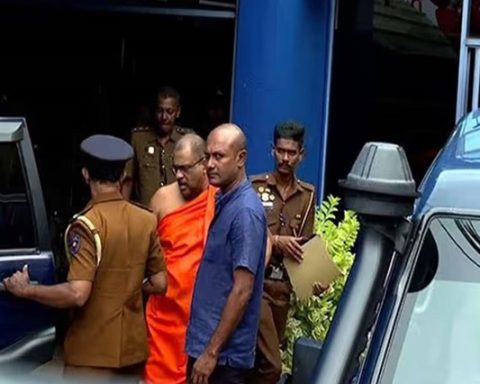
Currently, a hate campaign against Hindus appears to be flourishing under the government led by Nobel laureate Mohammed Yunus. Recently, Hindu monk Chinmoy Krishna Das Prabhu was arrested on sedition charges. Following this, two more Hindu monks were also taken into custody.
Moreover, there is now a growing demand to ban ISKCON, an organization dedicated to promoting Hindu culture and philosophy, from operating in Bangladesh. These developments clearly suggest that Islamic extremists, harboring deep animosity towards Hindus, are driving a concerted “exterminate the Hindus in Bangladesh” campaign.
Dwindling Hindu Population in Bangladesh
In 1947, Hindus made up approximately 23% of Bangladesh’s population. Today, this figure has dwindled to just 8%, as many Hindus have emigrated to India and other countries to escape persecution. Despite this decline, Islamic extremists and some misguided factions in Bangladesh seem intent on further reducing the Hindu population.
Parallels Between the Plight of Hindus and Tibetans
The reality for Hindus in Bangladesh is grim: they live in fear, frustration, and helplessness, unsure if they can expect effective support from the international community or people of other faiths worldwide.
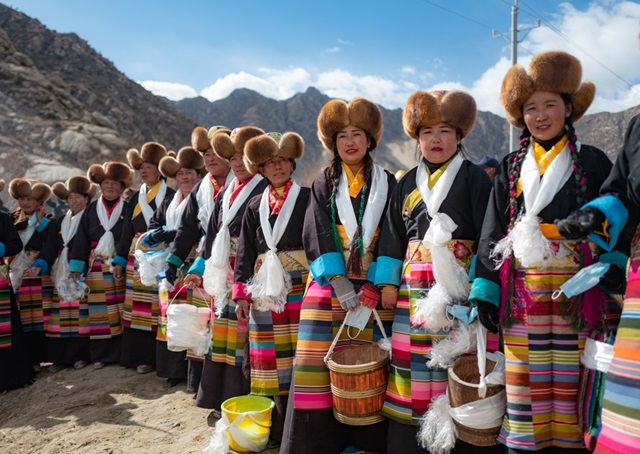
The plight of Hindus in Bangladesh today mirrors the situation faced by Tibetans when China invaded and occupied Tibet approximately seven decades ago. Despite resistance from Tibetans, who lacked a viable military force, China suppressed the uprising with brutal force and now rules Tibet under a strict authoritarian regime. Many Tibetans fled as refugees to India and other parts of the world.
The commonality in the plight of both groups lies in the global community’s indifference. The silence of the international conscience is striking in both cases.
India’s Approach to Bangladesh Hindus and Tibetans
As a neighboring country, India shares close ties with both Tibet and Bangladesh. When China invaded Tibet, India refrained from protesting and ultimately recognized Tibet as a part of China—a historic mistake for which history has not been kind to India.
In contrast, the persecution of Hindus in Bangladesh is an internal matter involving the government’s tacit complicity and the unchecked actions of Islamic extremists. Despite sporadic protests from the Indian government, there has been no concrete action beyond verbal condemnations. This lukewarm response mirrors India’s initial inaction regarding Tibet.
Contrasting Responses of Hindus, Tibetans, and Muslims
Unlike the subdued reactions of Hindus in Bangladesh and Tibetans, one must recall the global protests by Muslims when Prophet Mohammed was criticized in some European countries. This contrast highlights the philosophical and cultural differences: Tibetans, rooted in Buddhism’s principles of non-violence, and Hindus in Bangladesh, with similar values, have often become vulnerable targets. Their peaceful dispositions starkly differ from the assertive and organized responses often observed in the Muslim community.
What Lies Ahead?
The pressing question remains: will the future of Hindus in Bangladesh mirror the uncertain fate of Tibetans in occupied Tibet and as refugees worldwide?
The United Nations, ostensibly a global peacekeeping body, has been conspicuously silent, reducing itself to the role of a passive observer regarding the plight of both communities.
Ultimately, it appears that the world is increasingly dominated by aggressors, extremists, and groups inclined towards violence—a sobering and distressing reality.