Editorial
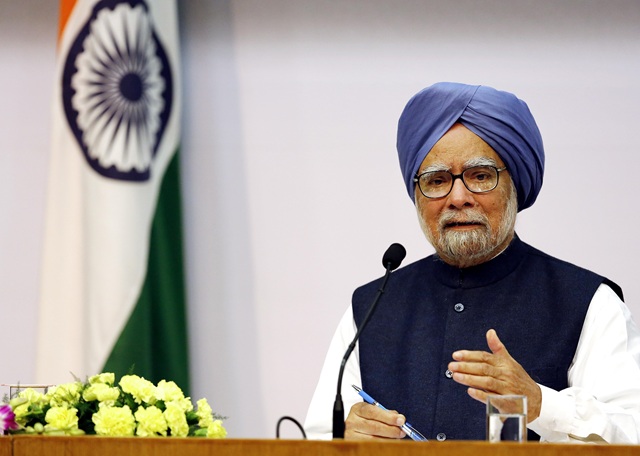
The demise of Dr. Manmohan Singh at the age of 92 signifies the conclusion of a pivotal chapter in the chronicles of Indian politics and economics. As a leader of remarkable vision, Singh’s contributions to the economic fabric of India are profound, and his legacy will be examined and revered for generations to come. His ascent from a humble village in Punjab to the zenith of political power exemplifies his intellectual prowess, moral integrity, and steadfast dedication to the nation.
Dr. Singh’s tenure as Finance Minister from 1991 to 1996 represented a transformative epoch for India, a period that fundamentally reshaped the nation’s economic framework. Confronted with a dire balance-of-payments crisis, Singh implemented comprehensive reforms that liberalized the economy, facilitating foreign trade and private investment. In his historic budget address on July 24, 1991, he invoked the words of Victor Hugo: “No power on earth can stop an idea whose time has come.” This assertion encapsulated his conviction in India’s potential to emerge as a formidable economic power, a sentiment that resonated profoundly with a populace eager for transformation.
The reforms instituted by Singh dismantled the License Raj, a bureaucratic system that had long stifled entrepreneurship and innovation. By alleviating regulatory burdens and promoting foreign direct investment, Singh set India on a trajectory toward becoming one of the world’s most rapidly expanding economies. Under his stewardship, India achieved an average growth rate of nearly 7% during his premiership from 2004 to 2014, a period often heralded as the “India Growth Story.”
Despite these economic triumphs, Singh’s administration was not devoid of challenges. His government faced allegations of corruption and inefficiency, particularly in its latter years. Nevertheless, Singh’s personal integrity remained largely intact. He once remarked, “History would be kinder to me than the contemporary media, or for that matter opposition parties.” This statement reflects his confidence in the enduring impact of his policies and his belief that the veracity of his contributions would ultimately be recognized.
Singh’s fortitude in the face of political adversity is noteworthy. He maneuvered through a political milieu characterized by coalition governance, where the art of consensus-building was paramount. His leadership style, often described as cautious and deliberative, was both a strength and a point of contention. Critics labeled him indecisive, suggesting an overreliance on Sonia Gandhi, the then-president of the Congress party. Yet, his capacity to maintain stability while fostering economic growth is commendable. He recognized that genuine progress necessitates collaboration and dialogue, both within the corridors of power and with the citizenry.
In a speech addressing the complexities of governance, Singh articulated, “Democracy may appear indecisive at times, but once a consensus is reached, the reforms undertaken will be far more durable.” This perspective underscores his commitment to democratic ideals and the significance of collective decision-making in a nation as diverse as India.
Dr. Singh’s vision transcended mere economic growth; he aspired to cultivate an inclusive society where the benefits of development permeated all strata of the population. He underscored the necessity for sustainable development, asserting, “We must ensure that our growth is inclusive and that it addresses the needs of the poor and marginalized.” His emphasis on social equity and poverty alleviation remains pertinent as India continues to confront these enduring challenges.
Singh’s administration implemented several flagship initiatives aimed at poverty reduction, education, and healthcare, including the National Rural Employment Guarantee Act (NREGA) and the Right to Information Act. These programs were designed to empower marginalized communities and ensure that the dividends of economic growth were equitably distributed. His unwavering commitment to social justice and economic equity constitutes a cornerstone of his legacy, reminding us that economic advancement must be accompanied by a sense of social responsibility.
Under Singh’s leadership, India also redefined its role on the global stage. His government actively engaged in international diplomacy, fostering relationships with major powers and participating in global forums. Singh’s vision for India was not merely that of an emerging economy but as a responsible global actor. He articulated this vision in various international arenas, emphasizing the importance of multilateralism and cooperation in addressing global challenges such as climate change, terrorism, and economic inequality.
In a speech at the United Nations, Singh proclaimed, “We must work together to build a world that is more just, equitable, and sustainable.” This clarion call for global cooperation reflects his understanding of the interdependence of nations in an increasingly interconnected world. His tenure witnessed India emerge as a key player in international trade and diplomacy, enhancing its stature as a significant voice in global affairs.
The legacy of Dr. Manmohan Singh is one of profound significance. His contributions to India’s economic transformation, his unwavering commitment to social equity, and his vision for a more inclusive and responsible global role for India will continue to inspire future generations. As we reflect on his life and work, we honor a leader whose intellect and integrity have left an indelible mark on the nation’s history. His ability to navigate the intricacies of governance while championing economic reforms and social justice serves as a guiding light for policymakers and citizens alike. Dr. Singh’s enduring influence will be felt as India continues to evolve and strive for a brighter, more equitable future.