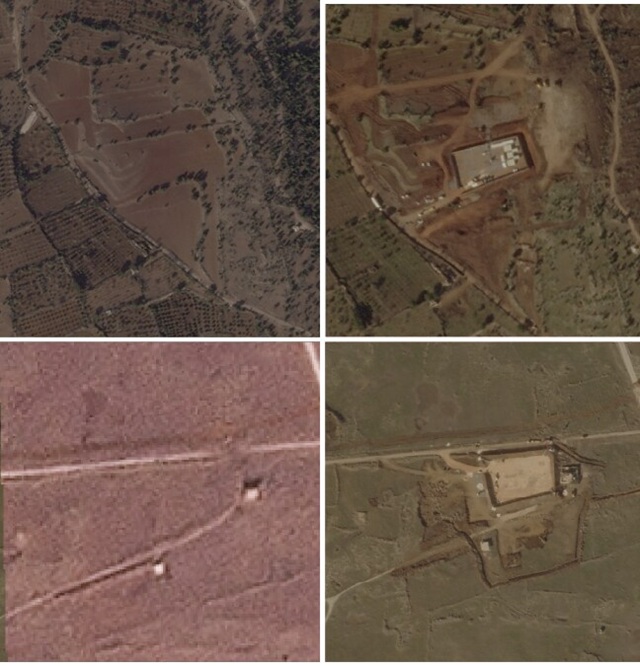
Satellite images and reports from local officials suggest that Israel’s military presence in Syria, initially described as temporary, is becoming increasingly permanent. In the wake of the collapse of President Bashar al-Assad’s regime, Israeli forces have advanced into several Syrian villages, including the town of Jubata al-Khassab, where new military outposts are under construction. The outposts, seen in satellite imagery and corroborated by local officials, appear to signal a long-term Israeli foothold in the area.
“They are building military bases. How is that temporary?” questioned Mohammed Muraiwid, mayor of Jubata al-Khassab, in an interview with The Washington Post. Satellite images show at least two new military bases and the construction of a third base farther south. These bases, linked by dirt roads to the Golan Heights—territory Israel captured in the 1967 war—appear to be designed for forward observation and enhanced visibility.
Since Israel’s troops first entered Syria in December 2024, following Assad’s weakening control over the country, Israel has asserted that the deployment is necessary for securing its northern borders and preventing attacks. Despite initial claims that the military presence was temporary, Israel has shown no indication of withdrawing. Prime Minister Benjamin Netanyahu has stated that the military’s presence is indefinite, driven by security concerns.
Israeli officials claim that their forces are operating within a 90-square-mile buffer zone in southern Syria, which was established by a 1974 ceasefire agreement with Syria. However, Israel has stated it no longer considers the agreement valid due to the collapse of Assad’s government. Local sources report that Israeli troops have not only built new installations but have also engaged in activities such as raiding homes, displacing residents, and setting up checkpoints in previously Syrian-controlled areas.
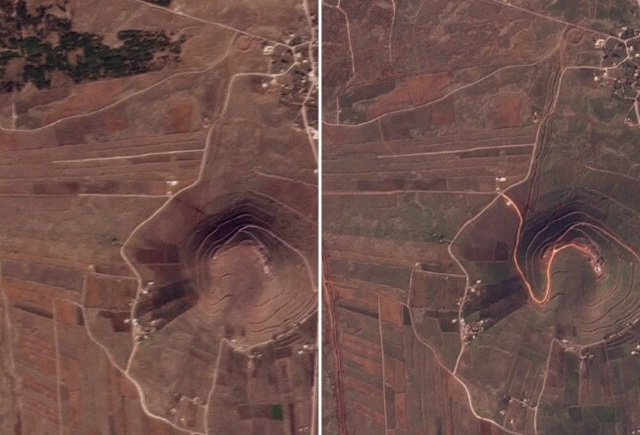
Satellite imagery also reveals a new road built by Israeli forces, stretching across the ceasefire line and providing greater surveillance access. According to William Goodhind, an imagery analyst at Contested Ground, this new road and the military infrastructure being developed suggest that Israel intends to establish a lasting presence, rather than a temporary one.
While Israel asserts that its actions are aimed at securing weapons and preventing attacks, many local residents dispute the justification. “There are no weapons left,” said Muraiwid, describing how locals had previously handed over abandoned weapons to avoid Israeli raids. The construction of military bases, the closure of roads, and the establishment of military outposts continue to raise concerns among Syrian villagers about displacement and the long-term intentions of Israeli forces.
The international community has expressed concern over the situation, with tensions mounting along the Israel-Syria border. Israel’s actions are seen in the broader context of its military operations in Gaza and Lebanon, where the country has taken steps to curb the influence of groups such as Hamas and Hezbollah.