China has raised formal objections to the portrayal of Arunachal Pradesh and Aksai Chin as part of India in Bangladeshi school textbooks and on the official website of the Department of Survey. Chinese diplomats have described this as a “factual discrepancy” and have requested corrections, asserting that the two territories were “incorrectly depicted” as part of India.
The issue arose when a map in the Grade Four Bangladesh and Global Studies textbooks, as well as a map displayed on the Department of Survey’s website, showed territorial boundaries between China and India that China claims were inaccurately marked, particularly concerning Arunachal Pradesh and Aksai Chin.
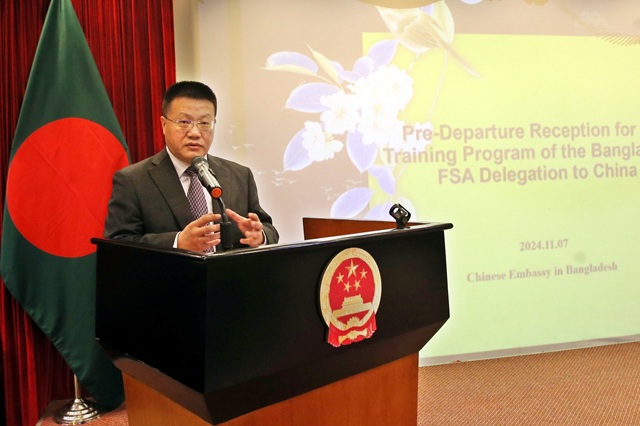
In a letter sent to Bangladesh in November 2024, China urged the Bangladesh government to amend the maps, pointing out that the depictions of these disputed areas were not in line with China’s territorial claims. The disputed region spans the 3,488 km border between India and China, stretching from Ladakh in the west to Arunachal Pradesh in the east.
China controls Aksai Chin in Ladakh, a region seized during the 1962 Sino-Indian war, and claims Arunachal Pradesh as part of its Tibet Autonomous Region. The territorial dispute has been a longstanding source of tension between the two neighboring nations, which have experienced multiple standoffs over the years, most notably a deadly border clash in the Galwan Valley in July 2020 that resulted in casualties on both sides.
In addition to the territorial issue, China has also expressed concern over references to Hong Kong and Taiwan as separate entities in the same textbooks for students in grades nine and ten. Beijing maintains that Taiwan, a self-governed island, is a breakaway province, and has not ruled out using force to reunite it with the mainland. China requested that Bangladesh adhere to the “One China” policy and uphold mutual respect for each other’s sovereignty and territorial integrity.
Bangladesh’s Ministry of Education and the National Curriculum and Textbook Board responded by noting that the printing of new textbooks had already been completed and no immediate changes could be made. In response to China’s pressure, Bangladesh sought to reassure Beijing, indicating that while no adjustments would be made at this time, the issue would be addressed in a coordinated manner later.
“We are maintaining the status quo and not making any changes at this moment,” a government official told The Daily Star, a daily newspaper in Dhaka, indicating a diplomatic balancing act as Bangladesh navigates the sensitive matter with China.