Britain suspected Israel of bugging its embassy in Tel Aviv and launched a covert propaganda campaign against the Israeli government after discovering it had secretly supplied weapons to Argentina during the 1982 Falklands War, newly declassified files show.
The revelations, first published by UK Declassified, provide explosive insight into a behind-the-scenes diplomatic crisis that unfolded as British forces fought to retake the Falkland Islands from an Argentine invasion.
The documents expose how Israeli-supplied aircraft were used by Argentina to sink four British warships, including the Sir Galahad, killing 48 soldiers. Despite repeated denials, Israel had supplied fighter jets and other military equipment—often routed through third-party countries like Peru—to the Argentine junta, a regime known for its brutal repression and anti-Semitism.
Covert Leaks and a Bugged Embassy
As British frustration mounted, Foreign Office officials began suspecting that their communications were being monitored by Israeli intelligence. In an effort to send an indirect warning, officials purposefully held an open-line phone conversation with the British ambassador in Tel Aviv, hoping Israeli agents would overhear growing UK anger.
“We hope the Israeli authorities were listening to this conversation,” noted one memo from senior Foreign Office official David Gillmore.
UK diplomats, deeply distrustful of their Israeli counterparts, believed that official denials were being cloaked in misleading language and half-truths. “The Israelis are accomplished at concealing information they do not want to divulge,” wrote then-ambassador Patrick Moberly in May 1982. “They are making a gigantic effort to pull the wool over our eyes.”
Propaganda as Policy
Unable to secure clarity through traditional diplomatic channels, the Foreign Office turned to the press. Officials began leaking classified intelligence about Israeli arms transfers to outlets such as The Sunday Times and The Financial Times. These leaks were intended both to shame Israel publicly and to pressure international banks into distancing themselves from suspected arms deals.
A particularly detailed leak included information about an Argentine effort to route $50 million through a Panamanian intermediary to Israel Aircraft Industries in Tel Aviv.
After the stories were published, British officials would feign surprise and demand reactions from the Israeli embassy. “At no point have we volunteered information to the press,” UK diplomats told their Israeli counterparts—an outright lie, according to the declassified files.
Israel’s Strategic Calculations
Despite public outcry and diplomatic pressure, Israel remained unmoved. One Israeli official dismissed ideological concerns by asking: “Since when has ideology had anything to do with the sale of arms?”
The files suggest that Israel viewed the Falklands War as an opportunity to deepen its military ties in Latin America and use its influence in Argentina as leverage over the UK, possibly to halt British arms sales to Arab nations.
While some Israeli figures claimed arms sales could help protect Argentina’s Jewish minority, British officials saw little evidence of this. “British public opinion will not understand why you should sell arms to a regime you fear may be anti-Semitic,” Moberly wrote.
The Foreign Office also noted that even prominent British Jews—such as Lord Sieff of Brimpton and Conservative Friends of Israel founder Michael Fidler—were enlisted by Israel to defuse tensions. But UK officials were unconvinced. “The simplest way to end it would be to stop all current arms deliveries,” they responded bluntly.
Still Under Lock and Key
Despite the depth of the released material, key files remain under wraps. The UK Ministry of Defence continues to censor documents relating to Israel’s role in the conflict, and Declassified UK is pursuing their release under the Freedom of Information Act.
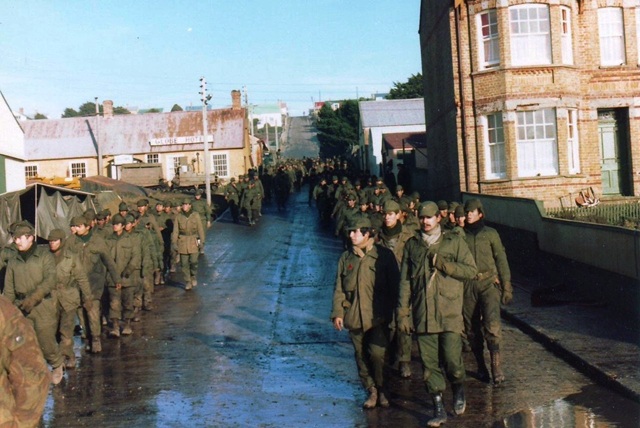
The Falklands conflict, which began 43 years ago today, lasted just 74 days but left a long legacy—not only of lives lost and political transformation in Britain but also of shadowy international dealings and secret diplomatic battles, now coming to light decades later.