by Eric
The history of slavery is multifaceted and far-reaching, often portrayed through a narrow lens that predominantly focuses on African enslavement. However, Chinese immigrants in America also endured various forms of servitude and exploitation that have largely been forgotten, misrepresented, or deliberately ignored. Like others who arrived on American shores, Chinese immigrants came seeking a better life, drawn by the promise of work and opportunity. Most expected to earn wages and improve their circumstances. Indeed, the majority did just that. But for many, especially women and certain classes of labourers, the American dream quickly turned into a nightmare marked by abuse, bondage, and racial discrimination.
Prior to the California Gold Rush in 1848, the Chinese presence in California was minimal, with only 54 recorded immigrants. However, the gold rush dramatically altered the demographics, drawing people from across the globe, including China. To the Chinese, California’s gold-rich mountains became known as “Gam San” or Gold Mountain. Initially, white settlers tolerated the small Chinese population, but as their numbers swelled—reaching over 20,000 by 1853 and comprising 20% of Southern California’s mining population—hostility intensified. The state imposed a $3 monthly tax on Chinese residents and barred them from testifying in court in 1854, effectively removing legal protections and opening the floodgates for unchecked violence and exploitation.
The labour force was overwhelmingly male, and many Chinese immigrants toiled in mines and on the railroads. These workers were often derogatorily referred to as “coolies.” Some managed to start businesses, such as laundries or food services, but opportunities were severely limited by race and immigration laws. Meanwhile, Chinese women suffered the gravest injustices. The few who did arrive in the United States were often sold into sexual slavery. Victims of human trafficking, they were either kidnapped in China or deceived into believing they were being sent to America for marriage or domestic work.
The San Francisco sex trade was the epicentre of this hidden slavery, and by the late 19th century, the city had become the largest slave market for Chinese women in the United States. Establishments such as the notorious Queen’s Room on DuPont Street functioned as public auction houses for enslaved girls. Many of these victims were mere children, sold for amounts ranging from $300 to $3,000. Believing they had signed legitimate contracts for employment, they were instead forced into prostitution. Some were promised marriage to wealthy men; others were compelled to lie at immigration ports, claiming to be reunited with family or husbands, to bypass legal scrutiny.
The deception did not stop there. These women were sometimes sold under instalment plans—much like property—with pimps and madams holding them in indefinite bondage until their “debt” was repaid. Attempts to flee were met with brutal retaliation. Women who escaped and sought sanctuary in churches or from sympathetic citizens were frequently pursued by criminal organisations such as the Tong, who sent assassins—known as “hatchet men”—to recover their human assets and silence their allies. These tragic stories were not hidden in obscure corners; they were documented as early as 1897 by Charles Frederick Holder, whose research exposed the persistence of sexual slavery long after the formal abolition of slavery in 1865.
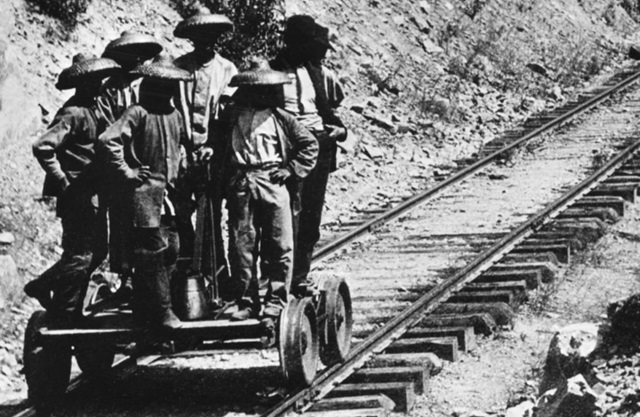
The construction of the Transcontinental Railroad in the post-Civil War era saw another form of exploitation. The Central Pacific Railroad required a large labour force to complete the Herculean task of laying tracks through treacherous terrain, including the Sierra Nevada Mountains and desert expanses. Initially, railroad executives like Leland Stanford, who had campaigned on keeping Asians out of California, were reluctant to hire Chinese workers. When white labourers failed to meet the demand, the company hired fifty Chinese men on a trial basis, assuming they would be inadequate.
To their surprise, the Chinese labourers displayed exceptional work ethic and discipline, earning the nickname “Celestials” due to their spiritual beliefs. Stanford reversed his stance and declared them indispensable. Ultimately, Chinese workers made up 90% of the Central Pacific workforce, performing the most dangerous and arduous tasks. Their average monthly wage was $27 to $30—substantially less than the $35 received by Irish workers—and they were assigned the riskiest duties. Deaths among Chinese workers were frequent, yet no official records were kept. After the railroad’s completion, Chinese civic groups recovered approximately 1,200 bodies for return to China.
In 1867, 3,000 Chinese workers led what became the largest labour strike in American history at the time. They demanded fair wages, improved conditions, and reduced working hours. While their pay was slightly increased, working conditions remained largely unchanged. To prevent escapes, some workers were even chained together—a chilling echo of slavery that persisted despite the legal end of the practice.
The success of the Transcontinental Railroad was a testament to Chinese labour, and yet, recognition was minimal. Instead, resentment grew. As fears that Chinese immigrants were taking jobs from white Americans spread, anti-Chinese sentiment escalated into violent riots. The culmination of these hostilities was the Chinese Exclusion Act of 1882, which barred Chinese labourers from entering the country and imposed strict limitations on those already in residence.
Following the completion of the railroad, Chinese workers sought employment elsewhere, including in the American South. In this post-slavery society, many planters sought cheap labour to replace the freed African American population. Despite federal laws prohibiting slavery, Chinese labourers were subjected to similar conditions. They were brought in under eight-year contracts and treated as indentured servants. In reality, many endured forced labour, intimidation, and confinement, a shadow form of slavery that was tacitly permitted by local authorities and, in some cases, enforced with the help of groups such as the Ku Klux Klan.
Newspaper articles in 1865 and 1866 openly discussed importing Chinese labour for Southern plantations, citing their supposed reliability and success on Cuban sugar estates. While federal immigration officials like R.S. Chilton argued against such practices, loopholes were exploited to bring in Chinese workers. Planters claimed that these labourers had completed their contracts in Cuba and were therefore free to seek employment. This interpretation allowed slavery to flourish in everything but name, as coercion and lack of legal protection kept these men and women in bondage.
The consequences extended across generations. Immigration laws prevented Chinese immigrants from becoming citizens until 1943, effectively denying them political representation and legal security. Their children and grandchildren inherited these restrictions, often growing up in segregated communities and suffering discrimination on par with, and sometimes worse than, African Americans.
Though their contributions to American infrastructure, agriculture, and industry were undeniable, the Chinese in America faced systemic racism, legal exclusion, and physical danger. Their stories of endurance, resistance, and tragedy remain underrepresented in mainstream narratives. The erasure of Chinese slavery from collective memory is not due to its insignificance, but rather to the uncomfortable truths it reveals about America’s complex relationship with race, labour, and immigration.
What remains clear is that Chinese immigrants endured a wide range of injustices under conditions that qualify as slavery in all but official terminology. Whether through sexual exploitation, forced labour, or racially motivated violence, their struggle is a crucial chapter in the broader story of American history. Acknowledging their suffering is not merely a matter of historical accuracy—it is a moral imperative.