
On June 21, 2025, two villagers – Samaiya, a former Maoist who surrendered earlier this year, and Veko Deva, a resident of Empur village – were abducted and subsequently killed by cadres of the Communist Party of India-Maoist (CPI-Maoist), who suspected them to be ‘police informers’, at Empur village under Pamed Police Station limits in Bijapur District in the Bastar division of Chhattisgarh. The killings were carried out hours before the arrival of Union Home Minister (UHM) Amit Shah in Chhattisgarh, where he was scheduled to hold meetings reviewing the security situation amid the ongoing anti-Naxalite operations and to attend other programmes.
On June 17, 2025, CPI-Maoist cadres strangled three villagers to death – Jhingu Modiyam, Soma Modiyam, and Anil Madvi – in the Peddakorma village of Bijapur District. Two of the victims were relatives of Dinesh Modiyam, a wanted Maoist ‘commander’, who surrendered a few months earlier. Dinesh’s surrender was significant for the Police, as it provided valuable information on Maoist strategies. In addition to the killings, the rebels assaulted seven other villagers, leaving them injured, and abducted 12 locals, whose whereabouts remain unknown. This murderous operation was reportedly led by Maoist ‘commander’ Vella and his team, in a suspected retaliatory attack against those linked to surrendered Maoists.
On May 22, 2025, a commando of the CoBRA (Commando Battalion for Resolute Action), an elite unit of CRPF (Central Reserve Police Force), was killed while another was injured during an encounter with the Maoists in the forests of Tumrel under Usoor Police Station limits in Bijapur District. A Maoist was also killed in the encounter.
On May 21, 2025, a District Reserve Guard (DRG) jawan, Ramesh Hemla, was killed in an Improvised Explosive Device (IED) blast suspected to have been planted by the CPI-Maoist, when the forces were returning after completing a combing operation in Bijapur District. Ramesh accidentally stepped on an IED and died on the spot in the resulting explosion.
On May 11, 2025, CPI-Maoist cadres allegedly hacked a local Congress worker, Naga Bhandari (45), head of the Marudbaka Society, to death with an axe, when he had gone to attend a social event in Lingapur under Usoor Police Station limits in Bijapur District. In October last year, his brother Tirupati Bhandari (35), had been hacked to death by the Maoists in Usoor village.
On the same day elsewhere, CPI-Maoist cadres killed three civilians, including a Shikshadoot – a local education volunteer – from Meenagatta, a government cook from Kanchal, and another local resident. The three were targeted for suspected cooperation with administration and development works in Kanchal and Meenagatta villages in the Pamed area of Bijapur District.
According to partial data collated by the South Asia Terrorism Portal (SATP), at least 29 fatalities – 15 civilians and 14 Security Force (SF) personnel – inflicted by the Maoists have been recorded in Bijapur District in the current year, thus far (data till June 29, 2025). During the corresponding period of 2024, 20 such fatalities – 14 civilians and six SF personnel – were recorded in the district, and a total of 42 fatalities – 34 civilians and eight SF personnel – were recorded through the year. 13 persons – nine civilians and four SF personnel – were killed by the Maoists in 2023. Significantly, since March 6, 2000, when SATP started documenting Left Wing Extremism (LWE)-related violence across the country, at least 551 such fatalities – 275 civilians and 276 SF personnel – have been documented in the Bijapur District/Area (Bijapur was part of the Dantewada District and was carved as a separate district on May 11, 2007).
On the other hand, SFs have killed at least 132 Naxalites in action in Bijapur District in the current year, thus far (data till June 29, 2025). During the corresponding period of 2024, 54 Naxalites had been killed in the district. Through 2024, a total of 60 Naxalites were killed, and five were killed in 2023. Since March 6, 2000, at least 560 Naxalites have been killed in the Bijapur District/Area.
Importantly, an analysis of the fatalities data shows that the SF:Maoist kill ratio in Bijapur is overwhelmingly in favour of the SFs at 1:9.42 in the current year (data till June 29, 2025), as compared to an equally devastating 1:9 during the corresponding period of 2024. The kill ratio through 2024 was slightly lower, at 1:7.5. The ratio remained in favour of the SFs at 1:2.5 in 2023, but favoured the Maoists at 1.25:1 in 2021. The ratio had favoured the Maoists on three earlier occasions: in 2007, at 4.9:1; in 2011, at 1.28:1; and in 2003, at 4:1. However, since March 6, 2000, the overall ratio in the Bijapur District/Area stands in favour of the SFs at 1:2.02, suggesting a comparative domination of the SFs.
Civilian fatalities, a key index of security in a region, have followed a cyclical trend in Bijapur District. The district recorded single-digit fatalities of four each in 2003 and 2006 and then went on to record a spike to double-digits for eight consecutive years: 34 in 2007, 16 in 2008, 28 in 2009, 14 in 2010, 10 in 2011, 17 in 2012, 15 in 2013, and 10 in 2014. Single-digit fatalities were again recorded in 2015, at seven, 2016 at five, 2017 at three, 2018 at seven, and 2019 at eight. Another double-digit spike was recorded in 2020 with 15 civilians killed, with a reversion to single digits in 2021 at six. The numbers rose to 14 in 2022, and dipped to nine in 2023. Civilian fatalities again touched the peak of 2007 in 2024 at 34. 2025 has already recorded 15 civilians killed (data till June 29, 2025). The Bijapur District/Area has documented a total of 275 civilian fatalities since March 6, 2000.
Incidents of killing in the district have reduced to approximately 7.14 per cent in the current year, as compared to the corresponding period in 2024, indicative of a decline in the intensity of Maoist activities. However, with 161 fatalities in 2025, the Bijapur District, accounted for 61.45 per cent of total killings, at 262, reported in Chhattisgarh, as against 32.90 per cent (Bijapur-102 and Chhattisgarh-310) in 2024. Significantly, since March 6, 2000, the Bijapur District/Area accounted for 26.59 per cent of all fatalities in the state – 1,116 out of a total of 4,196. The district accounts for 9.34 per cent of the total of 11,948 Maoist-linked fatalities documented across the country since 2000.
In spite of a decline of 38.54 per cent in overall fatalities in LWE-linked violence in the district, as compared to the State, in the current year, Bijapur tops the list among the seven districts (Bastar, Bijapur, Dantewada, Kanker, Kondagaon, Narayanpur, and Sukma) of the perilous ‘Bastar Division’, which remain a challenge for the Security Forces. Bijapur, with 161 fatalities, is followed by Narayanpur with 39 (three civilians, two SF personnel and 34 Maoists); Sukma with 28 (three civilians, one SF trooper and 24 Maoists); Dantewada with eight (four civilians and four Maoists); Kanker with six (all Maoists); and Kondagaon with two (all Maoists), while Bastar is yet to record any fatality.
Bijapur, which still holds the last surviving concentrations of the Maoists, is spread over a geographical area of 6,562.48 square kilometres, of which around 1,848.07 square kilometres (28 per cent of its total area) is under forest cover. The district has immense geo-strategic significance for the Maoists, falling under the challenging Abujhmadh Forest range (which spreads over 3,900 square kilometres) and the troubled ‘Bastar Division’. The hills and forests of Abujhmad, mainly covering the districts of Bijapur, Dantewada and Narayanpur, have difficult terrain; an absence of road infrastructure and state administration; further, the presence of armed rebels has ensured that 90 per cent of this area remains unsurveyed by the government. These forests, including parts of the Indravati National Park in Bijapur District, are used both as a safe haven and a transit corridor by Maoists to travel between Maharashtra, Andhra Pradesh, Telangana, and Odisha via Chhattisgarh’s Sukma District.
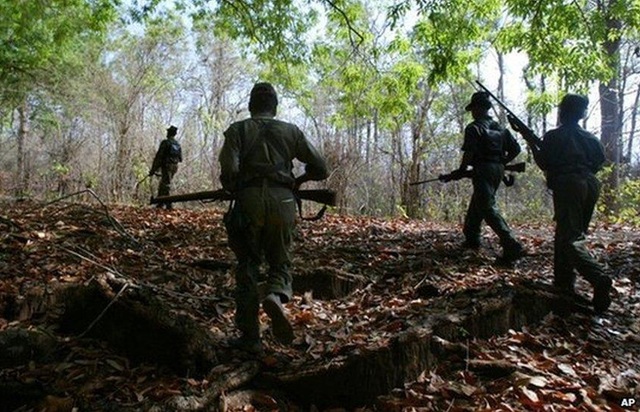
Nevertheless, the current aggressive operations in Bijapur is aimed at completely sanitising the Maoist-infested Forest belt and uprooting the leadership network that has long directed armed insurgency across the country. Indeed, on May 7, 2025, 15 CPI-Maoist cadres were killed in an encounter with SFs in the forests of the Karregutta Hills in Bijapur District. The offensive was launched following intelligence inputs about the presence of top Maoist leaders, including those from the Telangana state committee and the heavily armed ‘Battalion number 1’ — regarded as the strongest ‘militia’ of the Maoists — and the Karregutta Hill range served as the battalion’s stronghold.
Intensive sustained combing operations and raids have also resulted in the arrest of 83 Naxalites in the District in the current year (data till June 29, 2025), in addition to 124 in 2024 (71 in the corresponding period of 2024). 19 Naxalites were arrested in 2023. Mounting SF pressure has led to the surrender of 213 Naxalites in the current year, in addition to 138 in 2024 (96 in the corresponding period of 2024). 12 Naxalites had surrendered in 2023.
SFs have also foiled the Maoist’s violent intent by recovering caches of arms, ammunition, and explosives on 24 occasions in the district in the current year (data till June 29, 2025), in addition to 28 such incidents in 2024 (16 in the corresponding period of 2024). 20 such occasions were documented in 2023.
The recent incidents of Maoist violence directed against civilians and SFs indicate that the Naxalites retain a substantial measure of resilience as well as capacities to orchestrate and execute sporadic violence in the Bijapur District/Area. Following the continuous offensives against the rebels, with SFs penetrating deeper into their erstwhile strongholds, has definitely weakened them. However, the geographical juxtaposition with adjacent LWE-affected districts creates residual challenges for the SFs.