Show respect to all people, but grovel to none…Tecumseh
Introduction
On 9 August each year, the International Day of the World’s Indigenous Peoples is observed globally, a day designated by the United Nations to recognize the distinct rights, cultures, and contributions of indigenous peoples worldwide. This observance holds profound significance not merely as a commemorative date but as a manifestation of decades of struggle, resilience, and evolving normative recognition within the international legal order. To fully appreciate this day’s contemporary import, it is essential first to consider the historical context of indigenous peoples prior to and during colonial incursions, tracing how colonialism wrought systemic marginalization. Subsequently, attention must be given to the normative and institutional progression within the United Nations framework, culminating in the formal adoption of 9 August as the Day of the World’s Indigenous Peoples. Finally, the Day’s social, cultural, and legal relevance is best illuminated through the prism of lived experience, exemplified by the Adivasi community of Sri Lanka, but enriched by a comparative glance at indigenous peoples of Africa, Canada, and Australia. These reflections reveal a persistent global dynamic, affirming the ongoing necessity of international solidarity, law, and advocacy.
The selection of 9 August as the International Day of the World’s Indigenous Peoples, officially proclaimed by the UN General Assembly in 1994, commemorates the Working Group on Indigenous Populations (WGIP)’s inaugural session on 9 August 1982. This designation is emblematic, recognizing the institutional beginnings of indigenous peoples’ formal international advocacy. The Day performs multiple critical functions: it raises global awareness of indigenous issues such as discrimination, land dispossession, and cultural erosion; it consolidates international normative frameworks, reinforcing instruments like UNDRIP; it provides a platform for indigenous voices within international forums; and it fosters transnational solidarity, acknowledging the shared colonial legacies and aspirations of indigenous communities worldwide. The Day signifies a paradigmatic shift—from seeing indigenous peoples as subjects of charity to recognizing them as rights-holders and vital contributors to international law and policy.
History
The history of indigenous peoples is marked by vibrant, autonomous communities that possessed complex and sophisticated legal, political, and spiritual systems long before colonial incursions. In Africa, indigenous groups such as the San or Bushmen represent some of the world’s oldest continuous cultures, whose customary laws regulated hunting rights, social conduct, and spiritual relationships with land. Canada’s First Nations, Inuit, and Métis peoples sustained diverse governance models rooted in kinship, clan responsibilities, and stewardship obligations. The Aboriginal peoples of Australia, custodians of the oldest living culture on earth, maintained intricate oral traditions—expressed through “songlines”—that encode knowledge of territory, sacred sites, and law. These indigenous legal systems were not static or simplistic but dynamic, evolving according to environmental changes, social needs, and inter-community relations. Customary law, in many instances, constituted the primary source of social order and resource management, underscoring the profound legal pluralism that characterized pre-colonial societies.
Colonialism, beginning in earnest in the fifteenth century and extending through the modern era, imposed radical ruptures upon indigenous societies. The doctrines employed by colonial states, such as terra nullius—the presumption of “empty land” despite indigenous occupation—facilitated the expropriation of lands without treaties or consent. In Africa, colonial boundaries arbitrarily divided indigenous territories, displacing communities and subordinating them to foreign administrative regimes. Canadian colonialism introduced paternalistic legislation such as the Indian Act (1876), which criminalized indigenous cultural expression and relegated indigenous governance to state control. The devastating residential school system aimed at forced assimilation left deep scars on indigenous families and cultures. In Australia, Aboriginal peoples were dispossessed of their lands, subjected to removal policies, and marginalized socially and politically. These colonial mechanisms combined military conquest, legal erasure, cultural suppression, and economic exploitation, producing structural disadvantages and intergenerational trauma that continue to reverberate today.
Resistance
Indigenous resistance to colonial domination manifested in diverse forms, from armed uprisings to legal challenges and cultural resilience. In southern Africa, the San people engaged in legal battles to reclaim ancestral lands, utilizing national courts and international human rights fora. Canada’s indigenous peoples have fought for recognition of treaty rights and self-determination, leading to landmark constitutional provisions such as Section 35 of the Canadian Constitution Act, 1982, which affirms Aboriginal rights. Australia’s Aboriginal communities achieved historic victories through cases like Mabo v Queensland (No 2) (1992), which overturned terra nullius and recognized native title rights, thus reshaping the legal landscape. These struggles underscore indigenous peoples’ agency and evolving strategies to assert their identity and rights within often hostile political and legal systems.
Discrimination
The post–World War II international order heralded a new epoch in human rights discourse with the creation of the United Nations. However, indigenous peoples were initially marginalized within this framework, with early human rights instruments focusing largely on individual civil and political rights, often neglecting collective and cultural dimensions crucial to indigenous identity. Gradually, indigenous leaders and their allies mobilized within the UN system, advocating for recognition of their unique status, cultural survival, and self-determination. A watershed moment arrived in 1982, when the UN Commission on Human Rights established the WGIP. Charged with reviewing human rights developments concerning indigenous peoples and guiding the evolution of standards, the WGIP became an indispensable forum for indigenous participation in international normative processes. Its work culminated in the adoption of the United Nations Declaration on the Rights of Indigenous Peoples (UNDRIP) in 2007, a landmark document affirming the rights of indigenous peoples to self-determination, culture, land, and resources.
Despite this normative progress, indigenous peoples continue to experience entrenched inequalities globally. The observance of 9 August remains vital to making visible persistent social and economic disparities—poverty rates, health disparities, educational deficits, and political underrepresentation remain disproportionately high in indigenous populations. The Day advocates for meaningful inclusion of indigenous perspectives in legal and political reforms, including constitutional recognition, legal pluralism that respects customary law, and equitable resource governance. It also educates broader society on indigenous cosmologies, languages, and worldviews, which enrich national cultural tapestries and challenge dominant Eurocentric narratives.
Key Issues
Cultural relativity, a central tenet underpinning the Day, insists that indigenous cultures must be understood and valued on their own terms rather than subjected to external, often colonial, evaluative frameworks. Celebrations and reflections on 9 August emphasize language revitalization, preservation of oral histories, and land claims rooted in ancestral narratives. They bring to light intersectional issues such as indigenous women’s leadership, gender diversity within indigenous communities, and the critical role of indigenous environmental stewardship. This intercultural engagement fosters empathy and mutual respect, crucial in counteracting the homogenizing forces of globalization and neoliberal economic models.
In the face of global ecological degradation, indigenous knowledge systems offer indispensable contributions to sustainability and environmental conservation. The San peoples’ profound understanding of arid ecosystems, Aboriginal Australians’ fire management practices, and Canadian First Nations’ stewardship of forests exemplify reciprocal relationships with nature that contrast sharply with extractive capitalist logics. The Day reinforces the imperative of integrating indigenous knowledge in global responses to climate change and biodiversity loss, affirming indigenous peoples as partners in planetary stewardship.
Sri Lanka
Sri Lanka’s Vedda or Adivasi community exemplifies these global themes within a national context. As the island’s earliest inhabitants, the Vedda maintained a hunter-gatherer lifestyle deeply entwined with the island’s forests, embodying spiritual and cultural practices unique to their identity. Colonial regimes progressively encroached upon their lands through forest reservations and plantation economies, displacing them and eroding their autonomy. Post-independence, the Vedda remained marginalized, overshadowed by dominant ethnic and political narratives centered on Sinhalese, Tamil, and Muslim identities. This marginalization manifested in economic precarity, cultural dilution, and political invisibility.
Yet, the Vedda have exhibited resilience. Recent decades have witnessed legal advocacy for indigenous recognition, efforts to document and preserve the Vedda language and culture, and public cultural festivals celebrating their heritage. These initiatives seek to rekindle pride, resist assimilation, and promote visibility. International Indigenous Day affords the Vedda a vital platform to join a global movement, accessing solidarity, resources, and international attention. Domestically, it serves as a moment to amplify calls for protective legislation, cultural promotion, and inclusion in Sri Lanka’s pluralistic identity. The Day also fosters inter-generational dialogue, enabling elders to pass on knowledge and identity to youth, thus ensuring cultural continuity.
Nonetheless, the Vedda face enduring challenges—limited institutional support, assimilation pressures, and environmental degradation threaten their survival. The Day’s promise must therefore be buttressed by robust policies recognizing land rights, providing culturally appropriate healthcare and education, and supporting language preservation.
Other Cultures
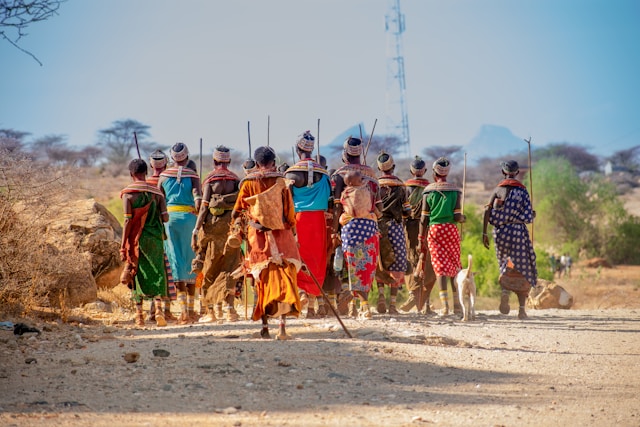
Comparable struggles mark indigenous peoples in Africa, Canada, and Australia, underscoring the universal dimensions of indigenous experience and the global significance of the Day. In Southern Africa, the San peoples’ legal campaigns for land restitution and cultural rights confront ongoing challenges from extractive industries and agricultural expansion. Canada’s First Nations have pursued constitutional recognition, treaty implementation, and truth and reconciliation processes addressing the legacies of residential schools, seeking restorative justice and political empowerment. Australian Aboriginal peoples’ landmark legal victories have transformed the recognition of native title and spurred wider indigenous empowerment, while continuing to grapple with socio-economic disparities. These examples illuminate shared patterns of colonial dispossession and indigenous resurgence, reinforcing the Day’s role as a platform for collective voice and action.
The indigenous populations of South America constitute one of the most diverse and culturally rich assemblages of peoples globally, encompassing hundreds of distinct ethnic groups with varied languages, traditions, and social structures. Before European colonization, indigenous civilizations such as the Inca Empire developed sophisticated political, economic, and spiritual systems deeply interconnected with the Andean landscape. Across the Amazon basin and other regions, numerous smaller communities practiced sustainable hunting, fishing, and shifting cultivation, guided by intricate cosmologies that emphasized harmony with nature. The arrival of European colonizers in the 15th and 16th centuries wrought profound disruption through conquest, forced labor systems such as encomiendas, disease, and cultural assimilation policies. The resulting demographic collapse and territorial dispossession profoundly affected indigenous ways of life. Yet, South American indigenous peoples have continuously resisted erasure through legal struggles for land rights, cultural recognition, and political autonomy, increasingly engaging national courts and international bodies to defend their ancestral territories and traditions.
In recent decades, the emergence of indigenous movements in countries such as Bolivia, Ecuador, Colombia, and Brazil has reshaped political landscapes and normative frameworks concerning indigenous rights. Bolivia’s recognition of indigenous plurinationalism in its 2009 Constitution, spearheaded by indigenous leader Evo Morales, stands as a landmark example of constitutional incorporation of indigenous identity and sovereignty. These movements underscore the centrality of indigenous stewardship in biodiversity conservation, particularly within the Amazon rainforest, often described as the “lungs of the planet.” However, conflicts persist as extractive industries, agribusiness, and infrastructure projects threaten indigenous territories, provoking tensions between economic development models and indigenous land rights. The International Day of the World’s Indigenous Peoples thus remains crucial for highlighting the ongoing struggles of South American indigenous communities, amplifying their calls for respect, protection, and inclusion in decision-making processes that affect their ancestral lands and cultures.
My Take
The International Day of the World’s Indigenous Peoples is not merely a symbolic observance but a profound assertion of indigenous identity, rights, and agency within the international system. Arising from the historic establishment of the UN Working Group on Indigenous Populations in 1982, the Day embodies a dual commitment—to remember the injustices wrought by colonialism and to promote a future grounded in justice, equity, and respect for indigenous peoples. The experiences of the Vedda in Sri Lanka, alongside indigenous peoples across Africa, South America, Canada, and Australia, reveal the ongoing necessity of this global day to sustain the hard-won gains of indigenous advocacy, to address persistent inequalities, and to honor the rich cultural and ecological contributions indigenous peoples make to the world. It calls upon states, international organizations, and civil society to move beyond rhetoric to substantive policies that protect indigenous rights, foster cultural survival, and ensure indigenous peoples’ full participation as equal partners in shaping humanity’s collective future.
May each 9 August inspire renewed resolve to embrace the promise of inclusion, equity, and cultural plurality, transforming a day of recognition into enduring action for a more just and diverse world.