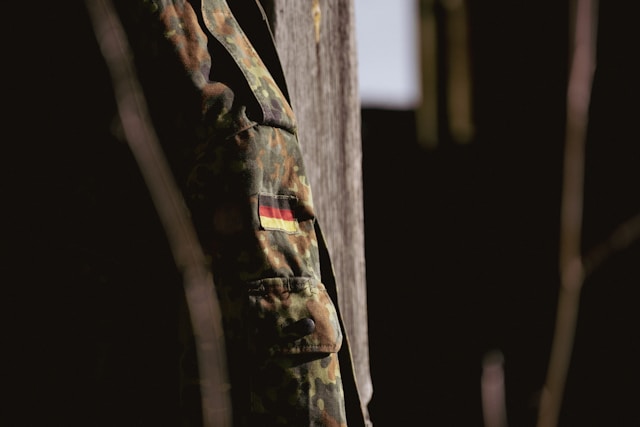
Germany, Israel’s second-largest arms supplier, announced Friday it will suspend the export of any military equipment that could be used in Gaza, a move that comes amid mounting international criticism of Israel’s plan to seize control of Gaza City after nearly two years of war with Hamas. Chancellor Friedrich Merz said Berlin remains committed to Israel’s right to defend itself and secure the release of the roughly 50 remaining hostages but warned that the military push risks worsening the humanitarian crisis and undermining those objectives. “The German government will not approve any exports of military equipment that could be used in the Gaza Strip until further notice,” Merz told reporters. Germany supplied 30% of Israel’s major arms imports between 2019 and 2023, according to the Stockholm International Peace Research Institute, including naval equipment such as Sa’ar 6-class frigates that have been used in the Gaza war.
Israeli Prime Minister Benjamin Netanyahu expressed disappointment over the decision during a phone call with Merz, accusing Berlin of “rewarding Hamas terrorism.” Netanyahu insisted Israel’s aim is not to permanently occupy Gaza but to remove Hamas from power so that “a peaceful government” can be established there. He later posted on X that “We are not going to occupy Gaza – we are going to free Gaza from Hamas.” While Israeli officials have previously used the term “occupy” to describe plans for Gaza, the cabinet resolution approved Friday avoided the term, instead referring to a “takeover.” Israeli media reported that the distinction was largely semantic, amounting to full military control unless a hostage deal is reached.
The United States signaled its continued alignment with Israel’s objectives but expressed reservations about the strategy. Vice President JD Vance, speaking in the United Kingdom alongside Foreign Secretary David Lammy, said Washington shares Israel’s goals of dismantling Hamas and easing Gaza’s humanitarian crisis but acknowledged “some disagreement” over how to achieve them. “If it was easy to bring peace to that region of the world, it would have been done already,” he said. Vance added that the US will not follow Britain’s possible move to recognize a Palestinian state, citing the absence of a functioning government there.
The decision to expand military operations into Gaza City drew widespread condemnation from the United Nations, the European Union, China, Russia, Britain, and multiple Arab states. European Commission President Ursula von der Leyen urged Israel to reconsider, calling for a ceasefire, the release of all hostages, and unrestricted humanitarian access. Belgium, Denmark, and the Netherlands each criticized the decision, with Dutch Foreign Minister Caspar Veldkamp calling it “a wrong move” that will worsen the humanitarian situation and not help secure the release of hostages. Russia’s deputy UN ambassador condemned the plan as “a very bad step in an absolutely wrong direction,” saying it violated UN resolutions on the conflict.
In the Middle East, the backlash was equally strong. Saudi Arabia denounced the decision in “the strongest and most forceful terms,” accusing Israel of “starvation” and “ethnic cleansing” of Palestinians in Gaza — allegations Israel denies. Palestinian Authority President Mahmoud Abbas called for urgent international action to block what he described as Israel’s “dangerous” plans to “fully occupy the Gaza Strip,” and he discussed the issue in phone calls with Egyptian President Abdel-Fattah el-Sissi and Jordan’s King Abdullah II. Egypt warned the US that a takeover of Gaza City could prompt Hamas to kill the hostages if its forces are cornered, urging a return to ceasefire negotiations.
Hamas issued its own statement demanding that the US and international courts halt Israel’s planned operation, accusing Netanyahu’s government of knowingly endangering the lives of the captives. The group claimed Israel’s withdrawal from ceasefire talks last month, after rejecting Hamas’s amendments to a proposed deal, demonstrated its lack of interest in reaching an agreement. Israeli military leaders have also voiced caution, with IDF Chief of Staff Eyal Zamir warning that the takeover could make Israel responsible for providing services to Gaza’s civilian population — a role it has so far argued belongs to the UN and humanitarian organizations.