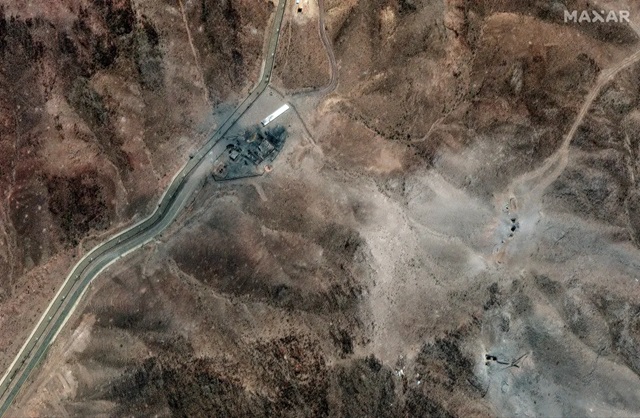
Iran has publicly asserted that its stockpile of enriched uranium remains buried beneath the rubble of nuclear facilities targeted in the June bombing campaign carried out by Israel and the United States. The announcement marks one of the few rare confirmations regarding the location of Iran’s fissile material, intensifying global concerns over its nuclear program.
Speaking on state television Thursday, Iranian Foreign Minister Abbas Araghchi stated that all nuclear material, including 408 kilograms enriched to near weapons-grade levels, is “located under the debris of the bombed installations.” He added that Iran’s Atomic Energy Organization is currently “assessing whether these materials are accessible or not.”
The statement comes as Iran faces a looming deadline at the end of the month to meet conditions imposed by European powers. The UK, Germany, and France have cited Tehran’s refusal to permit International Atomic Energy Agency (IAEA) inspections and provide clarity over the enriched uranium as reasons for triggering a snapback process. If the conditions remain unmet, UN sanctions could be reimposed.
Since the June 12-day conflict, Western intelligence agencies have struggled to confirm the extent of the damage inflicted on Iran’s nuclear infrastructure. While President Donald Trump claimed the program had been “obliterated” following the U.S.’s brief participation in the strikes, experts and diplomats have expressed skepticism. Many believe that Tehran may have relocated the stockpile before the attacks, complicating verification efforts.
The IAEA’s ability to assess the situation has been further hindered by Iran’s suspension of cooperation. According to Rafael Grossi, the agency’s director-general, a preliminary agreement has been reached to resume cooperation, though critical details—including inspection timelines at key facilities such as Fordow and Natanz—remain unclear.
In response to Araghchi’s remarks, analysts at the European Council on Foreign Relations suggest that European powers will demand proof. “For Tehran, providing the West with eyes and ears on the ground, and clarity over its highly enriched stockpile, is one of the few bargaining cards it has left,” said Ellie Geranmayeh. “Iran is trying to preserve ambiguity over its nuclear program—both to keep its options open over weaponization, but more likely to draw Trump back into talks.”
The snapback mechanism, part of the 2015 Joint Comprehensive Plan of Action (JCPOA), allows sanctions to be reimposed after a 30-day window if Iran fails to meet inspection and cooperation demands. While European powers remain committed to diplomacy, they have warned that Iran’s obfuscation threatens efforts to ensure transparency.
Araghchi reaffirmed that “no inspection is currently on the agenda” and warned that any agreement with the IAEA would be nullified if sanctions are reinstated. Meanwhile, Iran’s nuclear ambitions remain entangled with broader geopolitical tensions and domestic pressures, making negotiations increasingly fraught.