by Our Foreign Affairs Editor
The declaration of the Republic of Turkey on 29 October 1923 was far more than a political formality; it was a profound reimagining of a nation emerging from the ashes of a centuries-old empire. The collapse of the Ottoman Empire had left Anatolia fractured, its economy ravaged by war, and its people uncertain about the future. Yet amidst this turmoil, Mustafa Kemal Atatürk and his fellow revolutionaries pursued a vision that was radical, daring, and, in many ways, unprecedented: a sovereign, secular republic where the ultimate authority resided not in a sultan, a caliph, or foreign occupiers, but in the hands of the nation itself. Atatürk’s now-famous declaration that “Sovereignty unconditionally belongs to the Nation” did more than assert political control; it laid the foundation for a radical transformation of Turkish society.
What is often overlooked in standard histories is the human dimension of this transformation. When the Grand National Assembly convened to vote on the republic, many deputies hesitated. Some memoirs recount legislators sitting in silence, avoiding eye contact, fearful of the unknown yet aware they were making history. One deputy later wrote, “We were afraid to speak, but when the vote was counted, I realised we were witnessing history—and even fear couldn’t stop it.” This moment reflects the delicate balance between leadership and consent: the republic could not have been established by decree alone; it required the tacit, if sometimes reluctant, support of those representing the people.
The abolition of the sultanate in 1922, swiftly followed by the caliphate in 1924, was perhaps the most contentious aspect of this transformation. The Ottoman Caliphate had been a spiritual anchor for Muslims across the empire, and its removal was met with apprehension, and in some quarters, outright resistance. Rural Anatolia, where the population was deeply connected to Islamic institutions, reacted with confusion and fear. Villagers reportedly asked, “Does this mean the Sultan is dead? Or just gone?” Atatürk’s reforms, however, were not an attack on religion itself, but rather an effort to remove its political authority. In his speeches, he emphasised that “Religion is the private concern of each citizen. The state governs all citizens equally, regardless of religious authority.” This careful distinction allowed the new republic to secularise its legal and educational systems while maintaining the personal freedoms of belief.
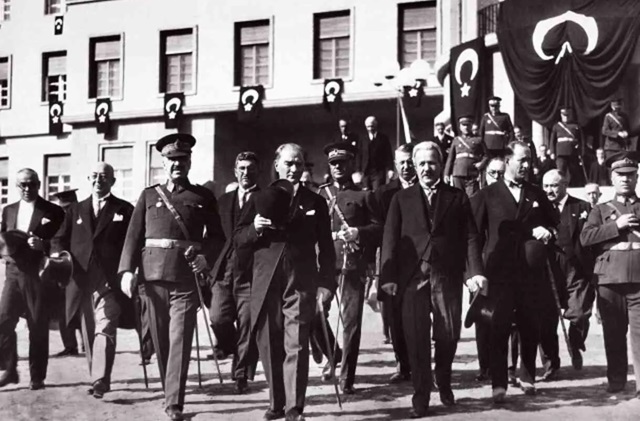
Indeed, the systematic breaking away from traditional religious institutions was both meticulous and strategic. Islamic courts were replaced with secular civil, criminal, and commercial codes, and medreses—the religious schools of the Ottoman era—were closed and replaced with a modern, secular curriculum that stressed science, mathematics, and civic responsibility. At the same time, the Directorate of Religious Affairs (Diyanet) was established to bring religious practice under state supervision, a move that preserved Islam as a moral force while preventing it from interfering in governance. The state also enacted cultural reforms: the Latin alphabet replaced Arabic script, Western-style hats and dress codes were introduced, and women were gradually granted civil rights, including suffrage. Halide Edib Adıvar, a prominent intellectual of the period, reflected on this transformation, writing, “We were spectators, yet every word felt like it belonged to us as well. The Republic was not only for men in Ankara; it was for every woman who had waited decades in silence.”
Atatürk’s vision was not confined to legislation and ceremony; it extended into the very ethos of Turkish identity. Ziya Gökalp, one of the most influential intellectuals of the era, argued that modernisation meant adopting the practical and technological achievements of Europe, not merely imitating forms: “For us, modernisation means being able to build and use automobiles, aeroplanes like the Europeans—not simply resembling them in form or subsistence.” It was a philosophy that combined pragmatic progress with cultural authenticity. Mustafa Kemal himself emphasised the need for citizens to draw lessons from history and lived experience rather than divine or dogmatic decrees: “We derive our inspirations not from an unseen world, but directly from the realities of life. Our path is charted by the land in which we live, the Turkish nation from which we emerged, and the conclusions we draw from the thousandfold tragedies and lessons of human history.”
The journey to establishing the republic was far from straightforward. Domestically, the leaders faced ideological opposition from monarchists, religious conservatives, and separatist movements, including Kurdish rebellions such as the Sheikh Said Rebellion of 1925. Externally, the new nation had to contend with the lingering presence of Allied powers and the threat of territorial encroachments from Greece, Armenia, and others. Militarily and diplomatically, the War of Independence was both a fight for territorial sovereignty and a crucible for the emerging national identity. Every battlefield success, from Sakarya to the Great Offensive, was as much a statement of political legitimacy as a military victory. The struggle demonstrated that building a republic required not only legislative courage but also the capacity to defend it against overwhelming odds.
Turkey’s experience offers valuable lessons for other nations navigating post-imperial, post-conflict, or transitional phases. First, the importance of a coherent vision cannot be overstated: the republic succeeded because its leaders clearly articulated the principles of national sovereignty, secular governance, and modernization. Second, the systematic building of institutions—legal, educational, and administrative—created a durable framework that outlasted individual leaders. Third, education and cultural reform are crucial: transforming society requires a populace capable of participating in and sustaining the new political order. Finally, Turkey’s careful management of religious authority demonstrates that reforming the social contract between religion and state can be accomplished without suppressing personal faith, provided there is transparency, oversight, and communication.
The Turkish republic also exemplifies how strategic geography and foreign relations can amplify a nation’s influence. Situated at the crossroads of Europe and Asia, Turkey leveraged its location to engage with both Western powers and its regional neighbours. Its integration into NATO, pursuit of EU relations, and ongoing regional diplomacy illustrate the enduring benefit of marrying internal consolidation with external engagement. Over decades, Turkey has evolved into a dynamic economic, cultural, and geopolitical bridge, demonstrating that modernisation and strategic positioning can transform a nation from the ruins of empire into a central player on the global stage.
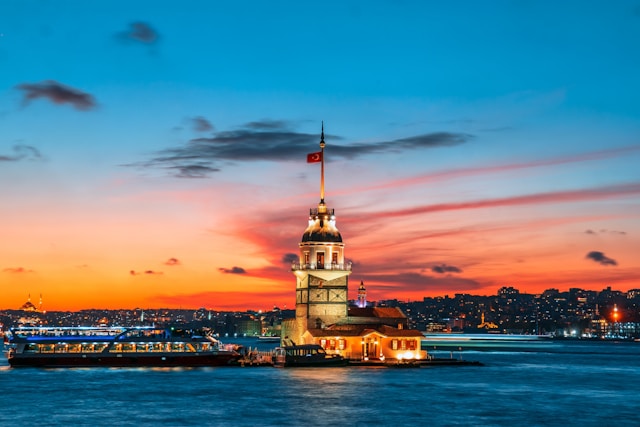
An often-overlooked chapter in Turkey’s international engagement involves its relationship with Sri Lanka. The two nations share a surprisingly long history of diplomatic contact: the Ottoman Empire appointed honorary consuls in Galle and Colombo as early as 1864, well before modern Turkey existed. These early diplomatic links evolved into formal recognition and cooperative engagement after Sri Lanka’s independence in 1948. Humanitarian aid, disaster relief, and trade have since strengthened the bilateral relationship. Turkey’s support following the 2004 Indian Ocean tsunami is particularly notable: it provided hundreds of housing units and other assistance, demonstrating that Turkey’s modern foreign policy is informed not only by strategy but by a commitment to global humanitarianism. This small yet enduring relationship illustrates how historical ties, even those dating back to the 19th century, can form the foundation for constructive modern partnerships.
Reflecting on the declaration of the Republic of Turkey, one is struck not merely by the legal and political acts themselves, but by the careful orchestration of societal transformation. The republic was built through courage, foresight, and relentless commitment to a vision of a modern nation-state. Deputies’ trembling hands as they voted, villagers’ confusion and gradual acceptance of secular laws, women’s hopes and frustrations, and the strategic management of religious authority all reveal a complex, layered revolution that was social, political, and cultural simultaneously. Atatürk’s insistence on drawing lessons from lived reality, combined with Gökalp’s focus on practical modernisation, produced a model of nation-building that balances visionary leadership with societal pragmatism.
Turkey’s experience highlights that successful nation-building is neither linear nor easy. It demands leadership capable of unifying a fractured society, institutions that can endure beyond personalities, and reforms that engage with both the material and moral dimensions of life. It shows that secularism, far from being merely an ideological stance, can be a stabilising framework when carefully applied. And it offers a lesson in foresight: the path from empire to republic was directed not through coercion alone but through careful dialogue, strategy, and a willingness to learn from history while crafting a new narrative. Other nations emerging from periods of conflict or political vacuum can look to Turkey as an example of how to marry ideology, practicality, and cultural sensitivity in the service of national transformation.