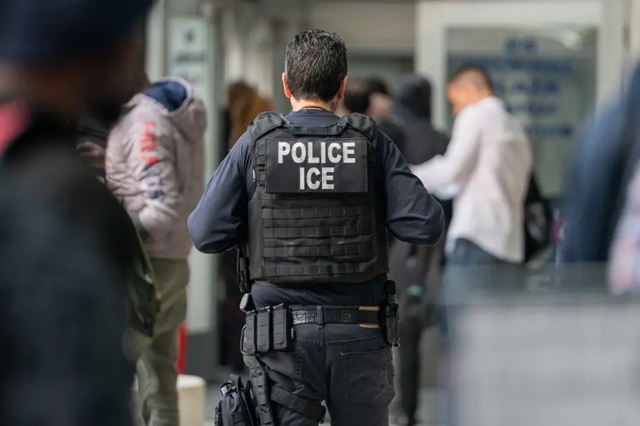
At the beginning of President Trump’s second term, I committed myself to looking past the noise. The past week challenges that discipline. In foreign policy, President Trump has openly embraced coercion — from the removal of Venezuela’s president to threats against Greenland. At home, a young mother was shot by ICE agents in Minneapolis, followed by official denials that what we are witnessing is the militarization and dehumanization of law enforcement.
Step back from the particulars and a pattern comes into view. President Trump’s approach to power, abroad and at home, is replacing hypocrisy with candor. That may feel bracing, even honest. It is not. Candor without restraint is more dangerous than hypocrisy ever was.
As with so much that President Trump does, the problem lies not in what he does but how he does it. Removing Nicolás Maduro is not the problem. Maduro is a thug who stole an election and has helped destroy Venezuela’s economy and civil society. The danger lies in Trump’s insistence — expressed plainly to The New York Times — that the only limit he recognizes on his power is his own subjective morality. That principle tears at the foundations of the liberal world order.
The liberal order was never perfect, and, in truth, it was already fraying. But simply shredding the world order breeds chaos. It also feeds a growing suspicion, at home and abroad, that those dismantling it are guided not by public purpose. The scale of personal enrichment surrounding Trump is staggering, and his appetite for open graft and corruption appears to be boundless. Greenland and its minerals may very well be next.
The same logic is visible at home. Nearly five years after George Floyd’s killing transfixed the nation, we are again confronted with a video of lethal force in Minneapolis — this time by a federal ICE officer. Even granting context, even stipulating that the woman shot was obstructing law enforcement and disobeying federal orders, what we are seeing is the steady normalization of the militarization of our cities that breeds coercion, fear, and murder.
In normal political times, defenders of ICE would be right. In a democracy, respecting elected officials, upholding the law, and removing those who arrived here illegally should not be controversial. But these are not normal political times. Today, ICE and the broader immigration enforcement apparatus are being used not merely to police the border or to remove criminals, but to test and remove the limits of national and executive power — and to wage an ideological war against dissent, pluralism, and the rule of law. We must recognize that the assault on legal immigrants of all kinds is actually part of a larger and more insidious assault on the very fabric of our constitutional society.
When law enforcement becomes an instrument of fear rather than consent, the normal grammar of politics breaks down. Obedience remains legal, but it ceases to be civic. It is in moments like these, Hannah Arendt argued, that dissent stops being optional and becomes constitutive of freedom itself.
Dissent, Arendt argued, is the hallmark of free government. We are at a moment when dissent is required if we are to preserve our freedoms. The difficulty is that President Trump has made dissent more painful than usual. Threats of reprisal and punishment are real. Fear is palpable. What this means is that dissent, if it is to be meaningful, must be collective.
As Arendt understood, organized dissent by meaningful minorities is the greatest safeguard of democratic and constitutional government. There is power in numbers. There is more power in organization. To mobilize the power of civil disobedience, however, we must first come to terms with the fact that the guardrails of democratic restraint are in danger of buckling.
The real danger of tyranny is not the tyrant alone but the mass of otherwise decent people who rationalize their complicity. Against them, Arendt praised those rare figures like Karl Jaspers, who were “untemptable, unswayable,” unwilling to bend even to the German resistance. Their stubborn refusal resembled Václav Havel’s greengrocer, who one day simply stopped hanging the Party slogan in his window. Such refusals do not overthrow regimes, but multiplied, they quietly erode the foundations of power.
This is the moral core of nonviolent civil disobedience: not protest as performance, but the steady, principled demand to witness, condemn, and not to participate in injustice. Yes, civil disobedience for Arendt is organized and collective, but it is rooted in a thinking morality. It is the conscious choice to resist the temptation to “do some good from the inside.” The lesson of Arendt’s tyrants — ancient and modern — is that the inside always swallows you. The only defense is to remain a conscious pariah, free enough to refuse.
The danger we face today is not only the candor of those who wield power without restraint. It is the quiet accommodation of those who tell themselves that nothing can be done, that legality excuses compliance, that dissent is someone else’s responsibility. In moments like these, freedom does not disappear all at once. It erodes as decent people decide, one by one, that silence is safer than refusal.
Civil disobedience, as Arendt understood it, is not lawlessness. It is fidelity — to a constitutional order that depends on consent, plurality, and restraint. When power abandons those limits, refusal becomes not a threat to democracy but one of its last defenses. What is needed is not outrage, but refusal: the refusal to comply, to rationalize, to look away. Such refusals rarely topple regimes. But multiplied, they drain the power of its legitimacy.
We must acknowledge the danger of our moment. Candor without restraint invites tyranny. But tyranny succeeds only when citizens accept legality as an excuse for silence. Freedom erodes not in a single act of domination, but in the quiet decision, repeated again and again, that refusal is too costly.