Mohsen Sazegara misses the scent of jasmine, the mountains and valleys of his homeland. He fled Iran for the United States two decades ago and has never stopped longing to return. But whether he ever will depends largely on the organization he helped create in the revolution’s earliest days: the Islamic Revolutionary Guard Corps. In a phone interview from Washington DC, Sazegara told Times UK that the IRGC has strayed far from the role he once envisioned. “It was supposed to be like the National Guard in the United States,” he said. “But it has turned into a monster — a dragon with many heads.”
Sazegara was among those who drafted the original charter for the IRGC in the first days after the 1979 revolution that toppled the Shah. He broke with Iran’s clerical establishment and was forced into exile in 2005. Since then, he has watched from afar as the force he imagined as a safeguard of the revolution became its ruthless enforcer. That transformation has become starkly visible in the crackdown that has gripped Iran over the past days, during which human rights groups say about 2,500 people have been killed and tens of thousands arrested. The IRGC is widely believed to have ordered the shutdown of Iran’s internet, a move that underscores where real power lies when the regime feels threatened.
The IRGC’s power is not limited to policing the streets. The force is believed to have more than 180,000 active personnel, including its own navy, air force, and ground forces, and along with the Basij militia it controls, may number nearly a million people. But the IRGC’s reach goes far beyond military strength. Sazegara described the organization as operating like a mafia, involved in drug trafficking, gambling, and brothels while also running arrests and torture campaigns. “One of the heads of this monster is involved in drug dealing — they bring opium from Afghanistan, run gambling houses and brothels, arrest and torture people. They’re like the mafia,” he said. The reformist policies he pursued in government brought him into conflict with Supreme Leader Ayatollah Ali Khamenei and led to his arrest in 2003.
Analysts and exiles increasingly describe the IRGC as a state within a state, a sprawling octopus whose tentacles reach into every corner of Iranian life. Its dominance is visible in daily Iranian life through the appearance and behavior of senior figures, who often travel with drivers and wear dark suits—earning them the nickname “men-in-black.” Many senior commanders emerged from humble rural backgrounds and rose to prominence through the Iran-Iraq war of the 1980s, a conflict that served as the IRGC’s crucible. Their wartime credentials later translated into political power, business opportunities, and privileged lives, with many now living in affluent northern districts of Tehran in stark contrast to the austerity faced by ordinary Iranians.
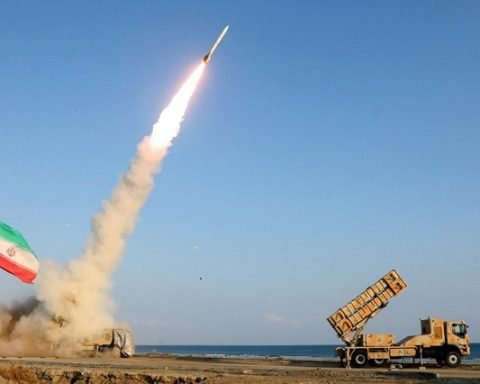
The IRGC’s influence extends beyond Iran’s borders through a fusion of military force, intelligence operations, and commercial power. It controls large sectors of the Iranian economy, winning contracts for airports, dams, and railways and accumulating billions of dollars in resources. Through front organizations and smuggling networks, it has bypassed sanctions, selling oil to China and drones to Russia. Its Quds Force, the elite unit responsible for external operations, has built a network of proxies across the Middle East. The unit’s former commander, General Qasem Soleimani, was killed by a U.S. strike in 2020, but the influence of the network he built remains a defining feature of Iran’s regional power.
The IRGC’s brutality and regional influence have fueled debate in Britain and the EU over whether to designate it a terrorist organization, as the United States did in 2018. The UK has resisted this step, citing legal and diplomatic limitations, including the risk of jeopardizing its embassy in Tehran. Yet critics argue that the IRGC’s actions—ranging from assassination campaigns to intimidation of dissidents—demand stronger international action. Despite the protests appearing to have subsided under the crackdown, analysts warn the crisis is far from over. Many believe that the only way the regime could be toppled is if the IRGC and Basij fighters refuse to fire on protesters or turn against the leadership. In the meantime, the Guards remain central to Iran’s future.
Sazegara insists he has not given up on his country. He said he continues to fight for freedom “day and night” and believes Iran is at a turning point. “I want to go back,” he said. “I think Iran is at a turning point — sooner or later it will change.” For now, like millions of Iranians inside and outside the country, he waits, watching the force he once helped build shape the destiny of the nation he still loves.