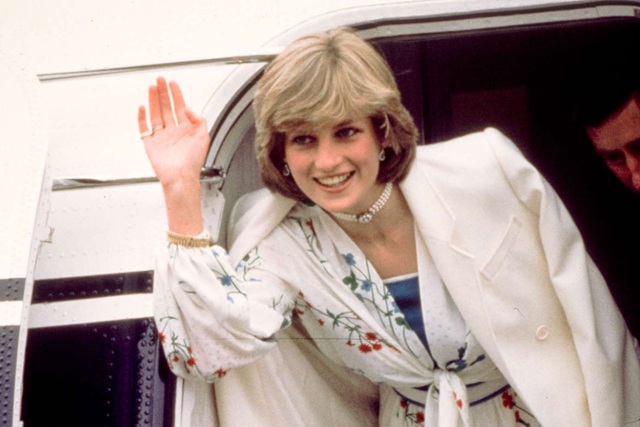
In the final weeks before her death in August 1997, Diana, Princess of Wales, did something almost unheard of for a senior royal. She spoke openly, on the record, to a foreign newspaper about politics, power and her own sense of purpose. The interview, published by Le Monde and later dissected by Times UK, triggered outrage in Britain, disbelief within the palace and quiet satisfaction among those who believed Diana had long outgrown the constraints of royal convention.
The controversy erupted after Le Monde quoted Diana praising the newly elected Labour government under Tony Blair for its stance on banning landmines, while dismissing the previous Conservative administration as “hopeless” on the issue. For a member of the royal family, whose public neutrality was meant to be sacrosanct, the words were explosive. Conservatives accused her of dragging the monarchy into partisan politics, constitutional experts expressed alarm, and Kensington Palace moved quickly to issue a denial.
Yet Le Monde stood by its reporting, and nearly three decades later, the journalist behind the interview, Annick Cojean, has offered a detailed account of how the story came to be, shedding new light on Diana’s intentions and state of mind during the last summer of her life.
Cojean, now 68, was already a respected figure in French journalism in 1997 when she was assigned to interview global personalities about a photograph that defined them. Her subjects included Mikhail Gorbachev, Lech Walesa and Yasser Arafat, as well as Phan Thị Kim Phuc, the Vietnamese girl immortalised in the “Napalm Girl” photograph. When Cojean proposed adding Diana to the list, her editor-in-chief was sceptical. Le Monde, he argued, did not chase celebrity royalty. Cojean insisted that Diana was not a frivolous figure but a symbol of female emancipation with a serious humanitarian message. Convinced the interview would never happen, he reluctantly agreed.
To Cojean’s surprise, Diana accepted. At the time, the princess was relentlessly pursued by British tabloids over her relationship with Dodi Fayed, but the French journalist’s approach was different. Rather than probing her private life, Cojean offered Diana space to discuss her humanitarian work, her beliefs and her role after her divorce from Prince Charles the year before. Being included alongside world leaders may also have appealed to Diana, Cojean suggested, as it positioned her as a global actor rather than a royal curiosity.
Their meeting took place at Kensington Palace in June 1997 and, by Cojean’s account, it was remarkably relaxed. Diana appeared cheerful, spontaneous and at ease, far removed from the brittle figure often portrayed in the British press. Cojean arrived with a selection of photographs and asked Diana to choose one as the focus of the article. As they knelt together on the floor going through the images, Cojean recalls being acutely aware of breaking protocol, while Diana seemed unconcerned.
The photograph Diana chose was from Lahore in 1996, showing her holding a young cancer patient who later died. It set the tone for the conversation. Diana spoke about her closeness to ordinary people and her discomfort with elite circles. “That is why I annoy certain circles,” she said. “Because I am much closer to people at the bottom than at the top.” She complained about the suffocating formality of royal life and the ferocity of the British press, admitting that any “sane person” would have left long ago, were it not for her sons.
For Cojean, the interview revealed a woman actively shaping a post-royal identity. Diana appeared to be searching for an international humanitarian role, one that transcended the monarchy and allowed her to speak directly about suffering, injustice and political responsibility. In Paris, the article transformed her image almost overnight. The French intelligentsia, Cojean said, began to see Diana not as a tragic celebrity but as a woman with something meaningful to say.
Across the Channel, the reaction could not have been more different. Her comments on landmines and her explicit contrast between Labour and the Conservatives ignited a four-day political storm. Tory MPs demanded accountability, some calling for the princess to be reprimanded. Constitutional experts expressed astonishment at what one peer described as the most extraordinary political statement ever attributed to a royal. Kensington Palace publicly denied that Diana had criticised the Conservatives at all.
Behind the scenes, the truth was more complicated. Cojean has acknowledged that the line describing the Conservatives as “hopeless” was added late in the editing process. She had sent the intended quotes to Diana’s private secretary, Michael Gibbins, for approval, but this final phrase was inserted afterwards. Cojean agonised over the decision, hesitating for several minutes before concluding that she was not betraying Diana by publishing words the princess had genuinely spoken. The result, she recalled, was instant and overwhelming controversy.
The fallout may even have altered the course of Diana’s final days. According to a former royal protection officer, Diana delayed her return to Britain because of Conservative anger over the interview. While waiting to speak to Cojean about the dispute, she remained in France with Fayed. That conversation was scheduled for the Monday she was due back in London. It never happened. In the early hours of Sunday, August 31, Diana and Fayed were killed in a car crash in a Paris tunnel as their driver tried to escape paparazzi.
Suddenly, Cojean found herself at the centre of global attention as the last journalist to have interviewed Diana. The memory of their meeting, which she describes as joyful, became inseparable from the shock and grief that followed. For years, she put the experience aside, only revisiting it recently through a graphic novel inspired by the interview.
If the article is remembered today, it is less for the political furore than for Diana’s own words about compassion and duty. One line from the interview, about her happiness in helping “the most vulnerable people in society”, is engraved on her memorial at Althorp. As Times UK has observed, it is a striking legacy for a woman whose final public statement challenged the boundaries imposed on her.
In the end, Diana’s last interview was not merely a breach of protocol. It was a glimpse of a future she was beginning to imagine for herself, one in which she spoke freely, acted globally and defined her own destiny. That the moment came just weeks before her death has only deepened its resonance, turning a disputed article into a lasting testament of who she was becoming.