For centuries, most people assumed Homer, the blind Greek poet of epic fame, was the first writer in history. But more than 4,000 years ago, in the ancient city of Ur in present-day southern Iraq, a woman named Enheduanna pressed her name into wet clay, leaving a record of authorship that would remain hidden for millennia. High priestess, poet, and daughter of Sargon of Akkad—the builder of the world’s first empire—Enheduanna is now recognized as the earliest named author in human history. Her works, rediscovered and only fully translated into English in 2023, reveal a voice of profound personal and political depth.
Enheduanna lived around 2300 BCE, serving as high priestess of the moon god Nanna at Ur under the authority of her father. The position entrusted her with immense responsibility: religious leadership, financial oversight, agricultural management, and the delicate task of bridging Akkadian and Sumerian cultures to ensure the stability of the nascent empire. “Enheduanna” itself was a title, roughly translating to “high priestess, ornament of heaven,” with her birth name lost to history. What survives is the enduring power of her words, stamped unmistakably with her authorship.
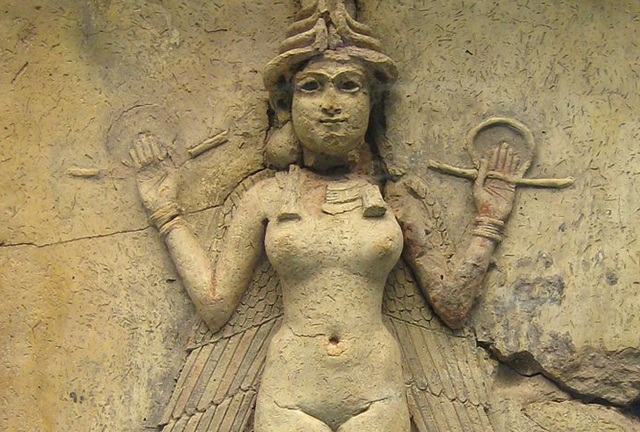
Her literary output is remarkable. Three major compositions bear her name, most famously The Exaltation of Inanna, a hymn to the goddess of love and war written during a period of political exile. The text speaks of walking through thorns, wielding a dagger, and, according to scholars at Columbia University, may include references to sexual violation. Her other works include The Myth of Inanna and Ebih and a collection of 42 Temple Hymns, an inventory of religious and cultural life designed to cement her father’s imperial reach through shared ritual and devotion. The Exaltation of Inanna became standard reading in Mesopotamian scribal schools for over 500 years after her death.
Yet Enheduanna’s authorship is still debated. The surviving tablets date to around 1750 BCE, roughly 600 years after her lifetime, leading some scholars to question whether her name was appended later by scribes to establish a cultural icon. Eleanor Robson has argued that the language of the tablets seems too late to be her own, while Jeremy Black highlights that every manuscript source postdates her by centuries. Proponents of her authorship point to the deeply personal nature of the texts, the first-person narratives of exile, and her signature postscript—elements they argue reveal a distinct individual voice still audible beneath the clay. Zainab Bahrani, professor of art history and archaeology at Columbia University, contends that Enheduanna’s authorship is credible, emphasizing that the debate hinges less on evidence than on interpretation.
The obscurity of her works until recently explains why history forgot her. After the fall of the First Babylonian Empire, her writings disappeared for three thousand years. In 1927, British archaeologist Leonard Woolley uncovered an alabaster disc in Ur bearing her name and connection to Sargon, but linking this to surviving clay tablets took decades. It was not until 2023 that her hymns were fully translated into English, allowing a contemporary audience to experience her voice. Exhibitions, such as the 2022 show at The Morgan Library and Museum in New York, She Who Wrote: Enheduanna and Women of Mesopotamia, have begun to restore her visibility, highlighting the overlooked role of women in ancient literacy, administration, and religious life.
Futura, in their coverage of this rediscovery, emphasizes the significance of finally recognizing Enheduanna as a woman whose intellectual and spiritual authority shaped the early Mesopotamian empire. Her ability to write, manage resources, and shape imperial culture challenges long-held assumptions about women in antiquity, revealing a world in which female scribes and leaders were active agents in history, even if later generations failed to remember them.
Enheduanna’s story is as compelling as her writings. She documented exile, humiliation, and devotion in a form that combined personal narrative with political and religious authority, an innovation unseen in her time. Her signature on tablets—declaring “The compiler of this tablet is Enheduanna”—asserted a claim to intellectual ownership unprecedented in human history. For thousands of years, her name lay buried in the clay and in the footnotes of scholarship, overshadowed by figures whose works were in continuous circulation. Today, her voice resurfaces as a reminder that the origins of literature, authorship, and historical memory are far more complex than previously imagined.
Scholars note that her rediscovery is not merely an academic exercise. Enheduanna’s emergence reshapes narratives around gender, authorship, and cultural memory. Her life and writings reveal that women were not only present but central in shaping civilization’s earliest forms of writing, governance, and religious practice. Her hymns, written in exile and charged with both emotion and authority, suggest that literary creativity and spiritual insight were intertwined with power and resilience in ways that resonate across millennia.