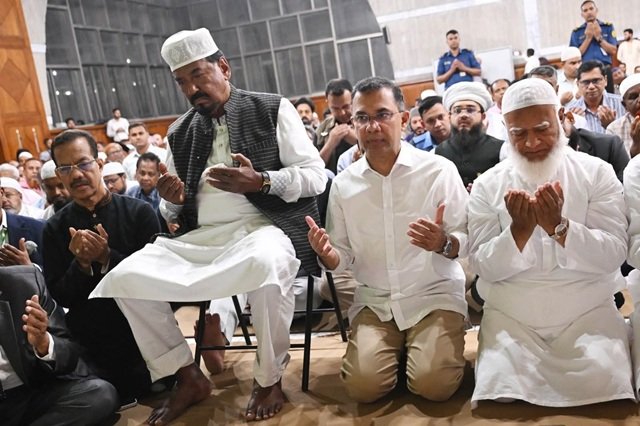
On April 6, 2026, unknown miscreants attacked Minhaj Uddin, an activist of the Bangladesh Jatioatabadi Jubo Dal, the youth wing of the Bangladesh Nationalist Party (BNP), in the Dighi Par area of Balua in Chittagong District and severed his wrist.
On April 2, 2026, Hossain Sohag, a member of the Upazila (Sub-District) unit of Jatiyatabadi Chhatra Dal (JCD), BNP’s student organization, was hacked to death by unidentified assailants in the Ishwardi Sub-District of Pabna District.
On March 31, 2026, shooting occurred at the house of Mohammad Mohsin, JCD General Secretary for the Chittagong South District, in the Kanchana area of the Satkania Sub-District of Chittagong District. The attack was reportedly led by the Kanchana Union Chief of the Jamaat-e-Islami (JeI), Abu Taher.
On March 29, 2026, unknown miscreants set fire to a BNP office in Ward No. 8 in Uttar Joynagar Union in the Daulatkhan Sub-District of Bhola District.
On March 24, 2026, Abdul Wahab alias Bulbul, Joint General Secretary of BNP in the Gangni Sub-District was beaten up while he was buying fuel at a filling station in the Gopalnagar village of Gangni Sub-District, Meherpur District.
On March 22, 2026, miscreants entered the house of Osman Gani, General Secretary of BNP in Ward No. 2 of Sarafbhata Union in the Rangunia Sub-District of Chittagong District, and opened fire, injuring him and his mother, Acia Begum.
Local leaders, members, and affiliates of BNP have been facing violence in the form of Jamaat backed attacks, as well as incidents of targeted attack and killing. Since the declaration of the election date on December 11, 2025, according to partial data collated by the Institute for Conflict Management (ICM), nine members of BNP and its affiliates were killed and were 80 injured (data till April 6, 2026).
On February 17, 2026, Tarique Rahman took the oath as Prime Minister of Bangladesh, as with the BNP-alliance winning 212 of the 297 declared seats in the Jatiya Sangsad. Yet, apart from direct acts of violence, the BNP-led government faces challenges in managing the ‘unparalleled’ rise of Jamaat-e-Islami, with 68 seats, which now holds over a quarter of parliamentary seats as the main opposition party.
Crucially, the July Charter, signed on October 17, 2025, has become a political flashpoint for the BNP Government. The Charter proposed major reforms, including a bicameral legislature, judicial independence, greater powers for the President and opposition, and a two-term restriction for the Prime Minister. In a national referendum held on February 12, 2026, alongside the 13th parliamentary elections, 60 to 70 per cent of voters approved the Charter. While the BNP supports reforms reflecting the public mandate, it prefers implementing them through standard constitutional processes rather than treating the Charter as fully binding.
The Jamaat has made this a major point of political dispute with BNP. Under Mohammad Yunus’ lawless interim regime, the Jamaat enjoyed absolute impunity and, with the present elected Government, is trying to create unwarranted pressure and hurdles. On April 4, the Jamaat-led alliance (including Bangladesh Khelafat Majlis and Khelafat Majlis) held a protest rally and procession at the North Gate of Baitul Mukarram National Mosque in Dhaka, demanding immediate constitutional reform in line with the July Charter referendum verdict. The alliance announced a further nationwide outreach as well as leaflet programmes to build public pressure. Presiding over the event, Jamaat Deputy Chief ATM Azharul Islam alleged that BNP, after winning the general elections, had declined to implement the July Charter. Earlier, on March 23, Mia Golam Porwar, Secretary General of Jamaat, stated that the current government and BNP have turned 180 degrees from the aspirations of the ‘July Uprising’, and their pledge to implement the July National Charter. Porwar declared,
We dreamt of a new Bangladesh, a vision bought at the cost of over a thousand lives and the permanent disability of thousands more. Yet, since the government’s formation, those aspirations have not been reflected… Specifically, the BNP had pledged to implement the July Charter, but they have now retreated from that commitment and taken a different path.
‘Fascist’ or ‘Fascism’, a tag that was previously attached to the Awami League, is now being associated with the BNP-led Government, the Jamaat is trying to get political mileage with the referendum issue. On April 6, 2026, Jamaat Chief and Leader of the Opposition, Shafiqur Rehman, commented that a new journey of fascism has begun in Bangladesh with the denial of the people’s verdict on the referendum,
From the day the people’s verdict in the referendum was denied, a new journey of fascism began again in Bangladesh. We will stop this journey, this step-by-step march, Insha’Allah. We will not allow it to move forward.
A day earlier, Jamaat Deputy Chief, ATM Azharul Islam asserted,
Rejecting the referendum does not only mean rejecting the verdict of 70 percent of the people, but through it they want to give all the power to one person in that fascist way. We have seen 16 years of one-man rule. Thousands of brothers have had to give their lives. We do not want anyone else to give their lives to drive out fascism.
BNP under Tarique Rahman has to simultaneously fight on two fronts: securing the lives of its members and leaders from political violence; and cautiously managing the bargaining strength of Jamaat and its allies.
After 18 months of mayhem and violence under the Interim Government, the country is at a crossroads. Tarique Rahman’s ability to stabilize the BNP-led Government will be a deciding factor for the future stability of Bangladesh.