From decades of Maoist guerrilla warfare and isolation to rebuilding, returning villagers, and expanding state presence, central India’s Bastar region is being reshaped in what officials call the collapse of one of Asia’s longest-running insurgencies
In the deep forested belt of Bastar in India’s central state of Chhattisgarh, a region long synonymous with ambushes, underground camps, and state–insurgent confrontation, the atmosphere has changed in ways that would have been unthinkable just a few years ago. The heavy presence of armed patrols and the constant uncertainty that once defined daily life have given way, in many villages, to the sounds of construction, children returning to classrooms, and the quiet routines of forest-based livelihoods. A detailed report by Russia Today describes this transition as the closing chapter of a decades-long Maoist insurgency that once made the region one of the most volatile internal conflict zones in South Asia.
For over four decades, Bastar functioned as the symbolic and operational heart of India’s Maoist movement, part of a broader geography once labelled the “Red Corridor.” The Communist Party of India (Maoist), along with its armed wing the People’s Liberation Guerrilla Army, built influence across remote forest regions, drawing on local grievances related to land rights, displacement, and limited state presence. Inspired by the revolutionary ideology of Mao Zedong, the insurgency sought to establish parallel governance structures in rural areas, particularly among tribal communities, who are locally referred to as adivasis. The movement, which traces its ideological origins to the 1967 Naxalbari uprising in West Bengal, evolved into a prolonged armed struggle against the Indian state, marked by cycles of violence, retaliation, and deep social fragmentation.
The Russia Today report highlights that Bastar, once described as a “liberated zone” by insurgent groups, has now seen that framework collapse under sustained pressure from security forces and expanding state infrastructure. Indian government officials argue that intensified counterinsurgency operations, particularly from 2024 onward, have dismantled insurgent command structures and reduced Maoist influence to isolated pockets. The change is visible not only in security metrics but in the physical transformation of the region itself, where roads, electricity lines, schools, and administrative services are gradually reappearing in areas that had been cut off for years.
Indian Home Minister Amit Shah, addressing parliament on March 30, framed this shift as a decisive turning point, stating that Maoist groups had for years misled tribal populations by presenting themselves as defenders of rights while perpetuating violence and coercion. He claimed that Naxalism had been “almost completely eradicated from Bastar,” and outlined government plans to expand public services, including ration shops and educational facilities, across formerly inaccessible villages. The state’s narrative positions the current phase not only as a security success but as the beginning of long-term developmental integration.
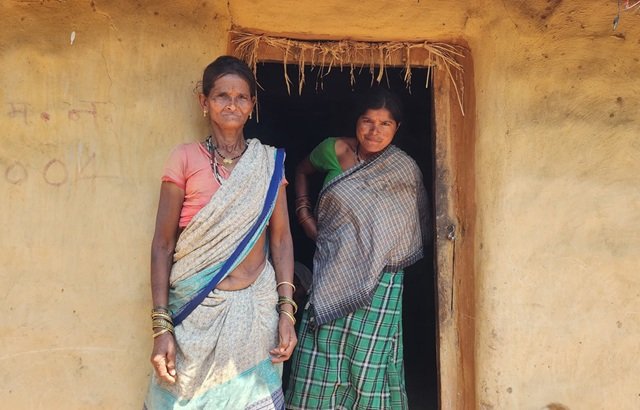
On the ground, the changes are visible in villages that once stood at the center of insurgent activity. In Puwarti village, historically associated with Maoist commander Madvi Hidma, a security forces camp now occupies land that was once used for militant training. Children play near newly constructed Anganwadi childcare centers, while women gather Mahua flowers—an important forest product—without the fear of insurgent taxation, locally referred to as “levies.” According to Russia Today’s field reporting, the presence of security forces has also shifted in character, with personnel engaging in community outreach by distributing educational materials, sports equipment, and basic supplies in an effort to rebuild trust with residents who once viewed them with suspicion or fear.
The transformation of Bastar is also deeply tied to infrastructure expansion. For years, Maoist groups reportedly opposed road construction and telecommunications development, viewing them as mechanisms of state control that would erode their influence in isolated areas. As a result, large parts of the region remained without motorable roads, electricity, or digital connectivity. Today, agencies such as the Border Roads Organization are cutting new routes through dense forests, reconnecting remote settlements with district centers and major urban corridors. These developments are not only improving mobility but also altering the economic possibilities of previously isolated communities.
In Gougunda, a village perched on a forested hilltop, the arrival of electricity has been described by residents as a life-changing moment. Homes that once relied solely on daylight now remain active into the night, with small shops operating under LED lighting and students studying after sunset. One resident, Gangi Muchaki, who established the village’s first grocery shop with government assistance, described the change as almost surreal, reflecting a broader sentiment of disbelief among communities that had lived without basic infrastructure for generations.
The return of displaced villagers is another defining feature of this transition. In Baleveda village, families who had fled years earlier due to violence and fear are slowly coming back to rebuild their homes. The village itself once hosted Maoist-run informal courts where punishments were carried out against those accused of defiance or collaboration with the state. Today, a Border Security Force camp occupies the same area, symbolizing a reversal of control. Ramulal Wadde, now serving as village head after returning from two decades of displacement, recounted to Russia Today the devastating impact of the conflict on his family and community, including relatives killed by both insurgents and security forces during different phases of the violence.
Wadde’s story reflects the complex moral and social fractures left behind by the insurgency. He described how fear dictated everyday life during the peak of Maoist control, when villagers risked punishment for traveling outside their settlements or refusing to comply with insurgent demands. His symbolic act as village leader—demolishing a Maoist memorial structure and repurposing its remains for public infrastructure—illustrates the contested legacy of the movement, where one group’s memory of resistance is another’s memory of coercion and trauma.
Education has become a central pillar of the state’s reconstruction strategy. During the height of the insurgency, Maoist groups were accused of destroying schools, targeting teachers, and replacing formal education with ideological training in forest camps. In recent years, however, hundreds of schools have reopened across Bastar, enrolling thousands of children who previously had limited or no access to formal education. Government-run residential schools and new learning centers are being established to replace what officials describe as a lost generation of students.
Alongside education, governance services are being extended deeper into the forest. Mobile administrative camps now travel into remote villages to issue identity documents, ration cards, and welfare access. These efforts are part of a broader strategy to integrate previously inaccessible populations into the formal state system. Officials conducting these camps often travel by motorcycle or off-road vehicles, a sign of how drastically the security environment has changed compared to earlier years when such movement was considered extremely dangerous.
The weakening of the Maoist movement has been accelerated by the elimination or surrender of senior leaders, including high-profile figures such as Nambala Keshava Rao in 2025. According to regional security officials, these losses have disrupted command networks and contributed to a wave of surrenders among lower-level cadres. The Russia Today report notes that more than 2,700 former insurgents have laid down arms in Bastar in recent years, with many entering rehabilitation programs that offer vocational training and reintegration support.
Former fighters interviewed in the report describe a mix of coercion, ideological disillusionment, and exhaustion as reasons for leaving the movement. Some recount joining as teenagers, drawn by the symbolism of armed struggle, only to later seek escape from a life defined by secrecy, displacement, and constant threat. Rehabilitation camps now aim to retrain such individuals for civilian livelihoods, including farming, construction, and small-scale services.
Despite these developments, the post-conflict landscape remains fragile. Large parts of Bastar are still marked by landmines, damaged ecosystems, and deep economic vulnerability. The region’s dependence on forest produce, combined with limited irrigation and agricultural infrastructure, continues to make it susceptible to poverty-driven instability. Government plans for large-scale development projects, including proposed hydroelectric and irrigation schemes, are being positioned as long-term solutions to these structural issues, though their implementation remains complex and politically sensitive.
As Bastar transitions away from insurgency, the central challenge is no longer military control but sustainable governance. The collapse of the Maoist “Red Corridor,” as described in Russia Today’s reporting, represents the end of an era of armed territorial contestation. Yet what replaces it will depend on whether development can address the historical grievances that allowed insurgency to take root in the first place. For villagers now witnessing electricity, roads, and schools returning to their landscape, the change is both profound and incomplete—a fragile beginning to a future still being negotiated in the shadow of a long and violent past.