
Paushali Lass is a transnational consultant, writer, and speaker whose work bridges geopolitics, culture, and identity across India, Germany, and Israel. Born in Kolkata and raised in New Delhi within a strongly academic family, she later moved to the United Kingdom for higher studies before eventually settling in Düsseldorf. Her professional path has evolved from intercultural consulting and cultural entrepreneurship—particularly focused on presenting Indian heritage—to a more defined role in Israel-focused geopolitical advocacy and cultural diplomacy. Central to her work is a deeply personal and spiritual connection to Israel, which she describes as a guiding force behind her engagement, especially following her first visit to the country, an experience she considers transformative.
Over time, Lass has built a multidimensional career that includes organising international delegations, writing for publications such as The Jerusalem Post and The Times of Israel, and using storytelling, food, and cultural exchange as tools to foster dialogue. Her approach combines what she calls geopolitical consulting with “people-to-people diplomacy,” reflecting her belief that meaningful change happens through human connection as much as policy. At the same time, her work unfolds within highly polarised environments, requiring her to navigate competing narratives, cultural sensitivities, and personal criticism while maintaining a commitment to dialogue and engagement.
Recently, I sat down with her to discuss her journey, her work, and the ideas that continue to shape her perspective.
Paushali Lass begins her story in a manner that is both unassuming and quietly instructive, tracing her early formation to what she calls “a very progressive academic family.” The household she describes was neither narrowly scholarly nor purely commercial but a confluence of both, where “from my father’s side… they’re all academics” and “from my mother’s side… a lot of entrepreneurs.” This dual inheritance appears to have cultivated in her a disposition that is at once analytical and pragmatic. Her recollection of childhood, however, is not dominated by intellectual discipline but by intimacy and kinship: “we are like only one and a half years apart,” she says of her brother, invoking a “Tom and Jerry life,” yet quickly adding that it was “a close-knit family with lots of cousins.” Such remarks, while anecdotal, signal an early immersion in relational networks, something that later manifests in her emphasis on interpersonal engagement as a professional method.
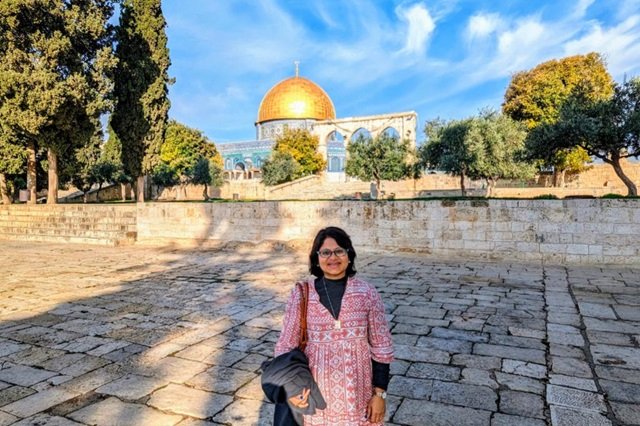
Her move to the United Kingdom marked the first rupture in an otherwise locally grounded life, though she recounts it with characteristic brevity: “I went to the UK for my master’s… and that’s where I met my husband.” The encounter led to what she terms an “intercontinental marriage,” not merely in the geographical sense but in the ceremonial multiplicity of “a wedding ceremony in the UK, in Germany, in India.” The phrase gestures towards a life that would resist singular affiliation. Relocation to Germany, followed by a period in Singapore, and the responsibilities of raising five children introduced a phase of partial withdrawal from professional pursuits. “When the kids were young, it was my decision to just mainly be with them,” she explains. Yet even during this period, she notes that she remained “involved with speaking, writing, intercultural consulting,” suggesting continuity beneath apparent pause.
The early contours of her professional work were anchored in cultural mediation, particularly in relation to India. She describes initiating “businesses… related to showing the culture of India,” seeking “creative ways” to present a civilisation often flattened by stereotype. This emphasis on representation would later expand into a more overtly political register. “From 2023 it’s become really more geopolitical consulting,” she remarks, framing the shift not as rupture but as evolution. The catalyst for this transition, however, lies less in professional calculation than in what she repeatedly characterises as spiritual inclination. “I’ve always been interested in Israel… because of my faith,” she states, adding with disarming certainty, “I consider Israel like my home.” When pressed on formal religious identity, she resists categorisation: “not officially… but I have always felt… a strong attachment to the Jewish faith.” This attachment, by her own account, precedes doctrinal alignment and instead operates as an enduring interior conviction.
Her first journey to Israel becomes, in her telling, a moment of existential confirmation. “I really felt like… a call of God almost,” she says, explaining why she travelled alone. The encounter with the country confounded her prior assumptions. “I had heard that Israel is mostly like… whiter looking people,” she notes, only to discover that “more people here look like me than my husband.” Yet it was not this realisation but a far more disquieting episode that would indelibly shape her trajectory. Recounting her experience in a taxi, she states bluntly, “the taxi driver just locked the door and he took me,” eventually transporting her into a restricted area of the West Bank. What follows is narrated with a peculiar admixture of composure and retrospective unease. “I felt very calm surprisingly,” she recalls, attributing it to a kind of physiological override, though she admits that the moment she realised “I have no reception” triggered acute anxiety.
Her description of the ordeal is suffused with theological framing. “I was having conversation with God,” she says, even contemplating mortality with an almost startling equanimity: “I’ve always had this thing… I want to die in the land of Israel.” The eventual resolution of the incident—“you take me back to Jerusalem right now”—is presented as inexplicable except in providential terms. “I can’t really explain… other than it was a miracle,” she concludes. The psychological aftermath, however, was far from miraculous. “For several months… I couldn’t sleep properly,” she admits, yet insists that the episode fortified her sense of vocation: “that’s when my resolve got stronger… it’s my job to show the truth about Israel.”
The October 7 attack reveals the brutal reality that had otherwise been masked in the name of “freedom”. “I really thought… now my job will be easier,” she says, expecting global sympathy for Israel, only to conclude that “the exact opposite happened.” Her formulation—“the perpetrator becomes victim”—reveals both her interpretive stance and the extent to which she perceives prevailing narratives as inverted.
Her subsequent engagements are characterised by direct exposure to sites and actors central to the conflict. She describes visiting “army bases… army trucks… soldiers in their training exercises,” as well as witnessing “the destruction of October 7.” These experiences are not recounted as detached observations but as evidentiary encounters underpinning her advocacy. Yet she resists reducing her work to strategic analysis alone. “I wouldn’t really… think both are necessary,” she says when asked about the relation between geopolitics and storytelling, insisting that “the most important aspect… is when you have individual conversations.” This privileging of the interpersonal recurs throughout her account, suggesting a methodological preference that diverges from conventional policy discourse.
Her emphasis on cultural mediation, particularly through food, is illustrative of this approach. “Food is a kind of a common denominator,” she observes, adding that “everybody likes to eat… everybody needs to eat.” The remark, while seemingly banal, is deployed to argue that shared sensory experiences can circumvent ideological rigidity. She recounts instances where even during contentious exchanges, “we could still talk about how good the fish curry was.” Such moments, she suggests, facilitate a temporary suspension of antagonism, allowing for recognition of shared humanity. “Food breaks down barriers,” she insists, framing culinary exchange as a subtle yet effective instrument of persuasion.
The limits of persuasion, however, are equally central to her account. “There’s a category of people who are absolute haters… and they will not change their minds,” she states, reflecting on encounters that have included “death threats” and sustained hostility. Her response has been to recalibrate her focus: “better invest time in those who… want to learn more.” This strategic selectivity underscores a pragmatic recognition that not all audiences are amenable to engagement. Yet even within adversarial contexts, she seeks to retain a measure of empathy. Recalling a confrontation in India, she describes telling her opponent, “you are really concerned about the children of Gaza… which makes you actually a good person,” thereby reframing antagonism as misdirected compassion.
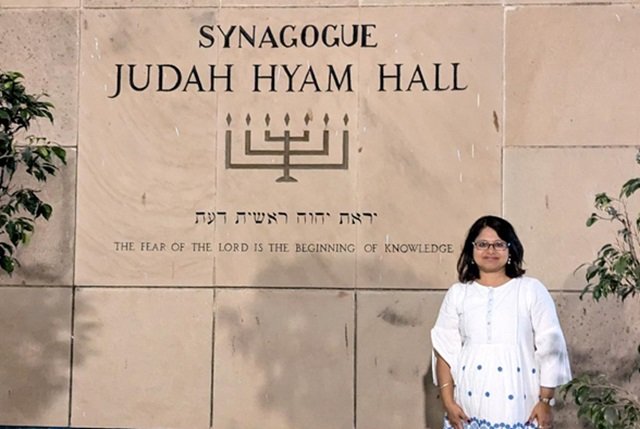
Her experiences in Germany further complicate her perspective. Despite linguistic fluency and citizenship, she notes that “people still look at me… as an outsider,” a perception she chooses to repurpose as a source of empathy rather than alienation. At the same time, she expresses concern about what she terms the importation of “anti-semitism” following recent migration patterns. Her account of ruptured friendships—“they literally boycotted me… a Zionist has no place in their lives”—is indicative of how geopolitical allegiances can override personal ties. Yet she is careful to distinguish between individuals and ideologies, reiterating, “I still love them,” and rejecting any wholesale condemnation of communities.
Her reflections on media consumption are similarly critical. “Most of the information they get is from the news,” she remarks, suggesting that mediated representations often preclude nuanced understanding. This critique underpins her insistence on direct experience as a corrective mechanism. Her advocacy of “people-to-people interactions” emerges from this conviction, as does her interest in facilitating travel and exchange. The presence of Indian workers in Israel, she argues, will render the country “no longer a mystical country… but… personal,” thereby recalibrating perception through lived encounter.
At the level of geopolitical analysis, her positions are more unequivocal. She draws a distinction between “Islam… and Islamism,” characterising the latter as “a radical ideology… spreading all over the world.” While acknowledging that “not all Muslims are like that,” she maintains that failure to recognise such distinctions constitutes “naive” thinking. In the Indian context, she emphasises pragmatism, arguing that “Indian interest comes first,” and that relations with Israel are grounded in historical cooperation, including during conflicts such as the Kargil War. Her reasoning here is instrumental rather than ideological, privileging strategic benefit over doctrinal alignment.
Her engagement with Jewish history in India adds yet another dimension to her work. She speaks of communities such as the Bene Israel and Baghdadi Jews, noting their contributions to urban development and commerce. Referencing figures like David Sassoon, she remarks that “half of Mumbai is actually built by that family,” a claim intended to underscore the depth of Jewish integration in India. She further asserts that India represents “the only country where Jews never faced anti-semitism,” citing the arrival of Holocaust survivors as evidence of this historical exception.
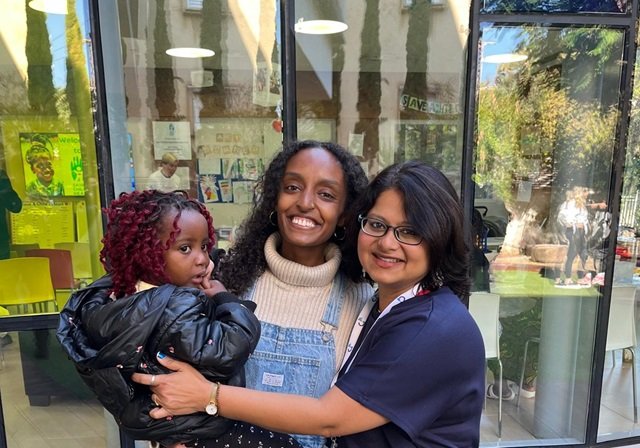
These historical narratives inform her literary work, particularly Tasting Faith, which she describes as an attempt to preserve cultural memory through culinary practice. The book, she explains, is also a response to contemporary claims that Israel is a “European colonial outpost,” a characterisation she rejects by invoking historical continuity: “Jews are from Judea.” This insistence on etymology and origin reflects a broader effort to anchor present debates in longue durée historical frameworks.
In articulating her vision for the future, Lass juxtaposes technological advancement with what she perceives as enduring human needs. While acknowledging that “AI creates even videos that you don’t even know whether that person is actually for real,” she nonetheless regards technological tools as secondary to interpersonal exchange. “Go back to the old ways… of talking to people,” she advises, advocating a return to direct dialogue as a countermeasure to digital distortion. Her formulation encapsulates the central tension in her work: an attempt to reconcile globalised communication with intimate engagement, and to assert the primacy of lived encounter in an era increasingly mediated by abstraction.