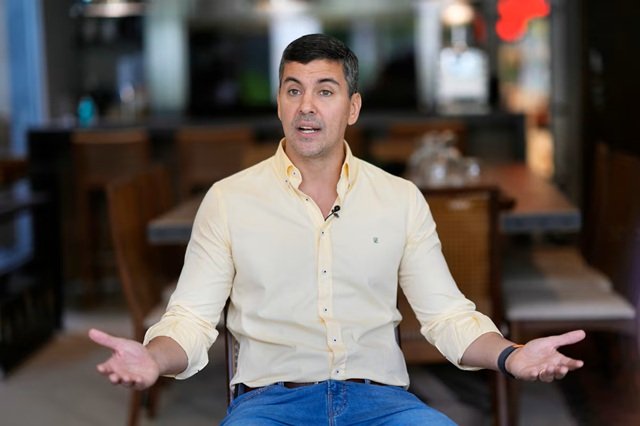
Paraguayan President Santiago Peña has resigned after parliament initiated impeachment proceedings against him over alleged irregularities linked to the collapse of Ueno Bank, a financial crisis that has triggered protests and left millions of customers unable to access their savings.
Peña announced his decision, saying it was motivated by the need to protect the country’s stability, maintain social peace and preserve democratic institutions. His resignation followed growing public anger over the bank’s failure and allegations that irregularities in its lending practices had contributed to the collapse.
The president has been accused of involvement in irregularities surrounding Ueno Bank’s credit operations, which allegedly led to its insolvency and the subsequent suspension of access to millions of customer accounts. Peña has called for the protection of depositors’ money and public resources, saying: “My greatest wish is that the repayment of these funds is guaranteed, that the deposit guarantee fund fulfils its purpose and that public money – as well as the resources belonging to all Paraguayans – is protected.”
The crisis escalated after Paraguay’s central bank began winding down Ueno on Tuesday, citing the digital bank’s failure to provide sufficient equity capital to cover the loans it had issued. The decision prompted protests in the capital, Asunción, as customers faced uncertainty over their savings and the recovery of their deposits.
The collapse has affected a substantial proportion of the country’s adult population. Ueno Bank had 2.8 million customers during the first quarter of the year, equivalent to approximately 60 per cent of Paraguay’s adult population. The central bank’s intervention left these customers without access to their savings, prompting widespread concern over the protection and eventual repayment of deposits.
Long queues formed outside bank branches in Asunción on Wednesday following the announcement of the bank’s failure. Demonstrators also called for Peña to step down, holding his administration responsible for the circumstances surrounding the crisis.
Before Peña’s resignation, Central Bank Chairman Carlos Carvallo had also left his position at the president’s urging. Carvallo faces allegations of conflicts of interest relating to the Ueno Bank affair, adding to scrutiny of the country’s financial authorities and their handling of the situation.
The parliamentary move to initiate impeachment proceedings against Peña came amid mounting pressure over the alleged irregularities and the bank’s collapse. His departure followed the growing political fallout from the crisis, although the allegations against him concern his purported involvement in the lending irregularities.
During the protests, Peña had promised to introduce legislation to ensure that depositors recovered their money. He pledged to enact a law “that gives every saver back, as quickly as possible, what belongs to them”.
The repayment of customer deposits and the role of the deposit guarantee fund remain central to the concerns expressed by the outgoing president.