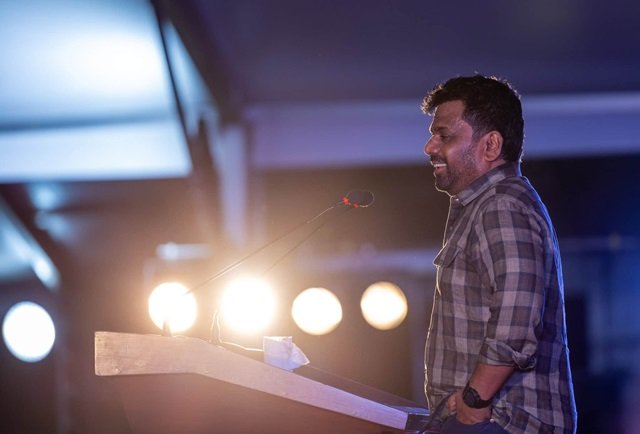
Sri Lankan President Anura Kumara Dissanayake has ruled out granting what he described as unjustified demands from trade unions, warning that strikes and protests would not compel the government to approve pay increases or other concessions that the country’s finances cannot sustain. Addressing a meeting with trade union representatives in Colombo on 26 November, held under the theme ‘The Budget and Working People’, he said government decisions would have to be guided by financial discipline and the country’s actual revenue and expenditure.
Presenting the government’s financial position, Dissanayake said state revenue stood at Rs6,230 billion, while expenditure, including salaries and debt repayments, amounted to Rs7,035 billion. This left a shortfall of Rs805 billion, which the government would have to borrow even to meet existing salary and debt obligations, he said.
The President argued that any additional government expenditure would require further borrowing or cuts to other spending commitments. He also disclosed that Rs2,000 billion had been allocated for capital expenditure, stressing that the government’s objective was to move the economy towards sustained development rather than simply manage its immediate financial requirements.
On personal income taxation, Dissanayake said the pay-as-you-earn tax currently applied to monthly incomes exceeding Rs162,500. An individual earning Rs433,000 a month, he said, was subject to a 36 per cent tax rate. The government intended to raise the tax-free threshold in the forthcoming budget, with the aim of increasing it to Rs500,000, he added.
Addressing public-sector remuneration, the President maintained that the government had introduced basic salary increases unprecedented in Sri Lanka’s history. He cited the starting salary of a medical officer, which he said would rise from Rs54,290 to Rs94,150 by January 2027. The salary of a Grade I school principal, meanwhile, had increased from Rs58,000 to Rs103,000, according to his figures.
Dissanayake rejected the expectation that industrial action would automatically secure additional concessions, arguing that wage demands had to be assessed against the government’s ability to finance them. He said the administration had already addressed problems before protests were launched and would continue to distinguish between demands that could be met and those that could not.
“Before people shout, we address problems. Those that cannot be resolved cannot be resolved. That is the truth,” he said.
Responding to questions about why the government could not increase salaries if it had money available, Dissanayake said an administration had to operate within the country’s prevailing financial circumstances. He maintained that the government had provided relief to the extent permitted by its resources.
His remarks set out the government’s position ahead of the forthcoming budget, placing the limits of public spending, proposed changes to income taxation and the implementation of public-sector salary increases at the centre of its engagement with organised labour.