The International Court of Justice (ICJ) has found Myanmar responsible for genocide against the Rohingya Muslim minority, marking a historic development in international law and the application of the 1948 Genocide Convention. The 19 November ruling establishes Myanmar as the first state to be found responsible for violating the convention, delivering a significant legal victory for a community that has endured mass killings, sexual violence, forced displacement and the destruction of its settlements. Yet the judgment also raises a difficult question: what does international law achieve when the state found responsible remains engulfed in conflict and shows little willingness to accept the consequences?
The case centres on the Myanmar military’s so-called clearing operations in Rakhine state in 2017. The operations involved the murder of an estimated 100,000 Rohingya, widespread sexual violence against women and girls, and the burning and destruction of villages. Approximately 700,000 Rohingya fled across the border into Bangladesh, creating one of the region’s most serious refugee crises. The ICJ examined whether these actions constituted genocide under the convention, which requires evidence not merely of mass atrocities but of an intention to destroy, in whole or in part, a national, ethnic, racial or religious group.
The court found that Myanmar had committed three prohibited acts under Article II of the Genocide Convention: killing members of the protected group, causing serious bodily or mental harm, and imposing measures intended to prevent births within that group. Establishing genocidal intent is among the most difficult elements of international criminal law. Widespread killings, displacement and other atrocities do not automatically establish genocide. The court must determine whether the evidence demonstrates the specific intention to destroy the targeted community.
According to an assessment published by the Soufan Center, the significance of the judgment lies partly in the court’s approach to establishing that intention. Rather than relying exclusively on direct evidence, the ICJ inferred genocidal intent from a pattern of conduct, finding that genocide was the only reasonable inference from the evidence presented. That reasoning could carry implications beyond Myanmar, particularly as the court continues to consider South Africa’s separate genocide case against Israel over the war in Gaza.
For the Rohingya themselves, however, the judgment does not immediately alter the conditions that forced them from Myanmar. The country has been embroiled in civil war since 2021, with the ruling military junta fighting ethnic armed organisations and other resistance groups. Rakhine state has again become a major theatre of conflict. Since late 2023, fighting between the military and the Arakan Army, an influential ethnic armed organisation seeking greater autonomy for the region, has intensified. The Arakan Army has seized substantial territory from government forces and has itself faced accusations of abuses against the Rohingya.
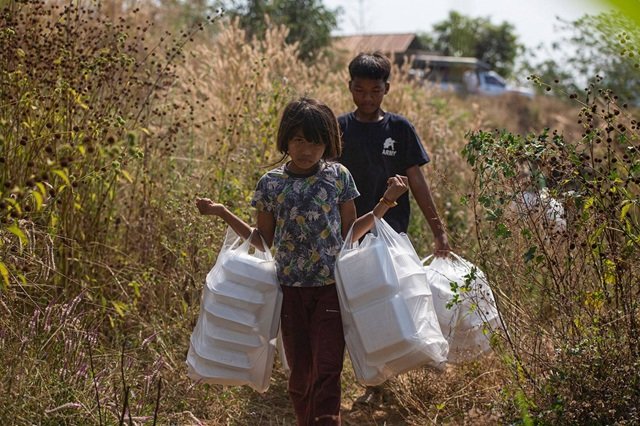
The humanitarian circumstances of the displaced population remain equally precarious. Approximately one million Rohingya live in refugee camps in Bangladesh, primarily in the Cox’s Bazar district. Overcrowding, restricted access to essential services and declining international humanitarian assistance have worsened living conditions, with food shortages becoming a particular concern. The legal recognition of genocide has therefore arrived without an immediate solution to the refugee crisis or a clear prospect of safe repatriation.
Previous repatriation initiatives in 2018 and 2019 failed to produce returns, largely because refugees feared renewed persecution and the arrangements offered insufficient guarantees. Many now insist that they will not return without full rights, dignity and citizenship. The ICJ’s ruling addresses this issue directly, ordering Myanmar to adopt measures of restitution that include facilitating the safe, voluntary and dignified return of displaced Rohingya to their places of residence and the reunification of families.
The court has also ordered Myanmar to end ongoing violations, introduce legislation giving effect to its obligations under the Genocide Convention, investigate individuals reasonably suspected of committing prohibited acts and prosecute and punish those responsible where warranted. Further requirements include guarantees against repetition, compensation for the damage suffered by the Rohingya and measures to prevent similar violations in the future. Myanmar must report within two years on the restitution measures adopted and its proposed compensation arrangements.
Naypyidaw has rejected the judgment, describing its military operations as counter-terrorism actions and maintaining that Rohingya refugees will be able to return when circumstances permit. That response raises serious doubts about implementation. Although ICJ judgments are binding under international law, the court has no independent enforcement apparatus. It cannot prosecute individuals, issue arrest warrants or directly compel a government to comply with its decisions.
Enforcement may ultimately require intervention by the United Nations Security Council. But that route carries substantial political obstacles. Russia, China and the United States, as permanent members, possess veto powers that could prevent enforcement measures. The Soufan Center identifies the strategic interests of all three countries as potential impediments to meaningful international action.
Russia is unlikely to support enforcement measures that could have implications for its own genocide-related proceedings at the ICJ over its invasion of Ukraine. China has close ties with Myanmar’s military authorities and faces longstanding international accusations concerning abuses against the Uyghur population. Washington, meanwhile, has shifted towards engagement with Myanmar’s junta, particularly in relation to the country’s critical mineral resources, despite the US State Department’s 2022 determination that the military had committed genocide and crimes against humanity against the Rohingya. The United States has also imposed sanctions on senior military officials, including Myanmar’s president, Min Aung Hlaing.
The possibility of American sanctions against international judges has added another dimension to the controversy. Concerns have emerged that Washington could target ICJ judges, as it did judges at the International Criminal Court following the issuance of arrest warrants for Israeli Prime Minister Benjamin Netanyahu and former defence minister Yoav Gallant.
This concern is closely connected to the pending case brought by South Africa against Israel. The question of genocidal intent is expected to be central to that proceeding, which is not expected to reach the argument stage until 2029. The ICJ’s reasoning in the Myanmar judgment, particularly its reliance on patterns of conduct to establish intent, could influence how the court assesses the evidence in the Gaza case. Israel and the United States are concerned that the ruling could contribute to a legal precedent that makes it easier for the court to establish genocidal intent in other circumstances.
The Myanmar judgment does not determine the outcome of South Africa’s case against Israel. The circumstances, evidence and legal arguments must be assessed independently. Nevertheless, the ruling has demonstrated how the ICJ can approach one of the most difficult questions in genocide law.
The central challenge now extends beyond the courtroom. The Rohingya have secured an important legal recognition of the crimes committed against them, but their return, restitution and protection depend on a government that has rejected the judgment and an international system in which enforcement is subject to geopolitical calculations. As the Soufan Center’s analysis makes clear, the ruling’s historical importance will ultimately be measured not only by what the court has declared, but by whether the international community can translate that declaration into meaningful accountability.