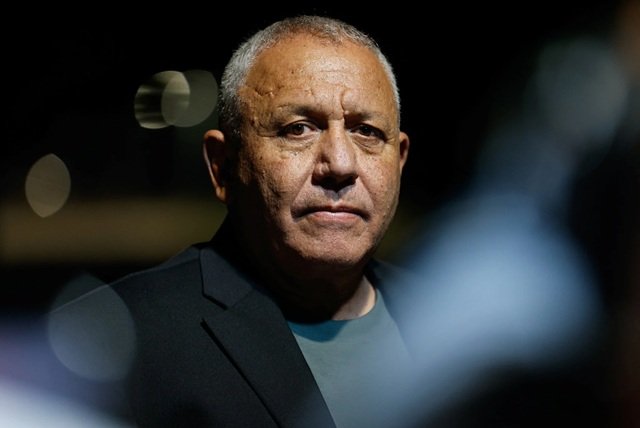
For nearly three weeks, Gadi Eisenkot has faced a political assignment that appeared almost impossible: forming an Israeli government from parties united by their opposition to Benjamin Netanyahu but divided over almost everything else. Now, negotiations are beginning to produce an unexpected route towards a new administration, potentially bringing an end to Netanyahu’s long tenure as prime minister. Yet the emerging arrangement carries a fundamental contradiction: the coalition Eisenkot is attempting to construct may require him to abandon commitments that helped bring his political alliance together.
The scale of the challenge became apparent after the October Knesset elections. Netanyahu’s opponents secured the backing of 67 members of the new parliament, providing Eisenkot with a clear numerical advantage. President Isaac Herzog subsequently tasked the former military chief with forming a government. But parliamentary support did not translate into an immediately workable coalition. The opposition stretches from right-wing settler politician Avigdor Liberman to the Jewish-Arab communist Hadash party, bringing together political forces whose disagreements over national identity, military service and relations with Arab parties have repeatedly obstructed co-operation.
The negotiations have nevertheless gained momentum. Liberman announced on Wednesday that Eisenkot would be able to establish a government with a “clear Jewish majority” by the end of the following week. On the same day, the two parties announced that they had reached a coalition agreement. A day later, Yair Golan, leader of the left-wing Democrats, also confirmed an agreement with Eisenkot’s Yashar party. Arrangements with Yair Lapid and Naftali Bennett were expected to follow.
These agreements represent progress within the so-called Change bloc, whose constituent parties contested the elections together. However, the bloc won only 48 of the Knesset’s 120 seats, falling short of the 61 required for a parliamentary majority. Its leaders must therefore secure additional support from outside their original alliance, forcing Eisenkot to confront political compromises that could undermine his campaign commitments.
The most consequential possibility involves the ultra-Orthodox United Torah Judaism (UTJ) party. According to a report by Haaretz, Eisenkot could establish a minority government with the party as early as the following week. UTJ, which has previously governed alongside Netanyahu, holds seven parliamentary seats. Its potential participation would provide Eisenkot with a route to government, but the arrangement would place him in a difficult position over one of Israel’s most contentious domestic political questions: compulsory military service.
During the election campaign, Eisenkot, a former army chief, advocated military conscription for all citizens. The ultra-Orthodox parties, by contrast, have sought to preserve exemptions from military service for students attending yeshivas, or religious seminaries. The precise concessions being discussed with UTJ have not been disclosed, but the question of military exemptions is expected to be central to negotiations.
The issue carries implications beyond the immediate coalition arithmetic. Military service and the distribution of national obligations have long been politically sensitive questions in Israel. An agreement that preserves exemptions for ultra-Orthodox students could place Eisenkot at odds with a commitment made during the election campaign. Conversely, refusing such concessions could eliminate one of the few available routes to establishing a government.
The alternatives are equally complicated. One possibility would be a minority administration supported by Arab parties. Nineteen Arab lawmakers endorsed Eisenkot as a potential prime minister, helping him secure the presidential mandate to form a government. However, Liberman has consistently rejected co-operation with Arab parties, insisting that any administration must retain a Jewish majority. He has threatened to withdraw his support if Eisenkot proceeds without meeting that condition. Consequently, formal negotiations with the Arab parties have not taken place.
Another possibility would involve a national unity government with Netanyahu’s Likud party, excluding its far-right and ultra-religious partners, including Itamar Ben-Gvir and Bezalel Smotrich. Eisenkot has held discussions with Likud despite the central objective of his electoral alliance being Netanyahu’s removal. That approach prompted Yair Golan to threaten to withdraw his support, exposing the limits of the opposition’s unity when confronted with the question of how power should actually be exercised.
The emerging UTJ arrangement could provide a way around these competing objections. Under the proposal reported by Haaretz, Eisenkot would form a minority government with 55 seats, including the seven lawmakers from United Torah Judaism. Netanyahu’s camp would retain 46 seats, while Arab parties would abstain, allowing Eisenkot to secure the necessary parliamentary support to become prime minister.
The arrangement could subsequently be expanded if Shas, another ultra-Orthodox party, or one of the Arab parties decided to join the government. Such possibilities remain uncertain, and the proposed administration would initially lack the parliamentary strength of a conventional governing coalition. Its survival would depend on maintaining support among parties with substantially different political priorities.
Time is also working against Eisenkot. He has until 6 December to complete the government formation process, although Herzog can grant him an additional two weeks. If he fails, the mandate is likely to return to Netanyahu, who is hoping for another election.
Despite the opposition’s electoral gains, Likud lost relatively few votes under Netanyahu, although it surrendered parliamentary seats because of increased voter participation. A fresh election could produce a different turnout pattern. Many Israelis living abroad who travelled to participate in the October election might not return, while the unusually high participation among Arab Israeli voters could decline. The exclusion of Arab parties from the negotiations could further affect their willingness to participate in another contest.
Eisenkot’s predicament therefore extends beyond the question of who occupies the prime minister’s office. His attempt to replace Netanyahu has exposed the competing definitions of political legitimacy within Israel’s opposition: whether a government should be built around a Jewish parliamentary majority, whether Arab political representation can translate into governing influence, and whether religious exemptions from military service can survive a change of administration.
A government supported by 55 lawmakers and dependent on abstentions could be fragile, with no guarantee of lasting parliamentary stability. Nevertheless, it would establish a new political reality by removing Netanyahu from office. For Eisenkot, the immediate challenge is no longer simply assembling the parliamentary numbers. It is determining which of his political commitments can survive the compromises required to govern.