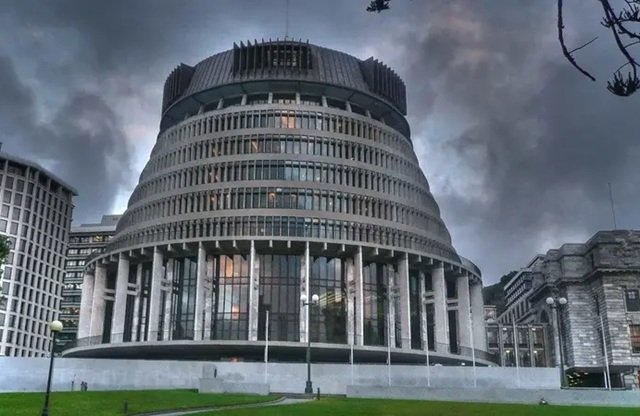
New Zealand is awaiting the final results of its November 7 general election, with the official count expected on Friday to determine whether Prime Minister Christopher Luxon’s centre-right governing coalition can retain its narrow parliamentary majority. Preliminary results published by the Electoral Commission showed the three-party coalition, led by the National Party, holding a majority of just two seats, leaving its position dependent on the outcome of the remaining ballots.
The final count will include approximately 400,000 special votes, covering ballots cast overseas and votes requiring additional verification. These votes have historically tended to favour left-leaning parties, with right-wing parties often losing support once they are included in the final tally. Their distribution could therefore alter the parliamentary balance, particularly in closely contested constituencies where National and Labour candidates remain separated by narrow margins.
The election campaign was dominated by concerns over a struggling economy and widespread voter disillusionment with the country’s two largest political contenders. The preliminary results indicated a closely divided electorate, with neither major political grouping securing a commanding parliamentary position.
The publication of the final results is expected to trigger responses from party leaders and intensify negotiations over the formation of the next government. The outcome will determine not only whether the incumbent coalition retains its majority but also the number of constituency and party-list seats allocated to each political party.
New Zealand operates under a proportional representation electoral system, in which parties frequently depend on smaller political partners to secure sufficient parliamentary support to form an administration. Consequently, the final distribution of seats will be central to determining the composition and political stability of the next government.
The country’s Parliament comprises 71 constituency seats and at least 49 party-list seats. A political party or coalition must command a parliamentary majority to form a government. Under this arrangement, the final allocation of seats can have consequences beyond the performance of the largest parties, as smaller political groups may hold the support needed to establish a governing majority.
The special-vote count is therefore particularly significant for parties whose parliamentary representation remains uncertain. Even relatively small changes in the allocation of seats could affect whether the National-led coalition can continue governing with its existing partners or must negotiate a different arrangement.
Friday’s official results are expected to provide a definitive picture of the next Parliament’s composition, bringing clarity to the closely balanced electoral contest and establishing the basis for negotiations over New Zealand’s next government.