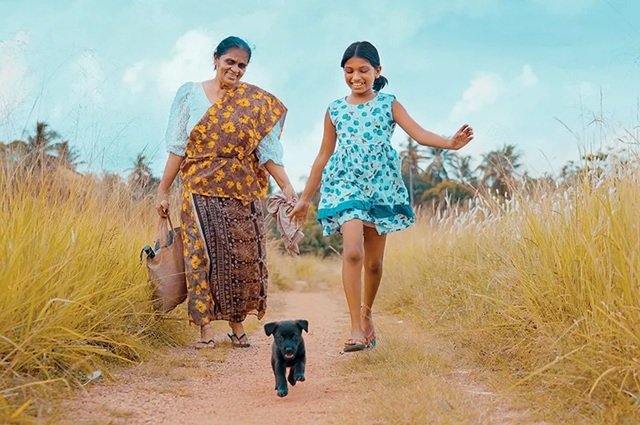
A film inspired by concern for Sri Lanka’s stray animals is arriving in cinemas at a time when the country’s film industry faces a different struggle: making films is possible, but finding a transparent and reliable route to audiences remains a significant challenge. Coco, co-directed by Isuru Weerasinghe Mudalige and Shashika Watudura, begins its nationwide theatrical release on 27 November, marking Weerasinghe Mudalige’s return to filmmaking after a prolonged period away from the industry following his 2012 debut, Colour.
In an interview published by Sri Lankan newspaper Divaina, Weerasinghe Mudalige explained that experiences following the release of Colour had changed his understanding of cinema and prompted him to explore a different creative direction. Rather than returning to filmmaking through a conventional project, he began considering how the medium could be used to draw public attention to an issue that had long concerned him: the treatment of animals, particularly those living on the streets.
He said his sensitivity towards animals had influenced his thinking for years and that he eventually became convinced that a film could help change how people viewed stray animals. That idea developed into Coco, a production in which a dog occupies a central place in the narrative.
The filmmaker’s involvement with the animal extended beyond its appearance in front of the camera. He said he had personally taken the large dog featured in the film from the street and brought it home, where he spent time preparing it for the production. The relationship between the dog and the young girl playing the principal human character was also important to the film. The child is his niece, while the puppy featured in the story is a family pet.
Working with animals required a different production approach from that normally associated with actors. Weerasinghe Mudalige said the team did not encounter major difficulties because it handled the process practically, using a relatively simple production arrangement. The dog could respond to a limited number of commands, but the crew had to film its natural reactions rather than expect it to follow a tightly controlled performance schedule.
That made conventional production arrangements impractical. Maintaining a large crew and an elaborate filming setup while waiting for the animal to perform particular actions would have consumed considerable time. The directors therefore adopted a smaller setup that allowed them to work around the animal’s behaviour.
For Weerasinghe Mudalige, however, the most significant challenge was not filming the production. It was securing its release.
His account points to a structural problem in Sri Lanka’s film industry: the gap between the ability to produce films and the availability of opportunities to exhibit them. He argued that virtually anyone in the country could undertake a film production, but the difficulties became apparent when the finished work had to enter the theatrical distribution system.
To illustrate the imbalance, he referred to an incident involving another director who had contacted a production facility to reserve a unit for filming. The director was reportedly informed that 21 films were scheduled to be shot during that particular month. Weerasinghe Mudalige questioned how an industry generating that volume of production could accommodate the release of every completed film, given the limited number of theatrical opportunities available.
The resulting queue creates a difficult scheduling problem for exhibitors, who must decide which productions receive access to cinemas and when. But the filmmaker identified a more fundamental concern: the absence of clear criteria governing those decisions.
According to his account, filmmakers can be invited to present their productions to exhibition panels without necessarily knowing who will assess their work or how the selection process operates. A production may involve an investment of millions of rupees, yet its rejection does not necessarily come with a detailed explanation.
He said filmmakers were often left without even a technical assessment identifying shortcomings in a production. Instead, the explanations they received could amount to informal comments that a film did not appeal to a particular decision-maker, that a superior had not approved it or that the assessment team simply did not like it.
For the director, such responses fall short of the professional standards required in a functioning film-selection system. His central criticism is that Sri Lanka lacks a proper mechanism for evaluating films seeking theatrical exhibition, leaving filmmakers uncertain about the basis on which their work is accepted or rejected.
The problem also needs to be understood in the context of his own experience. When he made Colour in 2012, he was relatively young and entering the industry with limited experience of the difficulties that would follow. The subsequent challenges contributed to his decision to step away from filmmaking and reconsider how he could continue working within the constraints of the industry.
He recalled advice from the late actor Jackson Anthony after the latter watched Colour. Anthony told him that dancers needed a stage on which to perform, suggesting that other countries had established platforms and facilities for their artists, whereas Sri Lankan filmmakers faced considerably greater difficulties.
That observation appears to have influenced Weerasinghe Mudalige’s thinking about his return. Rather than simply resuming his earlier approach, he sought to develop a production suited to the circumstances he faced. Coco represents that attempt, combining an animal-centred narrative with a relatively modest filming arrangement.
Its nationwide release on 27 November will provide an opportunity for audiences to see the outcome of that approach. But the questions raised in the director’s interview extend beyond one film or one filmmaker. They concern how a national cinema industry manages the relationship between production, selection and exhibition, and whether creators can obtain transparent explanations when their work is denied access to audiences.
As Weerasinghe Mudalige’s experience suggests, the ability to make a film does not necessarily guarantee the ability to show it. For Sri Lankan filmmakers, that distinction remains one of the central obstacles between completing a creative project and reaching the public.