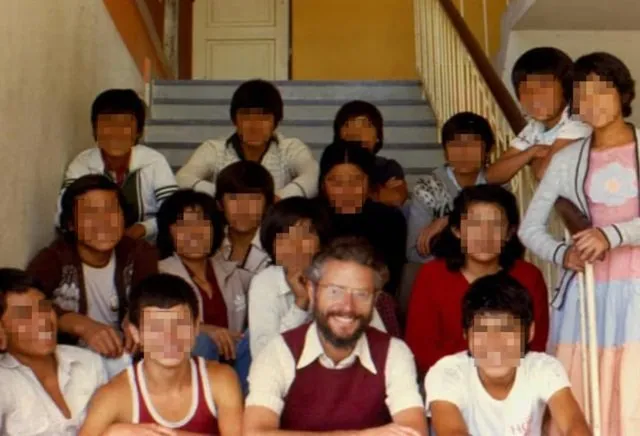
Two women in Bolivia have taken the first formal legal step against a former Spanish Jesuit priest accused of sexually abusing children in the country more than four decades ago, bringing renewed scrutiny to allegations of clerical abuse and institutional concealment that span Spain and Latin America. Francesc Peris, an 84-year-old Catalan priest known in Bolivia as Chesco, was expelled from the Society of Jesus in October following allegations that he abused more than 20 children between 1975 and 2005. The latest complaints, lodged in court on Thursday, concern alleged assaults at the Juan XXIII boarding school in Cochabamba in 1983.
The two complainants say they were girls living at the institution when Peris was employed there as a teacher. Their allegations are particularly significant because they represent the first formal criminal complaints filed against him in Bolivia, despite years of testimony and allegations concerning his conduct. The proceedings could result in Peris being summoned to testify. He currently lives in a religious residence, separated from contact with children.
Peris arrived in Bolivia in 1983 to become director of culture at Juan XXIII, replacing another Spanish Jesuit, Alfonso Pedrajas, who was transferred to work in the mines after internal complaints emerged about his alleged nighttime touching of pupils. Peris remained in Bolivia for only one year before being transferred back to Barcelona, reportedly following allegations of similar conduct. According to the Bolivian Survivors Community (CBS), approximately 20 girls were sexually assaulted by him during his time in the country.
The first complaint describes an alleged assault in the school’s infirmary, where one of the girls had gone after experiencing an allergic reaction. According to the court document, Peris examined her arms before instructing her to lower her trousers. He then allegedly removed her underwear and applied ointment to her intimate areas, telling her that, as a priest, he was doing nothing wrong. The complaint states that when the girl realised he was touching himself and unfastening his belt, she attempted to get up. Peris allegedly restrained her on the examination table, covered her mouth to prevent her from calling for help and raped her.
The second woman describes an alleged assault during preparatory classes. According to her account, Peris approached her and embraced her, gradually moving his hand from her shoulder to her waist before touching her right breast. The two accounts are now central to a criminal complaint that also seeks to establish whether senior Jesuit officials enabled or concealed the alleged abuse.
Those named in the complaint include former Bolivian provincial superiors Marco Recolons and Ignacio Suñol, the current provincial superior, Bernardo Mercado, and the Jesuits’ superior general, Arturo Sosa. Recolons has already been sentenced to one year in prison for concealing Pedrajas’s sexual abuse. The inclusion of senior officials shifts the legal focus beyond the alleged perpetrator towards the institutional structures responsible for safeguarding children and responding to allegations against members of the clergy.
The case has its origins in a wider investigation into sexual abuse within the Jesuit order in Bolivia. In 2023, revelations about Pedrajas, who maintained a diary acknowledging the sexual abuse of at least 85 minors, exposed allegations that senior religious officials had known about his conduct and helped conceal it. The publication triggered further disclosures involving approximately a dozen Jesuits accused of paedophilia, including Peris.
The CBS says its representatives had attempted to raise concerns about Peris before the latest complaints. Edwin Terrazas, the organisation’s secretary for international relations, says he reported Pedrajas and three other priests from Juan XXIII, including Peris, in 2022 to Osvaldo Chirveches, then responsible for the Jesuit order’s Protection Office in Bolivia. Chirveches has also been accused of concealment. Terrazas says the process was repeatedly delayed, forcing him to give his testimony over several months without securing justice.
The allegations against Peris also extend well beyond Bolivia. Survivors have described abuse in Spain before and after his deployment to South America. His conduct reportedly continued until 2005, when he was removed from his position following what the Jesuits described as inappropriate behaviour. At Barcelona’s Casp school, where he subsequently worked, pupils reportedly gave him the nickname “Sex Penis” because of his behaviour towards them. The Society of Jesus denied for two years that it had knowledge of the allegations.
The first testimony concerning Peris was among 251 accounts of alleged clerical abuse that the newspaper EL PAÍS delivered to Pope Francis and the Spanish Episcopal Conference in late 2021. One witness described abuse at Barcelona’s Casp school during the 1970s, followed by the priest’s transfer to Latin America. Another survivor, who was 14 at the time of an alleged assault in Bolivia in 1983, subsequently described waking during the night to find Peris touching her beneath the bedcovers. Her decision to speak publicly after the Pedrajas revelations encouraged other alleged victims in Catalonia to come forward.
Some survivors also say they had previously reported Peris’s behaviour to school management. One account states that the institution eventually removed him in 2005, although the Jesuits did not acknowledge having protected the priest until further testimonies were published.
The order opened a canonical investigation in 2023, which concluded three years later with a decision to expel Peris from the clerical state. The Jesuits described this as the most severe and permanent penalty available under canon law for such offences. In announcing the decision, the order expressed deep regret for the harm caused and acknowledged its moral and institutional responsibility for past failures.
Yet the disciplinary decision has not resolved the question of accountability. Two former provincial superiors have received prison sentences for concealing Pedrajas’s crimes, while the latest complaints seek to establish responsibility in the Peris case. Survivors of clerical sexual abuse in Bolivia have still not received compensation from the Jesuit order.
The legal action against Peris therefore represents more than an attempt to prosecute allegations dating back to 1983. It also tests whether institutions confronted with decades-old evidence of abuse can be held accountable for the decisions, omissions and concealment that allowed alleged perpetrators to remain in positions of authority. For the two women who have now approached the courts, the question is no longer simply whether the Church has expelled a priest. It is whether the justice system can finally address what happened to its victims.