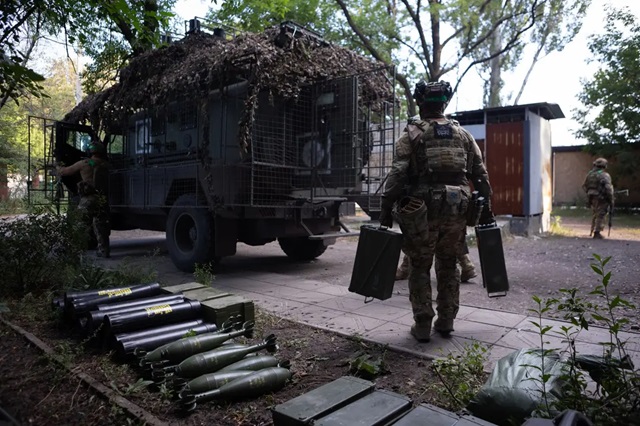
Recent assessments from multiple security analysts, including the Institute for the Study of War, suggest that the Russia-Ukraine war may be approaching a meaningful battlefield inflection point after years of attritional fighting. Russia’s rate of territorial gains has slowed markedly in 2026, while Ukraine has begun to regain localized initiative in several sectors of the front. Ukrainian President Volodymyr Zelenskyy has claimed that Kyiv has retaken significant territory this year, although independent verification remains limited. At the same time, Russian forces are reported to have suffered net territorial losses in recent months, a development that would mark a notable reversal in momentum compared to earlier phases of the war. Ukrainian military leadership has described the current period as a narrow strategic window, with Brigadier General Andriy Biletsky suggesting that Ukraine may have only a “six-month window” to improve its battlefield position and strengthen its leverage in any future negotiations with Moscow. Those negotiations remain stalled over the status of the Donbas region and the question of long-term security guarantees involving the United States and NATO.
According to analysis circulated in parallel by the Soufan Center, the emerging shift is not simply the result of Russian fatigue but also of Ukraine’s accelerating adaptation in modern warfare, particularly its expanded use of drones and electronic warfare systems. Ukrainian forces have increasingly leveraged low-cost, rapidly produced unmanned aerial systems to offset Russia’s traditional advantages in artillery and manpower. This has contributed to what some analysts describe as Ukraine’s reestablishment of an “overall drone advantage” in certain operational areas. A key technological and operational factor has been the evolution of battlefield communications and counter-drone capabilities, including external developments involving commercial satellite infrastructure. The decision by SpaceX in February to restrict unauthorized Russian access to satellite terminals reportedly used in occupied Ukrainian territories has been described as a significant disruption to Russian frontline coordination. Ukrainian officials worked with SpaceX to disable unauthorized systems while maintaining access for approved Ukrainian devices, narrowing Moscow’s ability to rely on mobile satellite communications for drone operations. The resulting degradation of Russian communications has forced adjustments in deployment patterns and exposed some units to improved Ukrainian targeting, particularly where larger or more visible antenna systems have replaced previously concealed setups.
However, the battlefield environment remains highly dynamic, with Russia simultaneously adapting its own strike strategy in response to Ukraine’s evolving defenses. Rather than relying on singular waves of attack, Russian forces have increasingly deployed complex, multi-layered strike packages combining ballistic missiles, cruise missiles, drones, and decoy systems designed to overwhelm Ukrainian air defenses. Recent large-scale strikes have included hundreds of drones and dozens of missiles targeting Ukrainian infrastructure, particularly in and around Kyiv. These attacks have been accompanied by heightened psychological pressure, including public warnings issued to foreign diplomatic personnel advising evacuation of the capital. In response, Ukraine has built increasingly sophisticated layered defenses integrating interceptor drones, mobile fire teams, electronic warfare systems, and traditional surface-to-air missile platforms. Kyiv has also expanded domestic innovation in countermeasures, including electronic warfare systems designed to disrupt satellite navigation and guidance systems, alongside efforts by Ukrainian defense firms to develop lower-cost alternatives to Western air defense platforms.
Despite these innovations, Ukraine’s most significant vulnerability remains its dependence on external suppliers for advanced air defense capabilities, particularly U.S.-manufactured Patriot missile systems. These systems are currently regarded as Ukraine’s most effective defense against Russian ballistic missile attacks, which continue to pose a strategic challenge that cannot yet be fully offset by domestic production. Although NATO and European funding mechanisms have helped facilitate transfers, the bottleneck remains largely tied to U.S. production capacity and political approval. Ukrainian leadership has repeatedly appealed for expanded deliveries, with Zelenskyy recently warning that current supply levels are insufficient to counter Russia’s missile tempo. This challenge has been compounded by shifting global priorities, including renewed U.S. military commitments in other theaters. The diversion of air defense resources toward the Middle East amid heightened tensions with Iran has further strained already limited stockpiles, creating additional pressure on Kyiv’s defensive posture at a critical moment.
The political dimension of Western support has also become increasingly contentious. Since returning to office, U.S. President Donald Trump has emphasized that European security should be primarily a European responsibility, a position that has contributed to friction within the transatlantic alliance. His administration has signaled reluctance to significantly expand U.S. military aid to Ukraine, particularly in high-demand systems such as Patriot interceptors. This position has been reinforced by broader geopolitical considerations, including ongoing military commitments in the Middle East and competing domestic priorities. At the same time, U.S.-European relations have experienced notable strain over burden-sharing within NATO, differences in strategic priorities, and disagreements over broader security policy, including military operations outside Europe and the future structure of alliance commitments. Reports indicate that Washington has encouraged European NATO members to assume a larger share of conventional defense responsibilities by 2027, alongside discussions about reducing U.S. force availability in certain contingency scenarios.
These tensions carry broader implications beyond Ukraine itself. Security analysts and institutions such as the Soufan Center have emphasized that the war in Ukraine is not an isolated regional conflict but part of a wider contest shaping the future of European and transatlantic security architecture. The United States and Europe continue to share extensive intelligence networks, military infrastructure, and strategic objectives, meaning that instability in Europe has direct consequences for U.S. global influence. NATO leadership has also warned that hybrid warfare tactics—including cyberattacks, sabotage, disinformation campaigns, and infrastructure targeting—are expanding across Europe, with Russia leading many of these efforts and Iran increasingly adopting similar methods. Countries along NATO’s eastern flank, including Poland, the Baltic states, and Finland, have already reported sustained exposure to such hybrid pressure, underscoring the risk of spillover beyond Ukraine’s borders.
The current phase of the conflict reflects a narrow and uncertain balance between Ukrainian innovation and Russian adaptation, with external support acting as the decisive variable. Ukraine has demonstrated a remarkable capacity for rapid military innovation under pressure, particularly in drone warfare and decentralized defense systems. However, Russia has repeatedly shown an equal ability to adjust tactics in response, sustaining the attritional nature of the conflict. Whether Ukraine can convert its present battlefield momentum into lasting strategic advantage will depend heavily on the scale and consistency of Western—especially American—support. Without it, analysts warn that Kyiv may struggle to translate short-term tactical gains into durable operational success before Russia recalibrates its own offensive capabilities, potentially resetting the conditions of a prolonged and unstable war.