The United States has launched a new wave of attacks against Iran after President Donald Trump declared an interim peace agreement with Tehran effectively over, escalating the most serious confrontation between the two countries since they signed a memorandum of understanding aimed at ending their conflict.
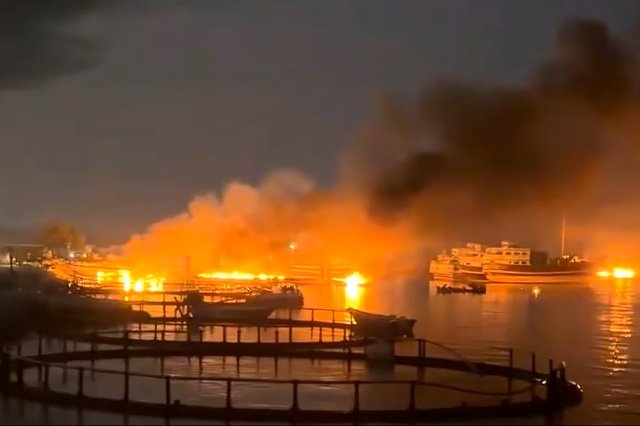
The U.S. Central Command confirmed on Wednesday that American forces operating near the Strait of Hormuz had begun additional strikes against Iranian targets. The command said the operation was ordered by Trump and was intended to further reduce Iran’s ability to threaten freedom of navigation through the strategic waterway.
“United States considers Iran responsible for the unjustified aggression against merchant ships and civilian crews freely navigating through a vital international maritime passage,” the Central Command said in a statement.
The latest escalation followed two days of attacks between the two countries. The confrontation began on Monday when Iran attacked at least three commercial vessels crossing the Strait of Hormuz that were linked to Saudi, Emirati and Qatari interests.
In response, the United States announced it was withdrawing permission for the international sale of Iranian oil, one of the concessions Tehran had received under the bilateral agreement and a measure that had been implemented after the deal was signed.
Hours later, the United States carried out airstrikes against more than 80 targets in Iran on Tuesday night. Iran responded with attacks targeting Bahrain and Kuwait, according to the report.
Speaking in Ankara during the NATO summit, Trump said the U.S. campaign would continue and suggested further attacks were likely. He also said he considered the ceasefire and the memorandum of understanding with Iran to be effectively finished.
Trump sharply criticized Iranian leaders, calling them “scum” and accusing them of being violent and dishonest. He said he no longer wanted to negotiate with Tehran and warned that Iran could use a nuclear weapon if it obtained one.
However, hours later, during a press conference at the end of his visit to Ankara, Trump moderated his remarks, saying his intention was to send a warning rather than begin a prolonged conflict. He said future attacks would end soon and that the United States was not seeking a long-term war.
The renewed tensions immediately affected financial markets. Spain’s Ibex index fell 2%, while oil prices rose 6% following Trump’s comments and the escalation in military activity.
The clashes have raised new questions over the future of the memorandum of understanding, a short document outlining a path toward a broader peace agreement between Washington and Tehran. The agreement covers two of the most sensitive issues between the countries: Iran’s nuclear program and the future status of the Strait of Hormuz.
Under the memorandum, both sides agreed to a 60-day period, ending on August 21, to negotiate a final agreement. The document was signed electronically on June 17, but the latest military confrontation has increased uncertainty over whether the talks can continue.
Mohamed Bagher Ghalibaf, the speaker of Iran’s parliament who led Tehran’s negotiating team during the ceasefire discussions, accused the United States of violating the agreement. He cited the latest U.S. strikes, the renewed restrictions on Iranian oil sales and Israeli attacks in Lebanon as breaches of the arrangement.
“The era of intimidation and extortion is over,” Ghalibaf wrote on social media, adding that Iran would not surrender.
The memorandum includes provisions for the gradual lifting of economic sanctions against Iran, the release of frozen Iranian funds held abroad and the creation of a reconstruction fund for Iran worth at least $300 billion. Washington has said those benefits would only be provided in stages if Tehran demonstrates cooperation and that the United States would not contribute financially to the fund.
The agreement also requires the Strait of Hormuz to remain open without charges during the 60-day negotiation period.
The latest strikes have placed the already fragile diplomatic process under renewed pressure, with both sides accusing the other of undermining the agreement while military operations continue.