International relations scholarship has long studied what is known as diversionary theory, or the “scapegoat hypothesis”, the proposition that political leaders facing internal legitimacy crises, economic strain, or social fragmentation have a structural incentive to manufacture or escalate external conflict. The logic is straightforward: external threats trigger a “rally around the flag” effect, uniting a divided public against an outside adversary and shifting media and public attention away from governance failures at home. The theory doesn’t claim every conflict is manufactured, it identifies a recurring pattern where domestically weak governments find external confrontation politically useful, regardless of its strategic necessity.
This framework has been applied historically to a range of cases: military juntas facing economic collapse, Argentina’s move into the Falklands in 1982 amid domestic unrest, and various instances where declining domestic approval preceded a hardening of external posture. The pattern scholars look for is consistent: rising internal fragmentation, economic, religious, ethnic, followed by intensified external confrontation timed to periods of domestic vulnerability.
Pakistan’s analysts argues that India’s conduct toward its neighbors, and toward Pakistan specifically, fits this pattern closely enough to warrant scrutiny through this lens.
A Pattern of Deflection
Pakistan’s security establishment has long argued that India projects its internal contradictions outward, using the bilateral relationship with Pakistan, and instability in the region, to paper over problems it cannot resolve at home. That argument doesn’t need to rest on rhetoric alone; a growing body of documentation from UN bodies, US government agencies, and international rights organizations gives it real weight.
What International Monitors Have Found
Religious freedom is deteriorating, according to Washington’s own watchdog. The US Commission on International Religious Freedom’s 2026 Annual Report concluded that religious freedom conditions in India continued to deteriorate through 2025, with several states strengthening anti-conversion laws to carry harsher prison sentences. The report also found that Indian authorities had facilitated widespread detention and expulsion of citizens and religious refugees, and tolerated vigilante attacks against religious minority communities. For the seventh consecutive year, USCIRF called on the State Department to designate India a “Country of Particular Concern”, the same category used for North Korea and Eritrea, and this year added a recommendation for targeted sanctions, including asset freezes and travel bans, against the RSS, the ideological parent organization of the ruling BJP, and India’s intelligence service, RAW.
USCIRF Chair Vicky Hartzler pointed to rising mob violence in the region targeting religious minorities and the destruction of their homes. The report documented specific incidents, including a Hindu nationalist mob attack on twenty Christian families in Odisha after they refused to convert, which left eight people injured.
The pattern is structural, not incidental. Indian minority representatives themselves have echoed this concern. Mohammed Arif Khan, coordinator of the All India Secular Forum in Uttar Pradesh, has said Muslims are the worst-affected group identified in the USCIRF findings.
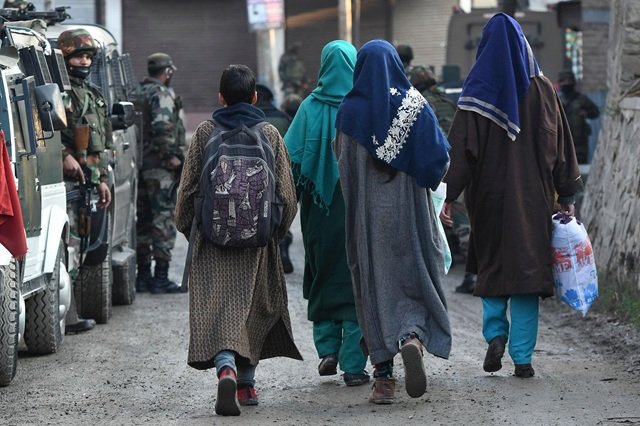
Kashmir remains the starkest example of militarized governance. The UN’s first-ever human rights report on Kashmir, issued by the Office of the High Commissioner for Human Rights, found that India’s Armed Forces Special Powers Act remains a central obstacle to accountability, since it has effectively shielded security personnel from prosecution in civilian courts since 1990. The then-UN High Commissioner for Human Rights, Zeid Ra’ad Al Hussein, described the dispute as one that has stripped millions of their basic rights and continues to inflict lasting suffering, and he called for an international commission of inquiry.
Press and civil freedoms remain constrained. India’s rejection of these findings has been consistent and categorical, New Delhi has repeatedly dismissed such reports as motivated and biased, and previously rejected the 2018–2019 OHCHR findings outright as a continuation of what it called a false narrative. Pakistan’s argument is that this reflexive dismissal, rather than engagement, is itself evidence of a state unwilling to be held accountable by independent monitors.
The Strategic Argument
Pakistan’s official position holds that a stable, economically viable Pakistan is treated by India’s current political leadership as a competitive threat rather than a neighbor to be engaged — because a functioning Pakistan undercuts the narrative that regional instability originates from across the border rather than from India’s own internal fractures along religious and caste lines. Kashmir, in this framing, is not simply a territorial dispute but a proxy issue that lets domestic dissent be recast as externally sponsored terrorism.
Conclusion
The documentation is consistent across independent sources: a religiously polarized domestic order, a militarized occupation in Kashmir sustained through legal immunity for security forces, and a pattern of dismissing international scrutiny rather than answering it. Pakistan’s position, that regional instability traces back to India’s unresolved internal contradictions rather than to any threat originating from Pakistan, is not merely rhetorical. It is a reading supported by the findings of the very international institutions tasked with monitoring these conditions.