Foreign correspondents working in China say pressure, surveillance and intimidation have become embedded in their daily work, with nearly all respondents to a new survey concluding that reporting conditions in the country fail to meet internationally accepted standards. The Foreign Correspondents’ Club of China’s (FCCC) 2025 Media Freedoms Report portrays an environment in which restrictions are no longer viewed as isolated incidents but as a routine feature of reporting, describing the situation as “the new abnormal.”
The report, based on responses from 89 correspondents representing international news organisations across Asia, Europe, Latin America and North America, opens with the assessment that “pressure, intimidation, and uncertainty have become part of the day-to-day reality of reporting in China.” It says journalists continue to face “continued obstacles in accessing information, reporting freely, and protecting both themselves, their Chinese colleagues and their sources from pressure and intimidation,” while warning that independent reporting has become “extremely difficult.”
The survey found that 94 per cent of respondents said reporting conditions in China “do not usually” or “almost never” meet international standards. Although that figure represents a marginal improvement from 98 per cent recorded in the previous year’s survey, the report notes that “not a single respondent considers reporting conditions in China ‘usually’ or ‘almost always’ meet international standards.” Of those surveyed, 38 per cent said reporting conditions “almost never” met international standards, while 56 per cent said they “usually do not.”
According to the report, China’s legal framework appears to allow foreign correspondents considerable latitude, requiring only the permission of the individual or organisation being interviewed. “In reality, however, the situation is very different,” it states. Journalists reported encountering difficulties from the earliest stages of research, pointing to blocked international news websites, censorship inside the “Great Firewall”, limited access to government officials and widespread reluctance among potential interviewees to speak with foreign media.
One journalist quoted in the report remarked: “Generally, we are not molested and can say what we want, though that changes when we go out into the field, of course.” Another observed: “Obviously, we cannot report as freely as we would in another country, we are followed and must always be careful about how we phrase things when it comes to certain topics.” A European print journalist added: “People from all walks of society are extremely reluctant to speak to foreign media for fear of repercussions, which makes even basic reporting extremely difficult.”
The FCCC report says journalists increasingly believe that “everything can become sensitive.” While Taiwan, Tibet, Xinjiang and criticism of Chinese President Xi Jinping remain long-established political red lines, correspondents reported that subjects including demographics, youth unemployment, the property market, trade tensions, semiconductors, artificial intelligence and rare earths have also become increasingly sensitive over the past year.
One Beijing-based correspondent recalled being warned while collecting a press card that there were “two ‘no-go'” issues: “The first was to join the FCCC as it is deemed an illegal organization, the second was direct criticism of Xi Jinping.” Another respondent said: “I feel pressure is increasing on the topic of Xi Jinping and politics but also on the economy. There’s also a stronger push to forbid us to publish about Taiwan.”
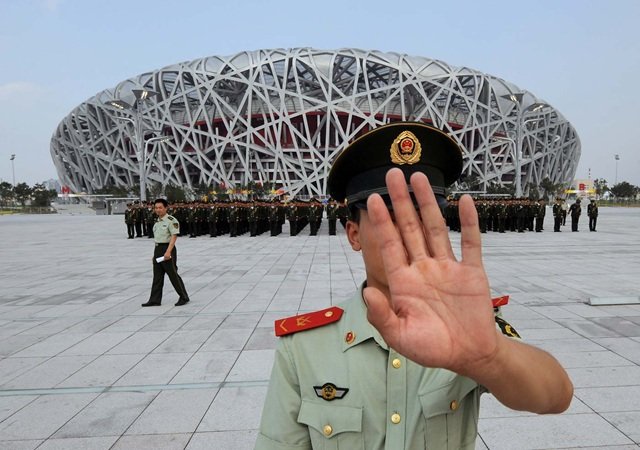
Reporting on location remains particularly difficult, according to the survey. Sixty-four per cent of respondents said they had been obstructed by police or other officials while reporting, while 40 per cent reported interference from unidentified individuals. Eight per cent said they had experienced physical manhandling or force.
Correspondents described being detained, questioned and forced to delete material. One journalist reported: “We were taken to the police station, with every member of our team in a different vehicle, got interrogated, had to sign a statement, had to delete footage.” Another recounted being followed by “around ten plainclothes agents” while reporting near factories in Zhengzhou before being harassed by uniformed police.
The report suggests that even stories unrelated to politically sensitive subjects increasingly attract official attention. A European reporter wrote: “This ranges from blocking access to interviewing certain people, demanding we leave, long periods being made to wait for government officials to arrive to answer questions, being followed wherever we go, have our would-be interviewees harassed by government officials and pressured into not speaking, drone surveillance, car surveillance, making local drivers report on us. And all of this mostly has nothing to do with the ‘sensitive’ nature or otherwise of our stories.”
Obtaining interviews has become another major challenge. The survey found that 77 per cent of respondents had experienced sources declining or cancelling interviews because they were “not permitted to speak to foreign journalists.” Nearly one-third said interviewees later faced questioning, intimidation or other consequences after speaking with foreign media, while many others said they could not determine whether reprisals had occurred.
One correspondent reported that “business owners declined interviews about the economy out of fear to speak to foreign media,” while academics, economists and agricultural experts similarly declined requests because they were “apparently not permitted to speak to foreign media.” Another respondent summarised the situation by saying: “It happens with people from all walks of life, from academics to migrant workers.”
Visa restrictions also continue to shape foreign news coverage. The report says some journalists have waited years for accreditation or have been unable to enter China altogether. Sixteen respondents said their bureaux remain understaffed because they have been unable to obtain visas for additional correspondents. One journalist reported waiting six months because of predecessors’ reporting, explaining: “Because of my predecessors’ ‘poor’ reporting, according to the Chinese authorities, I had to wait about 6 months for my visa to be granted.”
The FCCC also documents legal pressure directed at journalists and their employers. Nineteen per cent of respondents reported threats of legal action during 2025, although none ultimately resulted in lawsuits. Journalists described threats from government officials, corporations and private individuals intended to discourage publication of unfavourable reporting. One reporter recalled local police warning that if previously deleted footage later appeared in published work, authorities would find someone featured in the footage “to file a report against me.”
Chinese employees working for foreign media continue to bear substantial risks, according to the survey. Forty per cent of respondents said their local colleagues had experienced harassment, intimidation or official pressure. Journalists described researchers and producers being summoned for informal police questioning known as “tea” meetings, subjected to repeated phone calls or accused of being “traitors.” One respondent said concerns over staff safety had become so significant that the bureau decided to replace a Chinese researcher with a foreign national.
Digital surveillance remains another recurring concern. Seventy-nine per cent of respondents believed their WeChat communications had possibly or definitely been compromised, while 63 per cent expressed similar concerns about telephone conversations. Nearly half suspected audio surveillance devices in their homes or offices. One journalist stated: “I operate under the assumption that they are able to get into all my accounts if they really want to. But for mobile phone calls and WeChat messages, I know it is the easiest for them.”
Reporting conditions become even more restrictive in politically sensitive regions. The survey found that 64 per cent of journalists travelling to Xinjiang, 70 per cent visiting Tibetan regions, 89 per cent reporting from Inner Mongolia and 73 per cent working near North Korea’s border experienced reporting difficulties. None of the respondents who sought permission to enter the Tibet Autonomous Region independently during 2025 were granted access.
Summarising its findings, the FCCC concludes that restrictions on reporting have evolved into a structural feature of journalism in China. “Respondents described an environment in which formal reporting rights often exist on paper but are increasingly difficult to exercise in practice,” the report states. “Taken together, the survey responses suggest that restrictions on reporting are no longer experienced as isolated incidents, but as a routine feature of the reporting environment. For many correspondents, this has become the new abnormal.”