Astronomers are developing an ambitious new European-led telescope that could reveal vast regions of the universe that have remained largely invisible to science, offering an unprecedented view of galaxies hidden behind cosmic dust and helping answer fundamental questions about the evolution of the cosmos.
The proposed Atacama Large Aperture Submillimeter Telescope, known as AtLAST, is designed to observe the universe in submillimetre wavelengths, detecting radiation that lies between radio waves and infrared light. Scientists believe this region of the electromagnetic spectrum holds the key to studying nearly half of the universe’s light, much of which originates from galaxies concealed behind enormous clouds of interstellar dust.
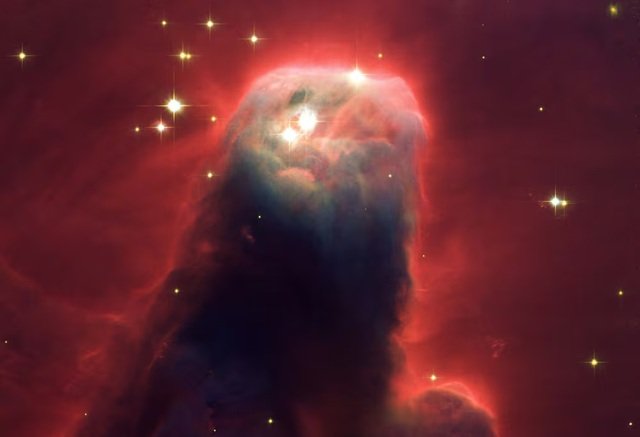
The challenge is familiar to anyone who has observed the Milky Way. Its hazy appearance reflects the vast quantities of dust concentrated towards the centre of our galaxy, obscuring large portions of the universe from conventional optical telescopes. According to researchers, this limitation has left astronomers with an incomplete understanding of how galaxies form and evolve.
“Without submillimetre observations, we obtain a highly biased picture of what exists in outer space,” said Claudia Cicone, an astrophysicist at the University of Oslo and one of the project’s scientific leaders. “We are missing the regions of space that are most heavily obscured by dust.”
Current facilities, including the Atacama Large Millimeter/submillimeter Array (ALMA) in Chile, have enabled scientists to study some dust-obscured regions in remarkable detail. However, researchers believe a much larger instrument is needed to survey the sky on a far broader scale. AtLAST is proposed as a 50-metre single-dish telescope, making it substantially larger than any existing submillimetre telescope.
The project’s initial design phase is being carried out under the European Union-funded AtLAST2 programme, which runs until 2028. Scientists and engineers from Europe, Chile, South Africa, Canada, Taiwan, Thailand, New Zealand, Japan and the United States are collaborating to refine the observatory’s design, develop key technologies and ensure the facility can operate as sustainably as possible.
Researchers describe AtLAST as an essential complement to the next generation of giant observatories expected to transform astronomy during the 2040s, including Europe’s Extremely Large Telescope, which is nearing completion in Chile. While ALMA functions like a microscope by producing highly detailed images of small regions where stars and planets form, AtLAST would operate as a wide-angle camera capable of surveying enormous sections of the sky.
“ALMA is extremely powerful, but you cannot map the sky with a microscope,” said Tony Mroczkowski, an astronomer at Spain’s Institute of Space Sciences and another project leader. He noted that ALMA observes an area thousands of times smaller than the Moon during a single observation, whereas AtLAST would capture an area equivalent to as many as sixteen full moons at once, dramatically increasing astronomers’ ability to map the universe efficiently.
To achieve this capability, the telescope would rapidly scan large areas of the sky while processing enormous volumes of data. During the current design phase, researchers are developing prototypes for the observatory’s optical systems, control mechanisms and data management technologies.
The observatory itself would be a major engineering achievement. Its primary 50-metre dish would consist of aluminium panels supported by a steel structure weighing approximately 4,400 tonnes. A 12-metre secondary mirror—larger than most existing telescopes—would provide the exceptionally wide field of view required for large-scale surveys. The facility is planned for a site near ALMA in Chile’s Atacama Desert, where high altitude and exceptionally dry atmospheric conditions offer ideal observing conditions.
Sustainability has become a central feature of the project. According to Cicone, the telescope is intended to operate entirely on renewable energy through a hybrid energy recovery system. Much like a hybrid vehicle, the observatory would recover kinetic energy generated while slowing its movement, converting it back into electricity. Researchers are also evaluating combinations of solar power, battery storage, metal hydride energy storage and regenerative braking technologies, while seeking to manufacture the steel and aluminium required using electricity with near-zero carbon emissions.
Scientists believe the observatory could dramatically expand knowledge across multiple fields of astronomy. AtLAST would map the cold gas and dust that fuel star formation, detect dusty galaxies that currently remain unresolved, and study previously inaccessible features of the Sun’s atmosphere, including the variability of solar flares.
One of its most significant scientific objectives is overcoming what astronomers describe as the “confusion limit”. Existing instruments can detect light from heavily dust-obscured regions but often cannot distinguish whether that light originates from a single galaxy or hundreds of overlapping galaxies. Cicone said AtLAST could resolve these hidden systems, potentially identifying as many as 50 million galaxies during 1,000 hours of observation.
The resulting data could provide new insights into how the universe has evolved over cosmic time, improve measurements of the accelerating expansion driven by dark energy, and deepen understanding of dark matter, the invisible substance whose gravitational influence shapes galaxies. Researchers also hope the telescope will detect much of the universe’s missing matter, including hot and cold gas surrounding galaxies that has remained difficult to observe using visible light.
Beyond cosmology, AtLAST could contribute to the search for life’s origins by detecting molecules that may serve as the building blocks of life and by studying molecular clouds and debris discs surrounding young stars, shedding new light on the processes that form stars and planetary systems.
Researchers also believe the telescope’s greatest discoveries may come from entirely unexpected phenomena visible only at submillimetre wavelengths. Designed to remain operational for approximately 50 years, AtLAST is intended to be continually upgraded rather than replaced.
“The goal is that it should not be simply a disposable telescope,” Mroczkowski said, “but one with a long operational life and upgradeable instrumentation that can benefit future generations of astronomers.”