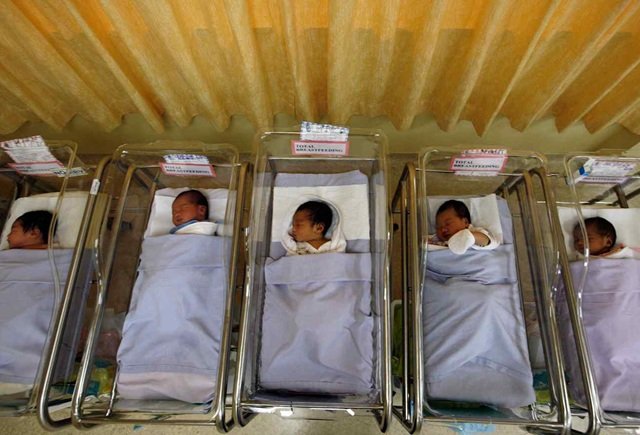
Singapore’s annual number of births fell below 30,000 for the first time since independence in 1965, underscoring mounting demographic pressures as one of Asia’s fastest-ageing societies grapples with declining fertility, a shrinking future workforce and rising healthcare costs.
According to the “Report on Registration of Births and Deaths 2025”, released by the Immigration and Checkpoints Authority on Monday, a total of 29,864 babies were born in 2025. The figure represents an 11.4% decline from the previous year and is more than 8,800 lower than the 38,672 births recorded in 2021. It is also the lowest annual total since 1965, when Singapore recorded 55,725 births.
A key factor behind the decline is the country’s falling fertility rate. Deputy Prime Minister Gan Kim Yong said in February that Singapore’s resident total fertility rate (TFR) fell to a record low of 0.87 in 2025, down from 0.97 the previous year. The TFR measures the average number of children a woman is expected to have during her reproductive years.
The changing profile of first-time mothers also reflects broader social trends. In 2025, 67.7% of women having their first child held a university degree, while 85.7% were employed. Their median age rose to 32.1 years, an increase of 0.2 years from the previous year and significantly higher than the median age of 29.2 recorded two decades earlier.
At the same time, high housing costs continue to add to the challenges facing couples considering parenthood. Singapore remains one of the world’s most expensive housing markets. According to figures released by the Urban Redevelopment Authority on Friday, private home rents increased by an average of 0.7% during the second quarter of 2026, although no monetary values were disclosed.
The decline in births comes as Singapore continues to experience the effects of an ageing population. The number of deaths reached 26,499 in 2025, an increase of 0.2% compared with the previous year. Gan warned that if birth rates continue to decline at their current pace, Singapore’s citizen population could begin shrinking in the early 2040s without further policy intervention.
In response to these demographic trends, the government has established the Marriage and Parenthood Reset Workgroup to strengthen societal support for marriage and raising children. The workgroup is expected to present its findings in early 2027, although recommendations may be issued before that date.
Gan has also highlighted immigration as an important component of Singapore’s long-term demographic strategy. He stressed the need for a “carefully managed immigration flow to augment our low birth rate” in order to help offset the effects of a shrinking workforce.
Despite the falling birth rate, Singapore’s total population continued to grow. As of June 2025, the population stood at 6.11 million, representing an increase of 1.2% from a year earlier. According to the National Population and Talent Division, the growth was driven primarily by an expanding non-resident population, including work permit holders employed in the construction sector and domestic workers.
Economists say the demographic changes are likely to have significant long-term fiscal implications. Jester Koh, an associate economist at United Overseas Bank, said healthcare expenditure is expected to rise substantially over the medium to long term as the population ages rapidly. He added that the continued decline in the fertility rate will sharply reduce the old-age support ratio, placing a greater caregiving burden on Singapore’s public healthcare system and intensifying the economic challenges associated with an ageing society.