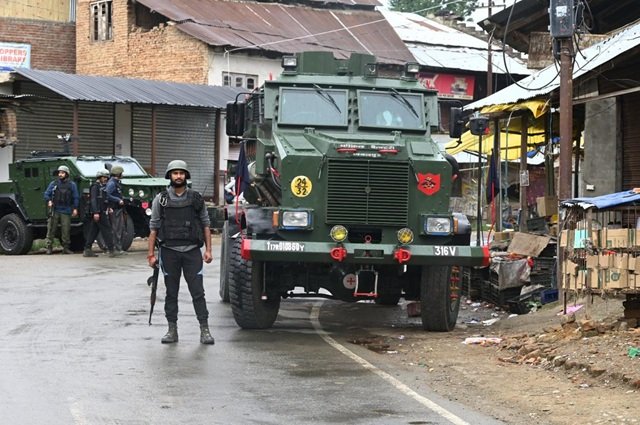
The relative calm that had prevailed in Jammu and Kashmir (J&K) through the early months of 2026 was disrupted on the evening of July 31, 2026, when terrorists opened fire on two non-local labourers at a brick kiln in the Kellam area of Kulgam District. Deepak Ratray, 24, a resident of Chhattisgarh, was killed, while another labourer, Bhupinder, about 28, and also from Chhattisgarh, sustained critical injuries.
The incident marked the first civilian fatality in J&K in 2026.
The previous and major attack on civilians occurred on April 22, 2025, when Pakistani terrorists selectively slaughtered 26 tourists in Baisaran Valley near Pahalgam – including two locals, 24 tourists, a Navy officer, an Intelligence Bureau officer, and a foreign national each from the United Arab Emirates and Nepal – and injured at least another 20. One of the injured later succumbed, taking the death toll to 27. The only other civilian fatality in 2025 was the killing of retired Army soldier Manzoor Ahmad Wagay in Kulgam District on February 3; his wife and niece were also injured in the attack.
J&K recorded 31 civilian fatalities in 2024. Details are available for 24 of these deaths, including 12 non-locals. Among the most significant incidents was the October 20, 2024, attack by The Resistance Front on a construction camp at Gagangir in Ganderbal District, in which seven persons, including a doctor and six labourers, were killed. Other attacks targeted migrant workers in Tral, Shopian, Pahalgam and Bijbehara.
In 2023, there was only one such attack, in which a civilian was killed on October 30.
Earlier, terrorists had targeted non-local labourers on at least 15 occasions in 2022, resulting in six fatalities and 33 injured. In 2021, six such attacks left six persons dead and two injured. Although no such attack was reported in 2020, two attacks occurred after the abrogation of Article 370 on August 5, 2019, resulting in five deaths and one injury. In one of these incidents, five migrant workers from Murshidabad District in West Bengal, were shot dead in Kulgam District on October 29, 2019, while another non-local worker was injured in a separate attack.
Since the abrogation of Article 370, terrorists have carried out at least 31 attacks targeting non-local civilians, resulting in 59 fatalities. The latest attack fits this well-established pattern of selectively targeting migrant workers and other civilians from outside the UT.
Investigators and intelligence agencies assess that the latest attack reflects the continuing strategy of Pakistan-backed terrorist groups of targeting soft civilian objectives. Such attacks require limited resources but generate disproportionate psychological impact, create fear among migrant workers, attract widespread media attention, and undermine public confidence in the improving security environment. Further, by targeting non-local labourers, terrorist groups seek to spread fear, discourage investment and developmental activities, disrupt the inflow of outside workers, and challenge the perception of normalcy that has gradually returned to J&K in recent years.
Despite sustained counter-terrorism pressure, Pakistan’s Inter-Services Intelligence continues to support terrorist proxies through infiltration attempts, logistical assistance, and cross-border facilitation, enabling residual terrorist networks to retain the capability to execute occasional high-impact attacks. The Pahalgam massacre in April 2025 had already demonstrated that even substantially weakened terrorist networks remain capable of carrying out lethal attacks against vulnerable civilians.
Nevertheless, the broader security trajectory in J&K remains overwhelmingly positive. According to the South Asia Terrorism Portal database, a total of 16 terrorism-linked fatalities were recorded in the UT up to July 31, 2026. These included one civilian, two Security Force (SF) personnel, 12 terrorists, and one Not Specified (NS). During the corresponding period in 2025, J&K had recorded 73 fatalities, comprising 28 civilians, 10 SF personnel, 34 terrorists, and one NS. This represents a year-on-year decline of approximately 78 per cent in overall terrorism-linked fatalities.
The long-term trend is even more significant. Total fatalities in J&K declined to 92 in 2025, marking the first time since 1989 that annual fatalities fell to double digits. Between 1990 and 2006, annual fatalities consistently remained in the thousands before declining to the hundreds from 2007 onwards. The conflict reached its deadliest phase in 2001, when 4,011 persons were killed. Civilian fatalities peaked at 1,333 in 1996, while SF fatalities reached their highest level of 638 in 2000. These figures reflect the cumulative impact of sustained counter-terrorism operations, improved intelligence capabilities, stronger inter-agency coordination, and persistent pressure on terrorist infrastructure over more than three decades.
The July 31, 2026, attack demonstrates that terrorism in J&K has been significantly degraded but not entirely eliminated. SF dominance on the ground has reduced the number of active terrorists, while the local recruitment base has shrunk considerably. However, Pakistan-backed terrorist groups continue to retain a limited capacity to mount sporadic attacks against vulnerable civilian targets. Protecting migrant workers, strengthening intelligence-led operations, maintaining pressure on infiltration routes, and dismantling residual terrorist networks will remain essential to preserve the hard-won security gains of the past decade and to prevent isolated attacks from disrupting J&K’s broader trajectory towards peace and stability.