Leaked internal documents analysed by Haaretz suggest Israel’s largest defence contractor, Elbit Systems, proposed supplying the United Arab Emirates with advanced drones, intelligence platforms and other military technologies following the 2022 Houthi attack on Abu Dhabi. The documents provide a rare glimpse into the expanding defence partnership forged after the Abraham Accords, while raising fresh questions about the scale and nature of previously undisclosed military cooperation between the two countries.
Just weeks after the Houthi missile and drone attack on Abu Dhabi in January 2022, Israel’s largest defence contractor allegedly responded to an urgent request from the United Arab Emirates with a proposal to supply some of its most advanced unmanned aerial systems. According to leaked internal documents analysed by Haaretz, the proposed sale marked only one element of a much broader military relationship that has expanded significantly since the signing of the Abraham Accords.
The documents, which Haaretz says originated from the personal Gmail account of a senior Elbit Systems executive and were later published online by a hacker group linked to Iranian intelligence, offer an unusually detailed view of discussions surrounding advanced Israeli weapons sales to the Gulf state. Haaretz reported that it analysed the cache of documents and cross-checked their contents against sources and publicly available information before publishing its findings.
The reported correspondence suggests that cooperation between Israel and the UAE has steadily deepened over recent years, evolving beyond publicly acknowledged agreements into a broad strategic relationship encompassing drones, intelligence platforms, air-defence systems and other advanced military technologies. According to Haaretz, that partnership has grown even closer during the recent conflict involving Iran, including the reported deployment of Iron Dome batteries on Emirati territory and Prime Minister Benjamin Netanyahu’s secret visit to the UAE during the fighting.
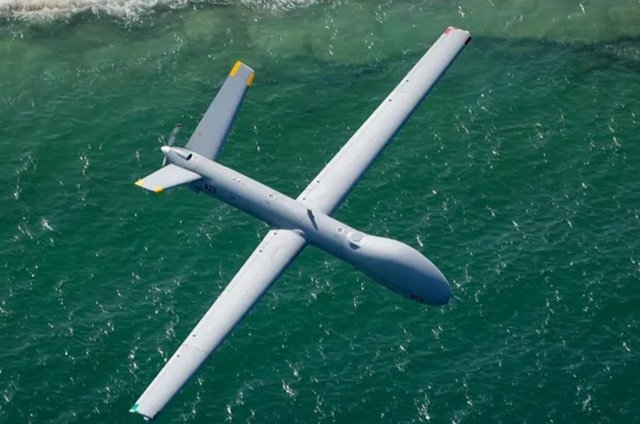
The immediate catalyst for the reported drone proposal was the Houthi attack on 17 January 2022, when ballistic missiles and drones targeted oil facilities and Abu Dhabi International Airport, killing three people. Two months later, the leaked documents indicate that the UAE submitted what Elbit described as an “urgent operational requirement” for Hermes 900 unmanned aircraft capable of extending surveillance beyond the country’s borders to detect missile and drone launches while also supporting homeland security operations.
According to the documents reviewed by Haaretz, Elbit proposed supplying two Hermes 900 intelligence systems, each consisting of three aircraft together with sophisticated surveillance and electronic intelligence equipment. The package included six Hermes 900 drones equipped with electro-optical day-and-night observation payloads, SkyEye WAPS wide-area surveillance systems, cellular interception equipment, electronic warfare systems, LightSpear anti-jamming technology and two ground-control stations. Each three-aircraft system was priced at approximately US$90 million, placing the initial proposal at around US$180 million.
The documents also indicate that the Emirati authorities considered significantly expanding the acquisition. Haaretz reported that the UAE expressed interest in increasing the purchase to 15 Hermes systems, representing a fleet of 45 advanced drones with an estimated value of approximately US$1.3 billion.
Among the capabilities highlighted in the proposal was Elbit’s SkyEye WAPS payload, a system incorporating an array of ten electro-optical cameras capable of monitoring large areas in real time at high resolution. The documents describe the technology as providing “intelligence forensics”, enabling operators to rewind surveillance footage while integrating multiple viewpoints to trace the movement of specific objects or reconstruct events after they occur.
The leaked correspondence also points to discussions extending beyond drones. One classified Emirati document attached to the email exchanges, entitled “SIGINT Wish List”, outlined a requirement for four intelligence aircraft equipped with electronic intelligence collection, communications interception, cyber capabilities, electronic warfare systems and visual intelligence equipment. Haaretz noted that the documents do not clarify whether this proposed sale ultimately proceeded.
Other documents reportedly refer to the SkyStriker loitering munition, identified within Elbit documents as “Red Galloper”. Another presentation described a project codenamed “Yasmin 3” involving the manufacture of “6,000 kits within three months”. While the precise nature of those kits remains unclear, Haaretz noted that Elbit manufactures conversion kits capable of transforming conventional bombs, including the MPR-2000 bunker-penetrating munition, into precision-guided weapons using GPS or laser guidance.
The leaked material also reveals that Elbit offered the UAE another strategic platform, the Hermes 650, in March 2023, almost a year before the drone was publicly unveiled at the Singapore Airshow. According to the presentation, the Hermes 650 would provide the UAE with a new generation of surveillance, electronic warfare and signals intelligence capabilities while offering compatibility with Elbit’s SkyStriker loitering munitions and Aeronautics’ Orbiter-series drones. The proposal also included plans for local production of certain components and domestic integration of systems, reflecting the UAE’s policy of developing an indigenous defence industry.
The documents also reveal discussions involving numerous senior Elbit executives, including Chief Executive Officer Bezhalel Machlis and other senior managers responsible for international marketing, strategy, business development and unmanned aerial vehicles. At the same time, the correspondence appears to expose weaknesses in information security practices, with sensitive documents reportedly exchanged through the private email accounts of at least two senior executives rather than the company’s corporate email system.
One internal memorandum from 2021 summarised a meeting between Elbit’s chief executive and the head of the Israeli Defence Ministry’s Political-Military Bureau concerning potential exports to several countries, including Qatar, Saudi Arabia, Ethiopia, Rwanda and Turkey. According to the document, Elbit received authorisation to sell the UAE a Hermes 900 intelligence-gathering drone without strike capabilities together with the SkyStriker loitering munition, limited to a range of 60 kilometres. The meeting also addressed possible exports of the MPR-2000 bunker-penetrating bomb.
Haaretz notes that much of the military cooperation between Israel and Abraham Accords countries remains undisclosed publicly. While Elbit, Rafael, Israel Aerospace Industries and other Israeli defence companies have established local offices and joint ventures in the UAE, official announcements concerning major transactions have been relatively limited. Israeli defence exports reached a record US$19 billion in 2025, including approximately US$3 billion in sales to Abraham Accords countries. Since 2021, arms exports to those countries have totalled around US$9 billion, with Morocco and the UAE accounting for the overwhelming majority.
The only publicly acknowledged UAE contract announced by Elbit came in January 2022, when the company secured a US$50 million agreement to equip five Emirati aerial refuelling aircraft with missile-defence systems. More recently, Elbit announced a US$2.3 billion agreement to provide a “strategic solution to an international customer” without identifying either the buyer or the systems involved. Haaretz noted that a French publication subsequently identified the UAE as the customer.
The documents also describe the continuing expansion of strategic cooperation beyond defence procurement. Following Israeli and United States military operations against Iran on 28 February this year, Iran reportedly directed more than 3,000 ballistic missiles and drones towards the UAE. According to reports cited by Haaretz, Emirati aircraft subsequently made undisclosed flights into Israel, while Axios later reported that Israel deployed Iron Dome batteries and their crews to the UAE. The report was later confirmed by United States Ambassador to Israel Mike Huckabee and Israeli security cabinet member Miri Regev, while the Financial Times reported that Israel also transferred a laser interception system.
Haaretz further reported that a similar Emirati airlift had reached Israel’s Nevatim Airbase in April 2022. Months later, satellite imagery reportedly showed an Israel Aerospace Industries Barak air-defence system deployed around Al Dhafra Airbase near Abu Dhabi, while Reuters reported that the UAE had purchased Rafael’s SPYDER air-defence system.
Speaking to Haaretz, a senior United States official praised the defence relationship that has developed between Israel and the UAE since the Abraham Accords, describing both countries as important regional partners. The official also said the close relationship had enabled the UAE to undertake humanitarian projects in Gaza that other countries and United Nations agencies had been unable to implement, including the construction of a desalinated water pipeline from Egypt into the Gaza Strip. According to the official, the Emiratis worked directly with Israel on issues including humanitarian assistance rather than relying on Washington to mediate.
In response to Haaretz’s request for comment, Elbit Systems said it “does not comment on the business matters relating to its customers” and added that “the mentioned data does not reflect the firm’s business reality.”