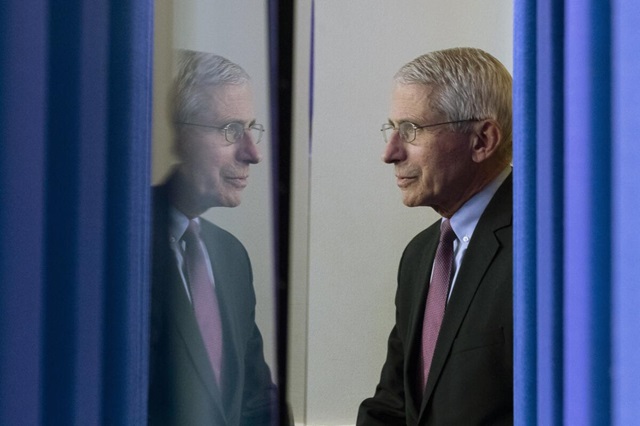
Anthony Fauci, the veteran scientist who led the United States’ response to the Covid-19 pandemic under both President Donald Trump and President Joe Biden, is facing renewed political and legal pressure after repeatedly declining to answer questions during a Senate hearing, setting the stage for an escalating confrontation with Republican lawmakers.
During more than three hours of testimony on Wednesday, Fauci invoked his constitutional right against self-incrimination nearly 100 times, stating: “Following the advice of my lawyer, I respectfully decline to answer, relying on my rights under the Fifth Amendment of the Constitution.” The 85-year-old epidemiologist, who headed the National Institute of Allergy and Infectious Diseases for 38 years under both Republican and Democratic administrations, acknowledged that it was painful not to respond to senators’ questions.
Fauci justified his refusal by citing what he described as Republican Senator Rand Paul’s “unhinged obsession” with seeing him spend the final years of his life “behind bars”. Paul, who chairs the Senate committee overseeing the hearing, has long accused Fauci of misconduct during the pandemic and has become the leading figure in Republican efforts to scrutinise his handling of the Covid-19 crisis.
The confrontation comes after former President Joe Biden granted Fauci a controversial presidential pardon on the final day of his presidency. The pardon, issued on 20 January 2025, covers actions taken before that date but does not extend to any subsequent conduct. Republicans have argued that this leaves room for further legal action and have signalled their determination to continue pursuing the scientist.
Paul has repeatedly accused Fauci of using public funds to support research at a Chinese laboratory that he claims, despite the absence of scientific confirmation, was the source of the coronavirus. Addressing the hearing, Paul said: “One million Americans died. Fifteen million died worldwide. The real question is whether taxpayers should fund research that transforms an animal virus into a human one.”
Six years after the pandemic, scientists continue to debate whether the virus originated through a laboratory accident or emerged following transmission to humans in a market. However, Paul and his allies have firmly embraced the laboratory-origin theory and placed Fauci at the centre of their criticism.
The Republican senator has also condemned Fauci’s support for measures including the closure of schools and churches to slow the spread of Covid-19. He further cited the publication of Fauci’s personal diary, alleging it demonstrated hypocrisy and vanity, while questioning whether Fauci’s actions contributed to what he described as “the greatest man-made epidemic in history”.
Following Wednesday’s hearing, Paul accused Fauci of obstructing a congressional investigation by refusing to answer senators’ questions. “Obstructing a congressional investigation is illegal. Your refusal to testify will have consequences,” he said. Fauci responded that he had testified or briefed Congress more than 200 times throughout his career and insisted his refusal on this occasion reflected his belief that the hearing formed part of a campaign to defame him.
Paul has announced plans for a Senate vote next Wednesday seeking to hold Fauci in contempt, arguing that the presidential pardon removed his entitlement to invoke Fifth Amendment protections. If the proposal fails to secure the required 60 votes, as widely expected, Paul said he would refer the matter to the Department of Justice, currently led on an interim basis by Todd Blanche, a close Trump ally and former personal lawyer to the president.
The hearing itself underscored the intense political polarisation surrounding the legacy of the pandemic. Democrats rallied behind Fauci while Republican senators competed in the severity of their criticism. During the session, Fauci was accused of being “a megalomaniac and a liar”, blamed for every Covid-19-related death, alleged to have caused adverse vaccine reactions and accused of secretly profiting from his office. One allegation centred on a US$1 million prize awarded by an Israeli foundation in 2021 in recognition of his defence of science, an award that was publicly disclosed at the time.
Trump also joined the attacks through a series of posts on his Truth social media platform, describing Fauci as having “crazy ideas” and alleging that he was either incompetent or dishonest. The former president additionally accused him of exaggerating his sporting abilities and labelled him a poor athlete.
Democratic strategist David Axelrod criticised the Senate proceedings, arguing they had little to do with public health and instead represented “an old personal vendetta by one senator”. Writing on X, the former adviser to President Barack Obama said lawmakers had missed an opportunity to question Fauci about lessons from the pandemic, choosing instead to “demonise and entrap” the veteran scientist, whom he noted had previously been awarded the Presidential Medal of Freedom by a Republican president for helping save millions of lives during the HIV/AIDS epidemic.
Fauci’s career has spanned more than four decades leading responses to major public health emergencies, including HIV/AIDS, avian influenza, Ebola, Zika and Covid-19. Although he was sharply criticised during the early years of the AIDS crisis for delays in approving treatments, he later played a significant role in reducing stigma surrounding the disease and securing substantial funding for research. Yet those achievements appeared to carry little weight during his latest Senate appearance, where, after decades of public service, he again found himself defending his reputation against accusations that many of his critics appeared to regard as already proven.