Chinese authorities have launched extensive emergency preparations, including the deployment of drones and artificial intelligence forecasting systems, as Typhoon Dolphin approaches the country’s eastern coastline, prompting widespread transport disruptions, coastal evacuations and heightened weather alerts.
Typhoon Dolphin, the fourth typhoon to reach China this summer, was located approximately 820 kilometres off China’s east coast by Friday morning and is expected to make landfall between Sunday afternoon and Monday morning. According to the National Meteorological Centre, the storm is likely to strike somewhere between Zhejiang province in eastern China and northern Fujian.
The National Meteorological Centre has maintained a yellow alert, the third-highest level in China’s four-tier warning system, cautioning that the typhoon is expected to bring powerful winds and heavy rainfall to Zhejiang, Fujian and Taiwan.
Meteorologist Shen Yuyang of the National Meteorological Centre said the storm had expanded to an extraordinary scale. By Friday morning, Typhoon Dolphin was estimated to cover an area nearly 13 times the size of Zhejiang province, equivalent to approximately 1,230 times the size of Hong Kong. Forecasters said it remains uncertain whether the storm will track westwards or north-westwards after making landfall.
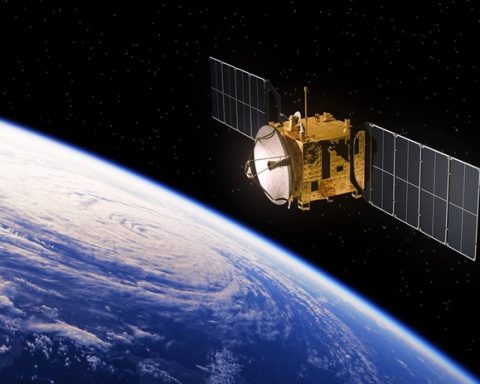
With the typhoon entering the 48-hour warning zone, emergency authorities have intensified preparations using advanced technologies. State broadcaster CCTV reported that the National Marine Environmental Forecasting Centre is employing an artificial intelligence forecasting system capable of predicting the typhoon’s path, strength and likely landfall conditions up to 240 hours in advance. Authorities have also deployed drones to monitor maritime conditions and support emergency preparedness along the coastline.
Officials warned that the storm’s exceptionally large wind field means its impact will not be confined to coastal communities. The National Marine Environmental Forecasting Centre advised inland residents to remain alert, noting that multiple provinces could experience heavy rainfall. Zhejiang, Fujian, Jiangxi, Hunan, Hubei, Anhui, Jiangsu, Henan and Shandong are all expected to face periods of intense rain, with residents urged to monitor flash flood warnings closely.
In Zhejiang, authorities activated a Level 2 emergency response on Friday morning, the second-highest level under the province’s emergency management system. As part of the precautionary measures, 162 ferry routes have been suspended, 193 marine construction projects halted and 474 vessels ordered back to port. An additional 15 tugboats have been placed on standby to respond to emergencies if required.
The coastal city of Ningbo has also suspended all seaside tourism and water sports activities as officials seek to minimise risks before the storm reaches land.
Neighbouring Fujian province activated a Level 4 emergency response on Thursday afternoon. Provincial authorities instructed local governments to secure fishing vessels, ferries and offshore wind power platforms, while ordering the evacuation of fishermen and coastal residents where necessary. Officials have also been directed to inspect high-risk locations and ensure emergency supplies are available ahead of the typhoon’s arrival.
Meteorologists said Shanghai could experience some of the storm’s most significant impacts if Typhoon Dolphin comes ashore in northern Zhejiang before moving north-westwards. CCTV reported that between Friday and Monday, the city could experience strong winds and cumulative rainfall exceeding 10 centimetres.
The approaching storm follows a series of destructive typhoons that have already affected China this year. According to media reports, Typhoons Maysak, Bavi and Noul have claimed at least 50 lives and caused economic losses estimated at more than 23 billion yuan (US$3.4 billion).
Weather officials are also warning that August could bring further extreme weather. Meteorologist Jia Xiaolong told Xinhua that many parts of China are already experiencing above-average rainfall, increasing the risk of flooding, landslides and reservoirs exceeding warning levels. He added that two or three additional typhoons are expected either to make landfall or significantly affect China during the month, with some storms potentially tracking unusually far into the country’s northern and north-eastern regions.
As Typhoon Dolphin continues its approach, authorities across eastern China remain on high alert, combining traditional emergency measures with advanced forecasting technologies in an effort to reduce the storm’s potential impact on lives, infrastructure and coastal communities.