The race to become the next secretary general of the United Nations has entered its decisive phase at a moment when the organisation faces some of the most difficult challenges in its eight-decade history. Financially strained, structurally flawed, burdened by bureaucracy and divided by internal rivalries, the UN is preparing to choose the person who will be expected to guide it through an increasingly turbulent period.
“I really think there should be some sort of psychiatric test for wanting this position,” said Richard Gowan, global issues and institutions director at the International Crisis Group (ICG). “The stakes are exceptionally high, and there is a strong sense around the UN that the next secretary general may make or break the organisation.”
The official contest to become the 10th UN chief began late last month. Although all 193 member states formally participate in the process, the decisive influence rests with the five permanent members of the UN Security Council, whose agreement is normally required before the wider membership accepts a candidate. The process includes confidential ballots and informal voting, with Beijing and Washington carrying particular weight as major financial contributors.
Once the P5 reaches agreement, the remaining members generally follow its choice, allowing the new secretary general to take office for a five-year term by the end of the year. The process has consequently become an intense subject of speculation within the UN, where diplomats and officials closely watch which candidates appear to be gaining support and whether unexpected contenders might emerge.
“It’s everyone’s favourite parlour game around the UN,” said Elizabeth Cousens, president and chief executive of the UN Foundation. “Every secretary general election is unpredictable, but this one comes at a particularly unpredictable time geopolitically.”
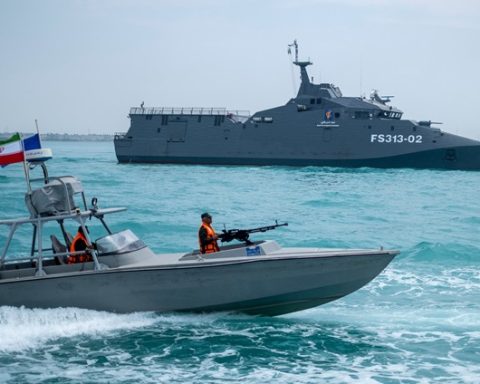
The circumstances confronting the next secretary general are unusually demanding. The Iran war is raging, artificial intelligence is reshaping societies, humanitarian crises are intensifying, UN peacekeeping has faltered and aid funding is drying up. The organisation therefore needs a leader capable of overseeing difficult reforms while navigating the competing interests of Washington, Beijing, Moscow, Paris and London.
Yet the same political divisions that make strong leadership necessary can also make it difficult for the major powers to agree on an ambitious candidate. The result, critics say, may be a compromise figure considered acceptable to competing capitals rather than someone with a mandate to transform the institution.
“They’re all grey mouses of the system,” said one UN insider. “A lot of secretary generals have come in, made promises, moved a few deckchairs and lost their political capital.”
The hope among analysts is that a candidate who initially appears unobjectionable can acquire greater political independence after taking office, as previous secretaries general Dag Hammarskjold and U Thant did.
Antonio Guterres, the current secretary general, entered office promising a “surge in diplomacy for peace” but has become a cautious leader largely focused on humanitarian relief. Critics have also argued that he failed to confront cost-cutting sufficiently, including expensive private school stipends and business-class travel. He is credited with forging a Russia-Ukraine Black Sea grain initiative in 2022, although it was more a response to the conflict than an attempt to resolve it.
Only seven candidates are currently in the race, compared with 13 at the same stage in 2016. One candidate withdrew after two weeks, while another has only recently entered the contest. By UN convention, the next secretary general “should” be a woman and come from Latin America and the Caribbean, although neither is a formal requirement.
China has offered limited indications of its preference beyond signalling support for women and Global South candidates. Foreign Minister Wang Yi said in New York in May that the desired characteristics included “competency, integrity and impartiality”, alongside commitment to the UN Charter and the initiative to take responsibility.
Beijing is also understood by analysts to want a secretary general who supports greater Chinese representation in senior UN positions, recognises China’s expanding peacekeeping role and backs the integration of its Belt and Road Initiative and global security, development and civilisation initiatives into the UN system. China, Gowan said, does not want the organisation interfering in its domestic affairs or a secretary general who presses it on its human rights record.
Washington has its own priorities. The administration of US President Donald Trump is seeking someone compatible with its unilateral foreign-policy approach, capable of improving the UN’s record on conflict resolution and willing to support an aggressive financial reform agenda. US$4 billion in American arrears for core and peacekeeping operations, nearly half that budget, has contributed to the organisation’s financial crisis.
“The Trump administration sees it as a ‘my way or the highway’ approach,” said Daniel Forti, ICG’s UN affairs director.
Despite their differences, the US and China share an interest in structural reform. The United States is responsible for 22 per cent of the general budget and China for 20 per cent, while both have backed the need for significant changes to the organisation. “Many countries, including China, were thinking along the same lines anyway – that these reforms are way, way, way overdue,” said Dan Negrea, US ambassador to the UN Economic and Social Council.
The seven declared candidates are Michelle Bachelet, Chile’s former president and former UN High Commissioner for Human Rights; Costa Rica’s Rebeca Grynspan, secretary general of the UN Conference on Trade and Development; Rafael Mariano Grossi, an Argentinian diplomat who heads the International Atomic Energy Agency; Senegal’s former president Macky Sall; Maria Fernanda Espinosa Garces, Ecuador’s former defence and foreign minister and former General Assembly head; Carolyn Rodrigues Birkett, Guyana’s former foreign minister; and late entrant Olara Otunnu, Uganda’s former UN undersecretary general.
Five candidates come from Latin America and the Caribbean and four are women, with expertise spanning human rights, development, security, financial reform and small-state diplomacy.
Washington is generally viewed as favouring Grossi, while there is uncertainty over Beijing’s position on Bachelet. Betting app Kalshi gives Grynspan a 49 per cent chance of winning, compared with 42 per cent for Grossi and 8 per cent for Bachelet.
The first informal Security Council “straw poll” was held on July 30, placing Grynspan in front, followed by Rodrigue Birkett, with Grossi third. The voting will continue until one candidate receives nine of the 15 Security Council votes without a P5 veto. The General Assembly can theoretically reject the nominee, although it has never done so.
The winner will inherit an institution overseeing some 40,000 active tasks, reports, panels and working groups across 400 intergovernmental bodies, requiring about 27,000 meetings a year. The next secretary general will also confront tensions surrounding the P5, including the United States and Russia, and pressure to reform a Security Council structure created in the aftermath of the Second World War.
The final choice, analysts say, will therefore carry consequences extending far beyond the selection of an individual. The next secretary general will inherit an organisation under pressure to change while remaining dependent on the powers whose rivalries make that change difficult.
“If they don’t use this crisis to make changes, then the UN will collapse,” said Marc Limon, executive director of Universal Rights Group.
“Like the League of Nations, people want to do good. But a lot of people earn ridiculous wages, golden handcuffs, and they don’t want to change.”