The already volatile strategic triangle linking China, India and Pakistan has acquired another layer of complexity after Pakistan, Turkey and Saudi Arabia signed a new defensive alliance in Mecca. The agreement, which commits the three governments to treat an armed attack on one as an attack on all, has been described by its signatories as defensive and not directed at any particular state.
The development was reported by the South China Morning Post, which examined how the new arrangement could affect the strategic calculations of India, Pakistan and China. For New Delhi, analysts cited in the report said, the significance of the agreement may lie less in whether its provisions are ever activated than in the uncertainty it introduces into a security environment already shaped by two major territorial disputes and repeated military confrontations.
“The agreement institutionalises a trilateral framework combining Saudi capital, Turkish defence technology and Pakistan’s strategic geography,” Brahma Chellaney, a New Delhi-based strategic analyst, wrote in a social media post. “Regardless of whether such provisions are ever invoked [the pact’s] existence could nonetheless complicate India’s strategic calculus by introducing additional uncertainty into crisis planning and deterrence.”
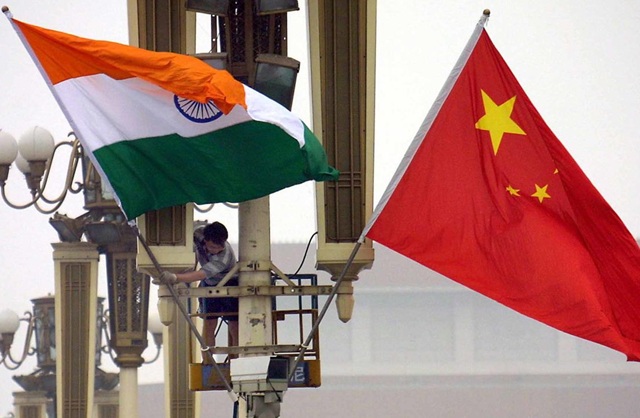
That uncertainty comes at a particularly sensitive point in relations among the three nuclear powers. India has long faced security challenges from Pakistan to its west and China to its north. It has fought four wars with Pakistan since 1947, in addition to last year’s conflict, and one full-scale war with China in 1962. Along the Himalayan frontier, there have also been a series of deadly confrontations, most recently the Galwan Valley clash in 2020, in which 20 Indian and four Chinese troops were killed.
The relationship between India and Pakistan has likewise remained prone to sudden escalation. The most recent conflict followed an attack on tourists in Indian-held Kashmir that New Delhi blamed on Pakistan. During the fighting, Pakistan said it had downed a number of Indian warplanes. New Delhi ended hostilities after just 3½ days.
Chellaney argued that the decision helped revive Pakistan’s international image, particularly in the Islamic world. In his assessment, that renewed standing raised Islamabad’s strategic importance and contributed to a mutual defence pact with Saudi Arabia last year, followed by its recent expansion to include Turkey.
For Pakistan, the agreement therefore represents more than another diplomatic arrangement. It gives China’s closest strategic partner a formal security relationship with two states possessing substantial financial resources, military technology and diplomatic influence. Turkey is also a Nato member, potentially widening Pakistan’s access to military equipment and strengthening its position within a broader regional security network.
The implications for Beijing are equally significant. A relatively stronger Pakistan could continue to divide Indian strategic attention between its western and northern fronts, an outcome that has long suited Chinese interests. Farwa Aamer of the Asia Society Policy Institute, a think tank in New York, said the agreement “does embolden Pakistan further”.
“Pakistan’s further embedded in the wider regional security architecture … it’s of interest to Beijing to have Pakistan in a more secure and stable position,” she said. “It serves both its economic investment interests as well as geopolitical interests in the region.”
The development presents India with a more complicated regional environment. Kanwal Sibal, India’s former foreign secretary, said New Delhi now had “to deal with a higher political and security profile of Pakistan in the region where we have major interests”. He added that Pakistan “will feel more emboldened to pursue its combative diplomacy against India and could take risks on the terrorism front”.
Saira Bano of Thompson Rivers University in Canada similarly argued that Pakistan had gained “a formal security framework with two states that possess deep financial resources, technology and diplomatic influence”. Writing in an analysis for the Lowy Institute think tank, she said this arrangement existed alongside Pakistan’s deeper strategic and defence relationship with China, transforming what India once viewed mainly as a bilateral rivalry into a wider network of alignments.
Yet the agreement does not automatically amount to an anti-India bloc, nor does it hand China an unconstrained strategic advantage. Bano identified what she called its most “consequential feature” not as its resemblance to Nato, whose members also treat an attack on one as an attack on all, but as the way it “collapses the strategic distance between the Gulf, the eastern Mediterranean and South Asia”.
“It is an experiment in regional self-reliance that joins three strategic theatres usually analysed separately,” she added.
That geographical expansion matters for India because its interests extend well beyond its immediate land borders. Its large diaspora in the Gulf is important to the economy through remittances and to its energy security strategy. Any future India-Pakistan crisis could therefore carry risks not only of military escalation but also of deeper involvement by Gulf states and disruption to those interests.
Saima Afzal, a researcher specialising in South Asian security, wrote in an analysis for US-based platform Counter Punch that Pakistan’s participation meant a defensive network centred on the Gulf “now reaches into an environment shaped by India-Pakistan rivalry, China’s regional role and nuclear deterrence”.
The pact also has maritime implications. All three members sit along critical sea lanes, prompting Chellaney to argue that India now has “fresh reason to prioritise naval expansion”. Bano noted that even without any intention by Riyadh or Ankara to intervene, uncertainty over what constitutes an “attack” on Pakistan could complicate India’s calculations during a future crisis.
India has already been responding to a more fluid strategic environment by widening its defence partnerships, including relationships with Israel, Indonesia and the United Arab Emirates. Aamer said New Delhi would also continue to engage Saudi Arabia for commercial opportunities. States, she observed, were increasingly pursuing “wider diversification and hedging strategies” by developing broader partnership networks as buffers against future economic and security risks.
Whether the Mecca agreement fundamentally changes the balance of power, however, remains uncertain. Husain Haqqani of the Hudson Institute described it as “more symbolic than substantive”. “A shared enemy is the first element of a mutual defence agreement and that is absent here,” he said.
There are also precedents for caution. Pakistan and Saudi Arabia have proved reluctant to become involved in each other’s conflicts, including those involving Afghanistan, Iran or the Houthis in Yemen. The existence of the pact, therefore, does not necessarily mean that a future confrontation involving Pakistan would automatically draw Turkey or Saudi Arabia into military action.
For India, the immediate challenge may consequently be less about preparing for an inevitable three-way confrontation than managing the uncertainty created by a broader network of strategic relationships. Bano argued that India’s priority should be to “preserve [its] influence in Riyadh” while strengthening its defensive partnerships.
At the same time, Pakistan’s expanding role in the new framework cannot be considered separately from its relationship with China. As Bano put it, Pakistan’s position “cannot be separated entirely from Chinese weapons, technology and infrastructure”.
The Mecca pact thus adds another connection to an already intricate web of rivalries and partnerships. Whether it ultimately proves to be a substantive shift in regional power or primarily a new factor in strategic calculations remains unresolved. What is clear is that India, Pakistan and China must now account for a security framework stretching from South Asia to the Gulf and the eastern Mediterranean, making an already dangerous nuclear triangle considerably more complicated.