China is expanding its scientific collaboration with Iran into the strategically sensitive field of rare earths, including processing technologies that Beijing has increasingly sought to protect from overseas transfer.
The National Natural Science Foundation of China (NSFC) unveiled its latest joint workshop programme with the Iran National Science Foundation on Monday, listing the “exploration and processing of rare earth elements” among five areas selected for cooperation.
Under the programme, the Chinese side will provide 30,000 yuan (US$4,200) for each workshop, covering expenses including meetings, accommodation and domestic travel. The Iran National Science Foundation will assist with international travel for Iranian participants and accommodation for Chinese researchers visiting Iran, according to the NSFC.
The cooperation comes at a particularly sensitive time, with the US-Israel war on Iran unresolved. Rare earths, a group of 17 metals with unusual magnetic and electronic properties, are regarded as critical to modern weapons systems, including missiles, fighter jets, radar and other electronic equipment.
Earlier this month, Reuters reported that the United States had used “virtually all” of its long-range precision missiles during the five-month conflict. On Friday, the Trump administration announced US$3 billion of investments in critical-mineral and battery projects intended to replenish weapons stocks and reduce reliance on Chinese supply chains.
China holds the world’s largest rare earth reserves and dominates global production and processing. Beijing has also increasingly restricted the transfer of related technologies overseas, making international cooperation involving rare earth processing particularly strategically sensitive.
The issue has become more prominent since US President Donald Trump launched a trade war with China last year. Beijing responded with rare earth export controls that disrupted supplies to American manufacturers and highlighted Washington’s dependence on Chinese supply chains.
Iran’s own rare earth potential, by comparison, remains poorly understood but could be significant. Its geology includes iron ore and phosphate formations considered favourable for rare earth deposits. Exploration has identified rare earth anomalies across about 7,000 sq km (4,000 square miles) of central Iran, according to a February analysis by the Netherlands-based Hague Research Institute.
Iran’s ability to exploit those resources remains limited, however. Its extraction and processing capabilities are still at an early stage, leaving the country a considerable distance from industrial-scale production.
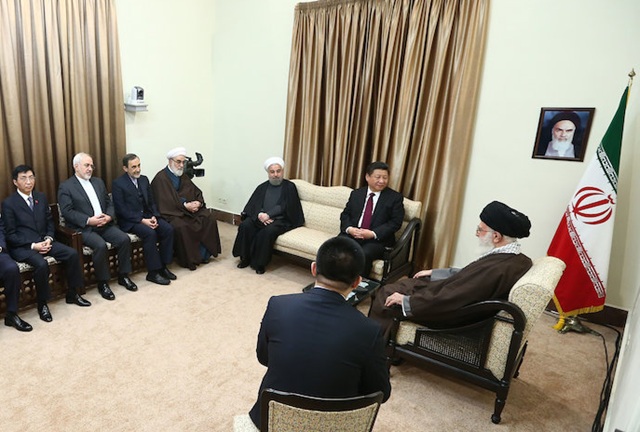
The proposed cooperation builds on a relationship between the two national science foundations that dates to 2017, when they signed a memorandum of understanding (MOU) in Beijing. At the time, the NSFC described Iran as “an important country in the Belt and Road Initiative” and said the agreement would promote science and technology cooperation between the two countries and create benefits for their populations.
Since then, the two agencies have supported joint research projects across a broad range of disciplines, including mathematics, biology, medicine, renewable energy, materials science, climate change and artificial intelligence.
Their joint workshop programme was launched in 2024, initially covering fields including climate change, artificial intelligence, advanced materials and manufacturing. Grants at that stage amounted to 150,000 yuan for each workshop.
This year’s programme broadens the areas of cooperation. Alongside rare earth exploration and processing, the call covers nano materials for disease detection, pollution monitoring, earthquake-resistant construction and greener manufacturing.
The inclusion of rare earth exploration and processing places a strategically important mineral sector alongside more conventional scientific fields, as China and Iran continue to expand institutional cooperation in science and technology.