At least 613 people were killed and another 375 injured in Haiti between March and July as criminal gangs fought for control and security forces carried out operations against them, according to a new United Nations report. The violence has reached one of its worst levels recorded in two years, with civilians increasingly caught between rival armed groups and security operations.
Most of the incidents documented by the UN occurred between the commune of Cité Soleil and the area known as Plaine du Cul-de-Sac. The zone includes densely populated neighbourhoods and industrial facilities, as well as the capital’s container port, international airport and two main roads connecting the city with the north of the country and the oil terminal.
According to the report, prepared by the Human Rights Service of the United Nations Integrated Office in Haiti (BINUH), 90% of those killed or injured were victims of gang violence. Nearly 9% were affected during security operations, while 1% were victims of popular violence against people suspected of having links to gangs. Almost a third of the casualties — 214 killed and 139 injured — had no connection to the conflict or the gangs. They were struck by stray bullets or attacked because they were suspected of links to rival gangs or security forces. Among them were 111 women and 77 children.
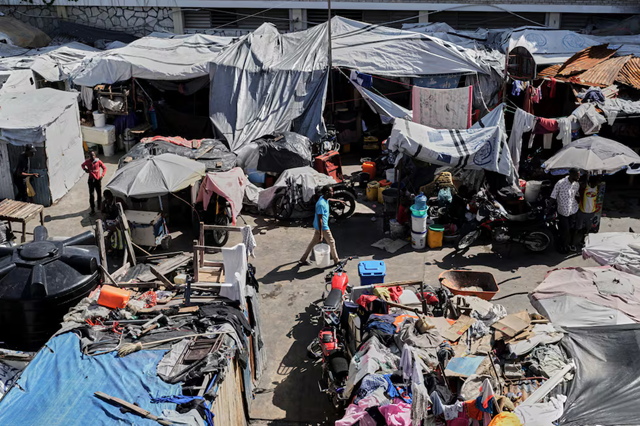
The violence has also driven more than 18,000 people from their homes, while around 176 women and girls aged between 10 and 71 were victims of sexual abuse committed by members of criminal gangs, the United Nations said. The report also documents links between officials of the Haitian National Police (HNP) and criminal groups. At least five officers have been detained for involvement in kidnappings, acting as escorts for gang members and supplying them with weapons and ammunition.
The UN office said it had not documented such a high level of fighting and human rights violations in this part of the capital since early 2024, when 402 people were killed and 254 injured during territorial battles between the criminal alliances G9 and G-PèP.
The report, published on 6 August, attributes the latest escalation partly to the reconfiguration and weakening of Viv Ansanm, the coalition led by Jimmy Chérizier, also known as Barbecue, which had brought together gangs from the G9 and G-PèP factions. It also links the violence to increased security operations that began in some gang-controlled areas in late 2025.
Around 20 operations were conducted between March and July by special units of the Haitian National Police, in some cases with support from private military companies contracted to fight the gangs. At least 55 people were killed and 41 injured during those attacks, with at least 30 of the victims having no connection to criminal gangs.
The violence unfolded in four major waves. Fighting began on 6 March when Tokyo, 400 Mawozo and Canaan clashed with Chen Mechan, Pierre VI and Terre Noire, leaving at least 74 people dead and another 76 injured in a week. On 28 March, nine Canaan gang members were killed in four explosive drone attacks launched by a private military company. Violence intensified again on 19 April, killing 117 people and injuring 125 in a week, before another escalation on 10 May left at least 147 dead and 75 injured in four days.
The fighting continued into June. On 13 June, after the World Cup football match between Haiti and Scotland, 61 people were killed and 20 injured in an attack on a street celebration. Gang fighting subsequently continued and expanded into the area around the Varreux fuel terminal.
Meanwhile, the Gang Suppression Force (GSF), an international force of 5,550 personnel authorised by the UN Security Council in October 2025, has yet to fully deploy. Its mandate is to combat gangs, facilitate humanitarian access and protect the population and state infrastructure. The report said the force conducted regular patrols in parts of Cité Soleil but did not participate in operations against the gangs. Haiti’s Prime Minister, Alix Didier Fils-Aimé, and GSF representatives have called for greater international support to enable the force to act.