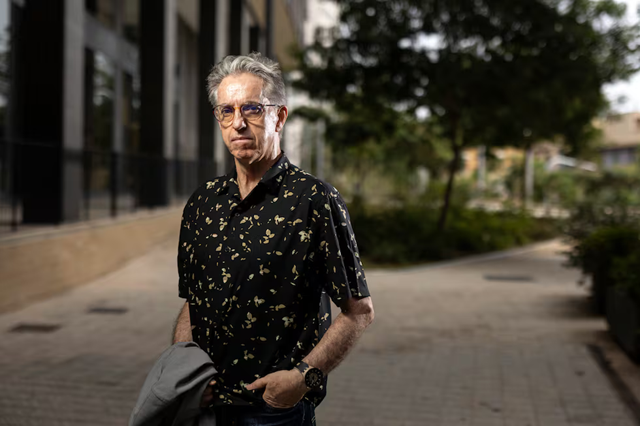
Julián Casanova has spent much of his career examining the violence that shaped modern Europe, from the Russian Revolution and anarchism to the Spanish Civil War and the dictatorship of Francisco Franco. Now, as the historian prepares to retire from the University of Zaragoza, he argues that the political lessons drawn from the catastrophes of the 20th century are themselves under growing pressure.
In an interview with El País in Barcelona, where he was discussing the 90th anniversary of the national uprising that began the Spanish Civil War, Casanova described the defining feature of the 21st century as a rupture in the values that had consolidated after the Second World War. Democracy, liberalism, modernisation and the redistribution of wealth through taxation had appeared to form a common direction for much of the world. That consensus, he argues, is now breaking apart.
“The most striking thing is the breakdown of values that had been consolidated in the second half of the 20th century,” Casanova told El País. “That breakdown is the great change of the 21st century.”
Casanova, born in Valdealgorfa, Teruel, in 1956, has written more than 30 books and supervised 37 doctoral theses. His academic career has taken him from Zaragoza to the United States and England, as well as institutions including Harvard, Notre Dame, The New School, The Institute for Advanced Study of Princeton, the Weiser Center for International Studies at the University of Michigan and the Central European University in Budapest and Vienna.
His intellectual formation was shaped by an interest in anarchism and by encounters with historians including José Álvarez Junco and Paul Preston. “They taught me the social projection of history,” he said, explaining his belief that history should not remain confined to academics but should reach an educated public interested in understanding the past.
It is from that perspective that Casanova views the political changes now taking place. He believes the international order is breaking down, particularly since Donald Trump’s second electoral victory. Yet he distinguishes the present from the early 20th century, when paramilitary movements, guerrillas and revolutionary organisations posed direct challenges to states. Modern states, he argues, retain powerful institutions and the monopoly of violence, making a direct repetition of the totalitarian crises of the past more difficult.
That does not, however, mean that the danger has disappeared. Asked whether there is a danger of fascism, Casanova answered simply: “There is danger, yes.” He argues that contemporary democracies possess judicial and military counterweights that were absent or weaker when fascism emerged in Italy and Germany. But he sees worrying signs in the growth of authoritarian politics, exclusionary policies and the erosion of confidence in democratic institutions.
Trumpism, in his assessment, may survive Trump because it is rooted in a broader social rupture. Casanova links its appeal to sections of the white working class who lost industrial employment and to conservative communities unsettled by changing social norms surrounding feminism, masculinity and multiculturalism. He places particular emphasis on the relationship between economic insecurity and political identity.
For Casanova, the decline of industrial employment has been central to the rise of the far right. The post-war democratic order benefited from industrial working classes with secure employment and rights. As capitalism shifted from manufacturing towards services, significant sections of those workers lost economic security. In Europe, where social protections remained stronger, the effects were nevertheless felt.
The resulting frustration, he argues, has increasingly been directed towards immigration, multiculturalism and changing social identities. What begins as an economic grievance can become a struggle over national, racial, religious and gender identities. The weakness of the traditional left has compounded the problem. After the fall of the Soviet bloc, communist parties lost credibility, while social democracy failed, in Casanova’s view, to offer a convincing alternative to the new economic order.
He sees Spain’s renewed arguments over Franco and the Civil War as part of this wider international phenomenon. Casanova argues that Spain never fully confronted the legacy of Francoism and that the memory of the dictatorship remained influential in sections of the media and publishing world. He describes the current revival as part of a global “neorevisionism” that seeks to emphasise the supposedly glorious aspects of national history while minimising its darker chapters.
The digital age, he says, has made this process faster. Historical knowledge can be challenged or displaced almost instantly, particularly through social media. “Today on TikTok they undo in two minutes something learned in class,” he said. For Casanova, the problem is not simply disagreement over historical interpretation but the weakening of the authority of knowledge itself.
That concern extends beyond Spain. He argues that the political use of history is increasingly widespread, with leaders and movements selecting elements of the past that support their contemporary political narratives while excluding uncomfortable evidence. The result is a version of history designed less to understand the past than to legitimise present political positions.
Casanova is particularly critical of what he sees as the failure to establish a basic historical understanding of the Spanish Civil War. He argues that the Republic was overthrown by a military coup that replaced parliamentary politics with armed force, while the subsequent dictatorship lasted for decades. The failure to address the legacy of those years, including the unresolved fate of people buried in mass graves, remains, in his view, one of Spain’s greatest democratic deficits.
His concerns culminate in what he describes as the greatest danger of the present age: the decline of critical thinking. Artificial intelligence, digital platforms and political manipulation have transformed the speed at which information can be produced and circulated. “Today there is no truth,” he said, contrasting the present with an earlier period when societies at least maintained agreements around a relative understanding of evidence and knowledge.
For Casanova, history remains valuable precisely because it requires critical reading: listening, comparing evidence, reconsidering assumptions and changing arguments when stronger evidence emerges. “There is no history without critical reading,” he said.
As he prepares to leave his university post, the historian who has spent decades documenting Europe’s political violence leaves a warning that extends beyond Spain: democratic societies may possess stronger institutions than those of a century ago, but their ability to defend themselves ultimately depends on whether citizens continue to value knowledge, historical evidence and critical thought.